
Framingham Wood Flooring installs and refinishes wide plank hardwood flooring in Framingham, MA, serving surrounding cities including Cochituate, Marlborough, Hopkinton, Wellesley and Maynard. Our 20-plus years with wood floors have taught us that wide boards reward careful work and punish shortcuts, so we plan every wide plank floor around moisture, species and fastening before the first board is cut.
Wide planks show more of the grain and give a room a calm, open look that narrow strip flooring cannot. They are a common choice in new houses, rebuilt older homes and additions, and they suit both modern interiors and older New England houses where wide pine was the original floor.
The tradeoff is movement. A wide board swells and shrinks more across its face than a narrow one, and that movement shows up as gaps, cupping or both if the floor is installed without care. The choices below are how we keep a wide plank floor flat and tight through the seasons.
Species and Cut for Wide Boards
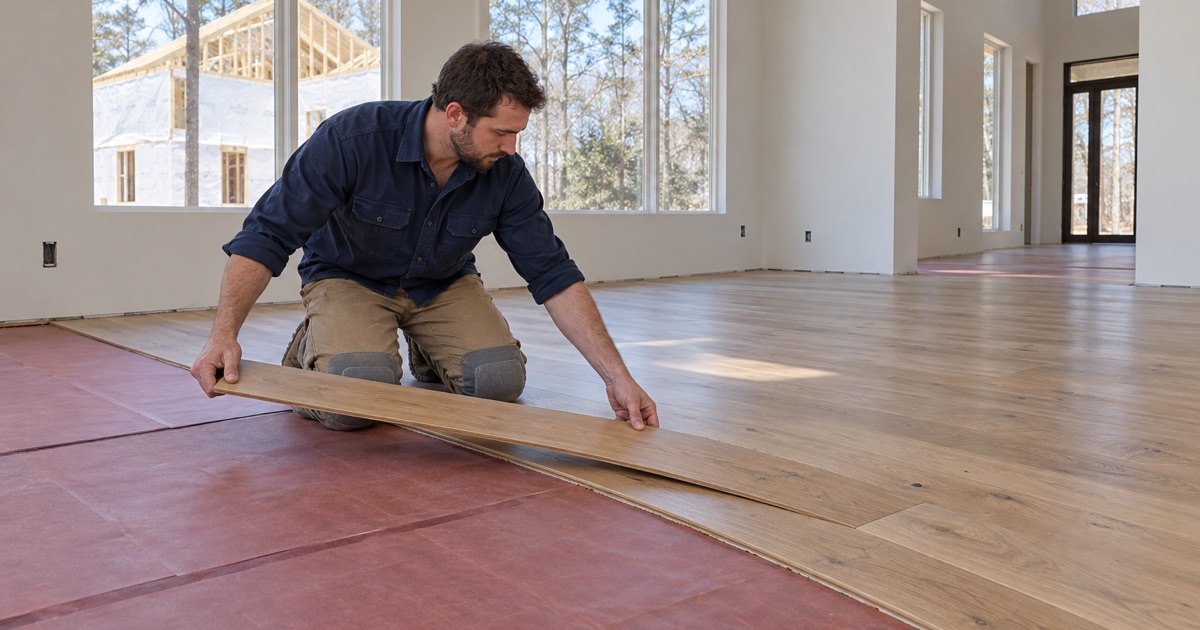
Wide Plank White Oak
Wide plank white oak is the most requested wide floor we install. It is hard, takes finishes well, and its cool, neutral color works with the natural and light tones many people want today.
White oak also holds up to daily wear better than softer woods, and its tight grain makes it a good match for matte and oiled finishes that show the wood rather than a shiny coating.
Rift and Quartersawn Boards
How a board is cut from the log changes how much it moves. Plain-sawn boards show the familiar cathedral grain and move the most across their width, while rift and quartersawn boards show straight grain and move considerably less.
For wide floors, rift and quartersawn oak is often worth the higher cost, because it stays flatter and gaps less in winter. Many owners also like its straighter, quieter look.
Eastern White Pine
Eastern white pine was the traditional wide floor in older New England houses, and it is still chosen for its warm color and very wide boards. It is soft, so it dents easily and develops character quickly.
That character is part of its appeal. We install and finish pine knowing it will wear, and we help owners decide whether that look fits the room before choosing it.
Solid or Engineered Wide Plank
Solid Wide Plank Floors
Solid wide plank floors are one piece of wood through the thickness, and they can be sanded and refinished many times. They must be nailed to a wood subfloor above grade.
They do best in homes that keep indoor humidity reasonably steady year round. In a house that runs very dry in winter, expect visible seasonal gaps between wide solid boards.
Engineered Wide Plank Floors
Engineered wide plank uses a real wood wear layer over a cross-layered plywood core, which greatly reduces seasonal movement. It is the right choice over concrete slabs, radiant heat and in basements that pass a moisture test. We look at the wear layer thickness with you, since a thicker layer allows future sanding and makes the investment in a wide plank floor last longer.
Installing Wide Boards
Acclimation and Moisture Control
Wide boards are less forgiving of moisture differences than narrow ones. We read the boards and the subfloor with a moisture meter and install only when they are within the manufacturer’s recommended range of each other.
On concrete, we test the slab first. Installing wide planks on a damp subfloor is the fastest way to a cupped floor.
Fastening and Adhesive
Wide solid boards usually need more than cleats through the tongue. Depending on the product, we add construction adhesive, screws or face nails at the ends to keep each board flat against the subfloor. We follow the manufacturer’s schedule exactly, because under-fastened wide boards are the ones that cup and squeak.
Expansion Gaps and Layout
Wide floors need a proper expansion gap at every wall, hidden under baseboard and quarter round. We also plan the layout so the widest boards and best grain land in the most visible parts of the room.
We dry-lay a section of the floor before fastening, so you can see how the boards look together. Mixing boards from several boxes prevents patches of one color or grain pattern from clustering in one spot.
Finishing Wide Plank Floors
Matte, Oiled and Waterborne Finishes
Wide plank floors are often finished in a low sheen to show the grain. Matte waterborne polyurethane and hardwax oil are popular choices, and both can meet Massachusetts limits for wood coatings.
Waterborne polyurethane gives a tougher surface film, while hardwax oil soaks into the wood and can be touched up in one spot without redoing the whole room. We explain the upkeep of each before you decide.
Character Grade and Natural Marks
Character grade boards with knots and color variation suit wide floors well and hide daily wear. Select grade gives a cleaner look but shows scratches and dents more readily.
In a busy kitchen or family room, character grade usually ages more gracefully. In a formal room with little traffic, select grade can give the clean, uniform look some owners prefer.
Wide Plank Floors in Local Houses
New Houses and Rebuilt Older Homes
Many of the houses built or rebuilt in this area over the past two decades use wide plank white oak as the main floor. On new construction we coordinate with the builder on subfloor, heating startup and humidity, since fresh drywall and concrete release a lot of moisture.
Installing wood before the house has dried out and the heat is running is a common cause of wide boards gapping later. We wait for the house, not just the boards, to be ready.
Matching Wide Pine in Older Houses
Some older houses still have their original wide pine floors, often with repairs and patches from over the years. Matching those boards for an addition or a repair means finding pine of similar width, age and color. We can source wide pine, cut it to match, and finish it to blend with the original floor so an addition reads as part of the house.
- 20+ Years on Wood Floors
- Free Written Estimates
- Lead-Safe Work Practices