Framingham Wood Flooring handles wood flooring in Watertown with more than 20 years in the trade behind every estimate. We refinish tired oak, repair boards damaged by water or pets, and install solid hardwood and engineered floors. In this city a good share of that work happens inside condos and apartments rather than detached houses, which changes how a job is scheduled, staged and cleaned up, so we plan for it from the first visit.
A unit in a large building raises questions a single-family house rarely does: where the equipment goes, how dust stays out of a shared hallway, what the building asks of outside contractors, and what actually sits under the existing floor. We answer those before we quote. A price that ignores them is a price that changes halfway through the job, and nobody wants that conversation with a floor half sanded.
Owners, landlords and tenants working with their landlord’s approval all call us, and the work differs for each. Below we walk through what we find in the newer buildings, how owned condominium units and rental units are handled, what the city’s rezoning may bring, and how to plan a floor project here from the first photo to the final coat.
Floors in Watertown’s Pleasant Street and Arsenal Street Buildings
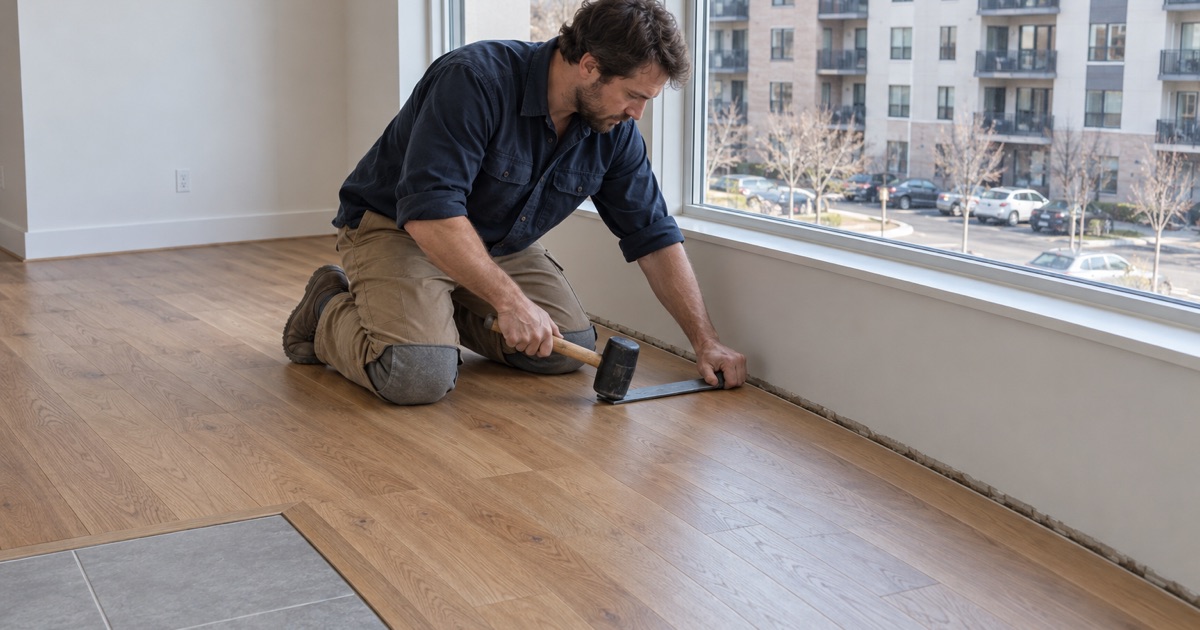
Watertown’s newest floors are concentrated along two corridors. Boston Indicators, writing in April 2024, counted nearly 2,000 condos and apartments built along the Arsenal Street and Pleasant Street corridors over the previous 20 years. Census figures point the same way: 2,240 of the city’s housing units, 13.0 percent, date from 2000 or later, with 1,083 of them built between 2010 and 2019 and another 219 since 2020.
Those units stand beside a much older housing stock. Most of Watertown’s homes predate 1960, so a single week of our work can move from a strip-oak floor laid before 1940 to a unit that is barely ten years old. The two call for different decisions, and we do not carry the habits of one into the other.
What newer units tend to have underfoot
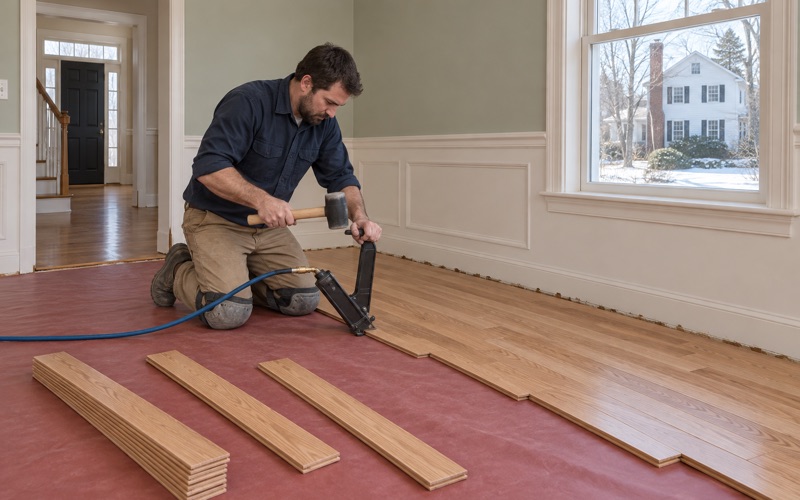
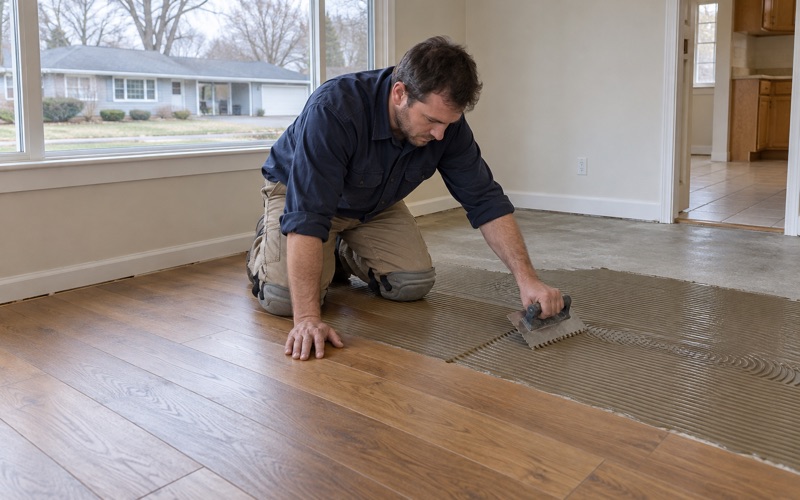
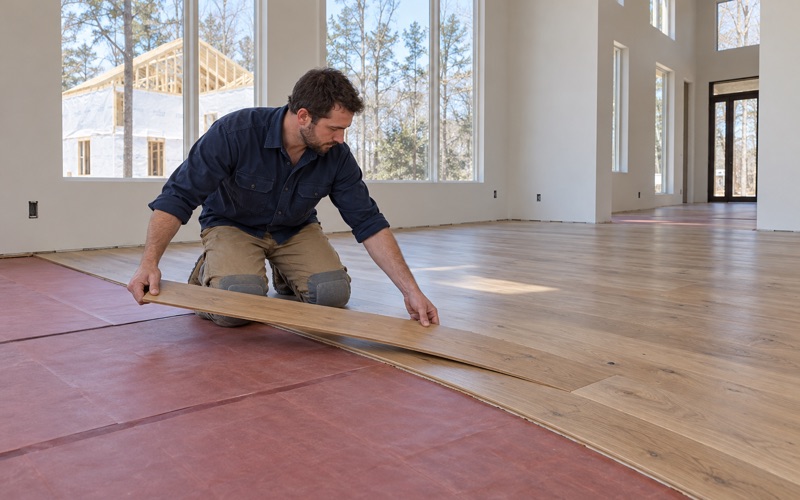
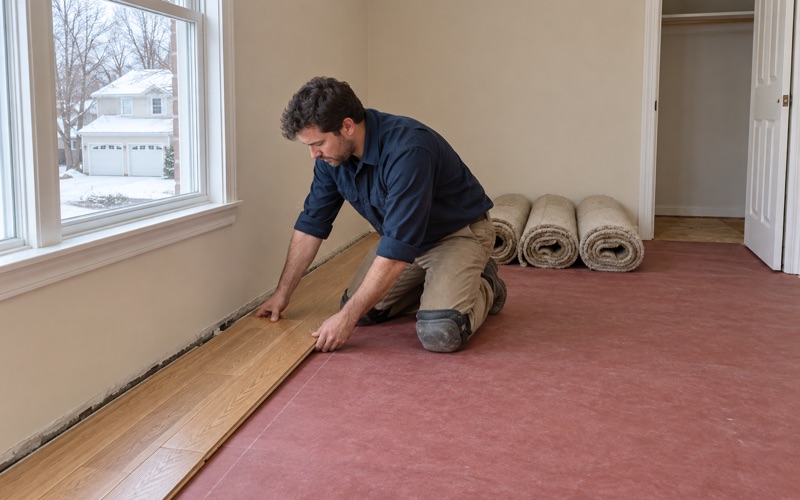
Flooring in recent multifamily construction varies widely. Some units have solid hardwood, many have prefinished engineered planks with a plywood core, and some have a floating installation over an underlayment. We identify which one you have before anyone talks about sanding, because that answer decides whether a refinish is possible at all.
With engineered flooring, the engineered wear layer is the limit. We measure it at a floor vent, a threshold or a removed board before a sanding is promised. A thin veneer may take a screen and recoat but not a full sand, and where the wear layer is already gone, board replacement or a new floor is the honest recommendation.
The problems younger floors show
A floor ten or fifteen years old tends to show traffic lanes in hallways and kitchens, scratches through the factory finish, and water stains near a dishwasher or ice maker line. Cupping near a sink or a sliding door is usually a moisture story. We trace the source and read the boards with a moisture meter before replacing anything, so the new boards do not cup the same way.
Newer buildings are tight, and the air inside them swings with the heating season. Watertown sits in the National Weather Service’s Southeast Middlesex forecast zone, MAZ014, and in a dry winter even a well-installed floor can open winter gaps between boards that close again by summer. We tell you which gaps are seasonal and which point to a real problem worth fixing.
Looking for wood-flooring closer to Lexington? See Wood-Flooring Services in Lexington.
Owned Condos and Rental Units in Fifty-Plus-Unit Buildings
Watertown has 2,528 housing units in buildings of fifty or more, 14.7 percent of the city’s total. Census tenure figures show who lives in them: 1,826 renter households and 578 owner households. Across the whole city, 52.3 percent of households rent, so many of our Watertown calls come from someone who does not own the floor they stand on, or from the landlord who does.
Owned condominium units
An owner in a large building controls the unit but shares the structure around it. Condominiums in Massachusetts are organized under M.G.L. c.183A, and associations commonly keep their own rules for contractors, work hours, elevator use and flooring changes. We ask for those rules in writing and read them before we quote, rather than guessing what a particular building allows.
Swapping carpet for hardwood, or a floating floor for a glued one, can change how footsteps carry to the unit below. We do not quote sound ratings we have not tested, but we will talk through underlayment choices and what the board has asked of owners. That decision stays with the owner and the association, and we build the plan around whatever they settle on.
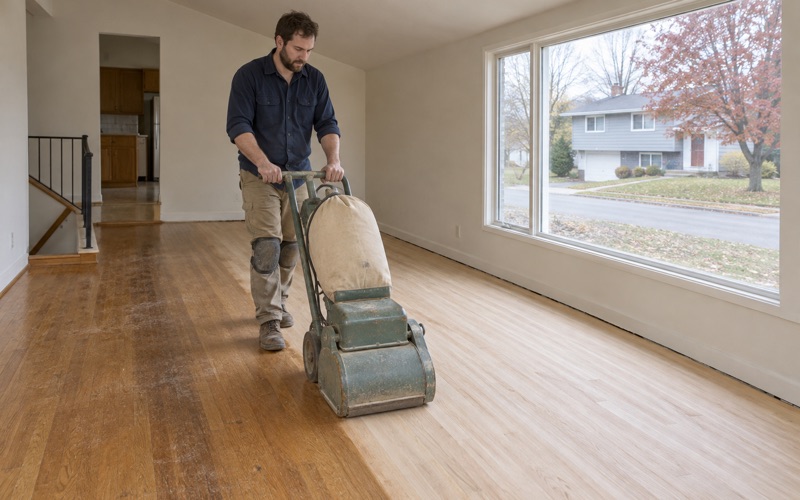
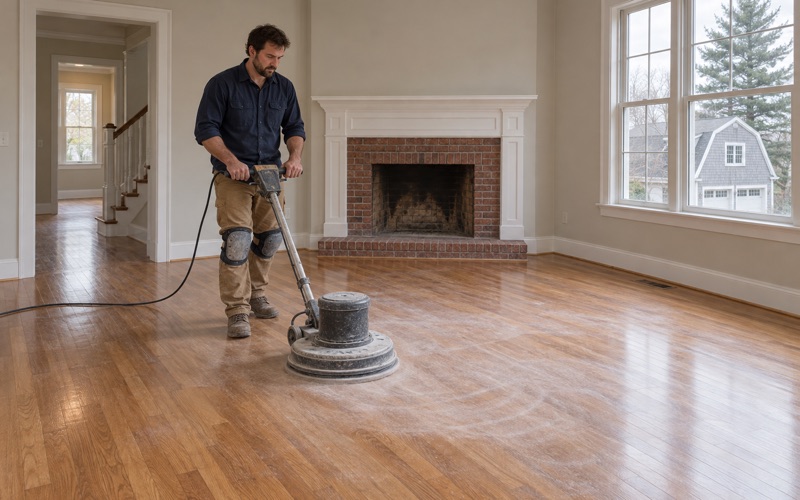
Refinishing an owned unit is often better value than replacing it. When the floor is solid hardwood or has enough wear layer left, a sand and refinish with waterborne polyurethane removes traffic lanes and scratches. Our finishes are chosen to fit the Massachusetts VOC limits for wood coatings, which are tighter than the federal ones, and in a building where neighbors share the hallway air, a low-odor finish matters.
Rental units
For a landlord, the clock runs from the day one tenant moves out to the day the next moves in. We turn floors around in that gap, sanding or recoating, replacing damaged boards and treating pet urine stains, so the unit is ready ahead of the city’s rental inspection. A screen and recoat can often be finished in a day or two, where a full sand takes longer.
Watertown prohibits rentals of fewer than 31 days, so the apartments we work in are homes on real leases, not short-stay turnovers. That usually means steady wear across a full tenancy, and the floor has to hold up until the next one. We pick the finish and sheen level with that in mind, since a satin sheen hides everyday scuffs far better than gloss does.
What Watertown Square Rezoning May Add
The corridor buildings may not stay the newest for long. The state assigned Watertown 1,701 units of capacity under the MBTA Communities law, and the city’s Watertown Square zoning allows 3,133 units as of right. Boston Indicators estimated that actual redevelopment is more likely to land around 800 to 1,000 units. None of those figures counts finished homes, and we treat them as a forecast, not a fact on the ground.
If that redevelopment arrives, it will add more multifamily units near the square, and in time those floors will need the same care the corridor buildings need now. Prefinished engineered floors age in predictable ways, and the first refinish or board replacement often comes in the second decade. At that point the measurement of the wear layer, not the sander, sets the scope of the job.
Older buildings near the new ones
Change near the square touches older buildings as well. The Watertown Historical Commission implements the city’s Demolition Delay Ordinance for buildings 50 years old or more, and the City Council amended that ordinance in August 2023. That review concerns demolition rather than refinishing, but if your building is under review, we want to know before we set a date.
Older stock close to the corridors also raises the lead question. Massachusetts runs its own lead-safe renovation rules for homes built before 1978, and 77.7 percent of Watertown’s housing units were built before 1980. We check the building’s year and look for painted surfaces, including painted stair risers and baseboard, before any sanding begins.
Planning a Floor Project in Watertown
Before the estimate
Start with what you know: the unit’s build year if you have it, whether the floor is solid or engineered, and any leak history. Photos of a vent cutout or a threshold help us tell solid hardwood from engineered planks before we arrive. If you own a condo, keep the association’s contractor and flooring rules on hand, and if you rent, we will need the landlord’s approval before we set a date.
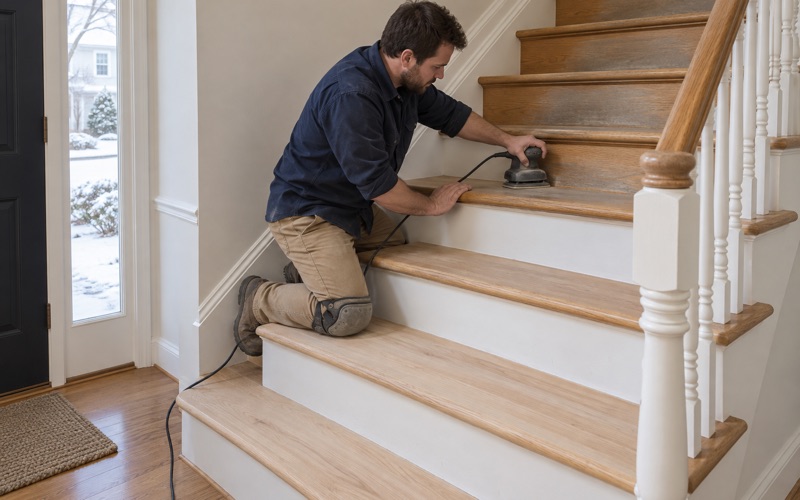
At the visit we test moisture, check the subfloor where we can see it, and measure any engineered wear layer. If there is old carpet, we look at what is under it; oak uncovered beneath a carpet pad needs the tack strip, staples and pad residue cleared before it is sanded, not after. Stairs are priced by the tread and riser rather than folded into a square-foot figure.
On the day of the work
In a large building, work days are shaped by the elevator, the loading area and the neighbors. We use dustless sanding with a HEPA vacuum hooked to the drum sander and orbital sander, and we protect the hallway and doorway between the elevator and the unit. Waterborne finishes cure quickly enough that a small unit can often be walked on soon after the final coat, though furniture waits longer.
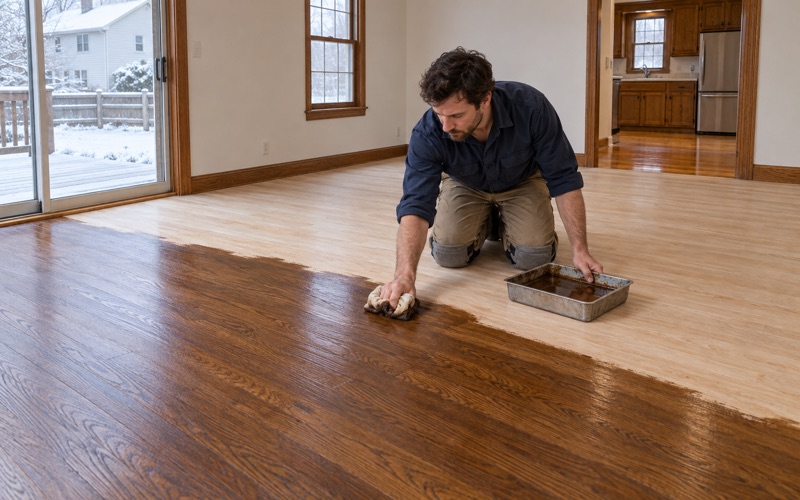
If you want a different color, we lay stain samples on the actual floor first. Orange oak can be taken to a natural or modern tone, and seeing the samples in your own light is the only fair test. Water popping before the stain gives an even, deeper color on red oak and white oak alike, and it keeps a large open room from looking blotchy.
When water is involved
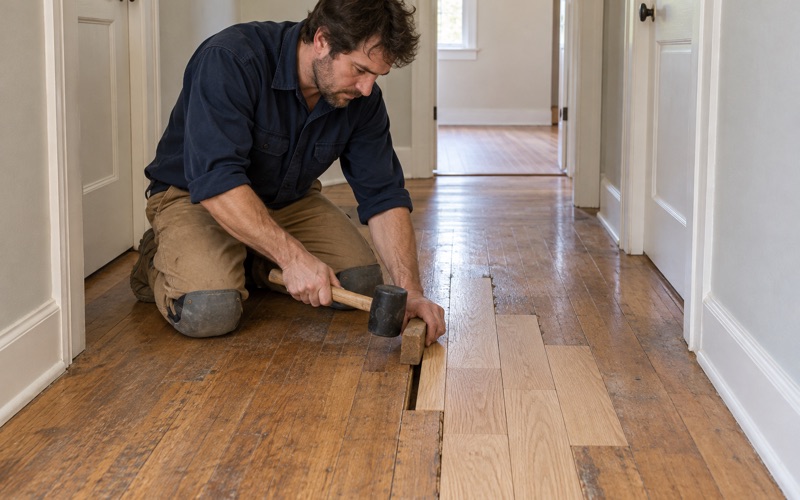
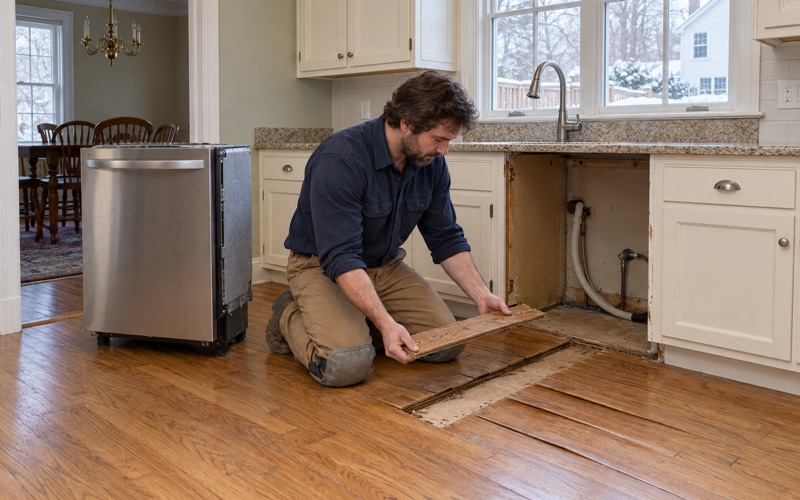
Leaks are a familiar problem in stacked units, where damage can come from a dishwasher, an ice maker line or plumbing in the unit above. We trace the source, dry the boards and read them with a meter before replacing anything, and we document the damage room by room for the adjuster. A weave-in repair can often save the rest of the floor.
Whether your floor is in a unit finished last decade or in an older building a few blocks off the corridors, the approach is the same: find out what is actually there, then choose the work that fits it. Call Framingham Wood Flooring to set up a visit in Watertown, and we will walk the floor with you before any number is written down.
- 20+ Years on Wood Floors
- Free Written Estimates
- Lead-Safe Work Practices