Framingham Wood Flooring puts more than 20 years of sanding, refinishing and installation behind wood flooring in Walpole, and the work we are asked to price here keeps shifting toward condominium units. That shift follows the housing the town is approving. It changes what a first visit looks like: fewer questions about a whole house, more about one unit inside a building with shared walls and neighbors above or below.
A condo floor still starts where any floor does. We read the boards with a moisture meter, look at how the planks are fastened, and measure an engineered wear layer before anyone promises a sanding. What differs is the paperwork around the job and the people on the other side of the subfloor, and both shape a quote as much as the square footage does.
Detached single-family houses are still most of the town, and we work in plenty of them. This page is about the part of Walpole’s housing that recent town approvals are adding to, and about what an owner or landlord in a newer multi-unit building should expect from us.
Floors in Walpole’s New 40B Condominiums
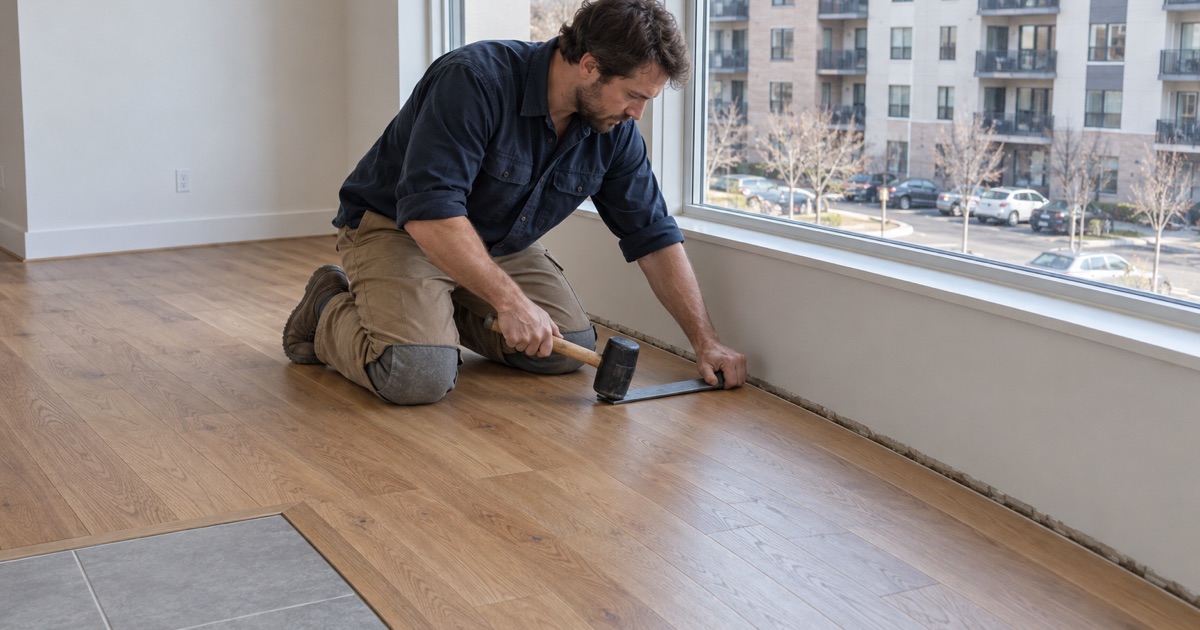
The Town of Walpole’s own Chapter 40B page lists nine comprehensive-permit projects approved or in process since 2021. Chapter 40B lets a developer build at a higher density than local zoning allows when a share of the units is affordable, and here it has produced a mix of condominium and rental projects. For a flooring contractor, that means more homes with a single owner, a master deed and a board, rather than a detached house where the owner answers only to themselves.
Why the town keeps approving them
The driver is one number. Walpole’s subsidized housing inventory stands at 7.1 percent, or 485 units, against the state’s 10 percent goal, and a town under that line has limited power to turn down a qualifying comprehensive permit. The state approved Walpole’s Housing Production Plan on April 25, 2019, and a Safe Harbor certification ran from April 8, 2024 to April 7, 2026.
None of that is flooring on its own. What it tells us is that the multi-unit share of our Walpole work is likely to keep growing, because the gap between 7.1 and 10 percent is still open and each approved project adds units that will someday need a refinish, a repair or a new floor.
What a newer unit’s floor needs in its first years
We do not assume what any builder put down in these projects, and we look before we recommend anything. A newer floor usually needs care rather than a full sanding: a screen and recoat to refresh a worn finish, board replacement where something heavy was dropped, or an answer about board gapping that opened during the first heating season.
Winter gaps in a young floor are normally seasonal, and we meter the boards before calling them a defect. Walpole sits in the National Weather Service’s Western Norfolk forecast zone, MAZ013, and the swing from humid summer to heated, dry winter is where a lot of early cupping, crowning and gap complaints begin. A relative humidity test inside the unit tells us whether the floor or the air is the problem.
Looking for wood-flooring closer to Arlington? See Wood-Flooring Services in Arlington.
The Ownership Projects: Pinnacle Point, Darwin Commons, Neponset Village and Burns Avenue
Several of the nine projects are built around ownership. Pinnacle Point on Pinnacle Drive lists 28 ownership units, Darwin Commons at 32 Darwin Lane lists 28 owner units, Neponset Village at 5 Pleasant Street lists 24 homeownership units, and Burns Avenue at 48 Burns Avenue lists 20 owner units. Moose Hill Condominiums on Moose Hill Road adds 8 more, which puts each of these developments somewhere between 8 and 28 owner units.
The town’s page records approvals and decisions, not construction progress, so we do not guess which of these buildings are finished. What we can say is how we approach a floor in a small condominium, whenever an owner there calls.
Small associations, real documents
A building with 20 or 28 owners is governed under M.G.L. c.183A, the state condominium statute, through a master deed, bylaws and rules. Before we quote a replacement, we ask the owner to check those documents for anything about flooring, since a change from one floor type to another can matter to the unit below. We have not read any association’s rules, so we will not tell you what yours requires; you can find out in a few minutes.
Refinishing inside an occupied building
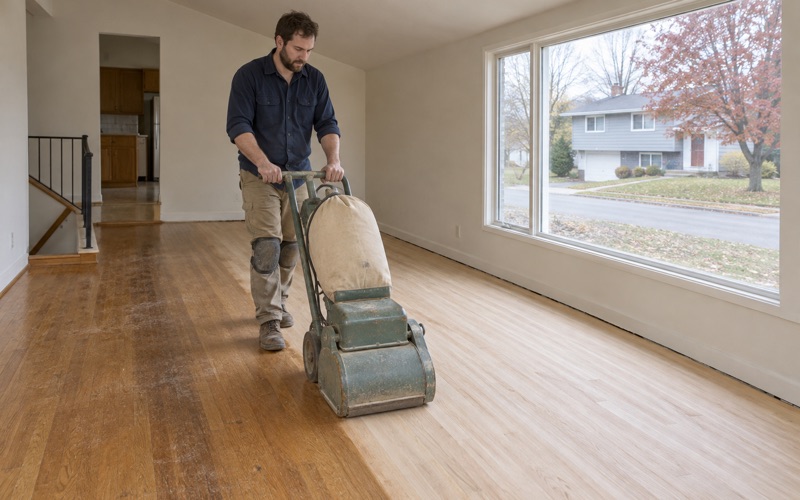
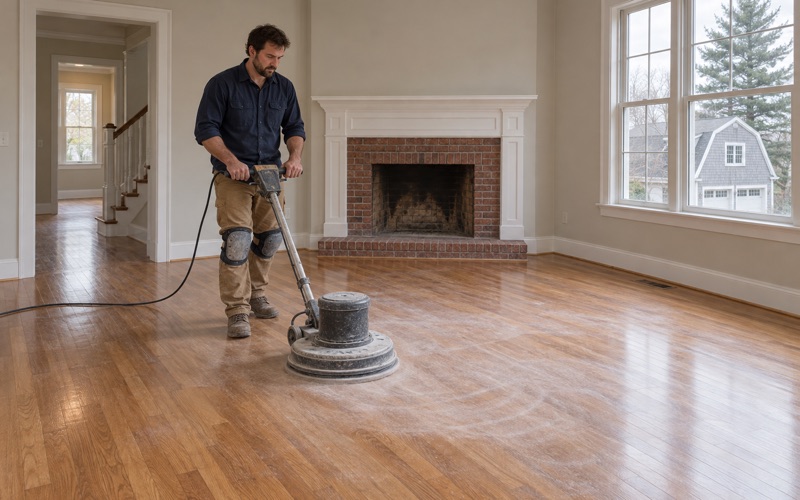
Sanding in a condominium is a shared-air job. We run dustless sanding with a HEPA vacuum connected to the drum sander and orbital sander, and we plan the grit sequence so the loudest work fits the hours the building allows. Waterborne polyurethane and hardwax oil cure with less odor than an oil-modified polyurethane, and every finish we apply fits the Massachusetts VOC limits for wood coatings, which are stricter than the federal ones.
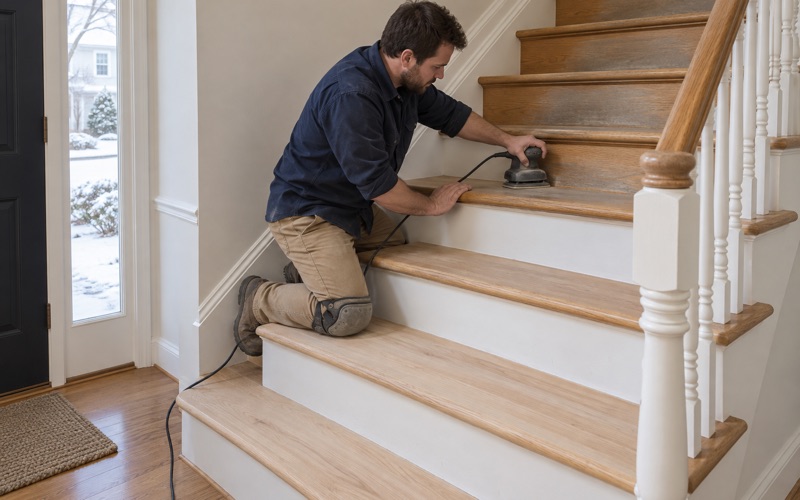
If a unit has an interior stair, we quote the stair treads and risers one by one instead of folding them into the floor’s square-foot price. Stair nosing usually shows wear first, and pricing each piece separately lets an owner refinish the stairs now and the main floor later if the budget calls for it.
Engineered floors and the wear layer
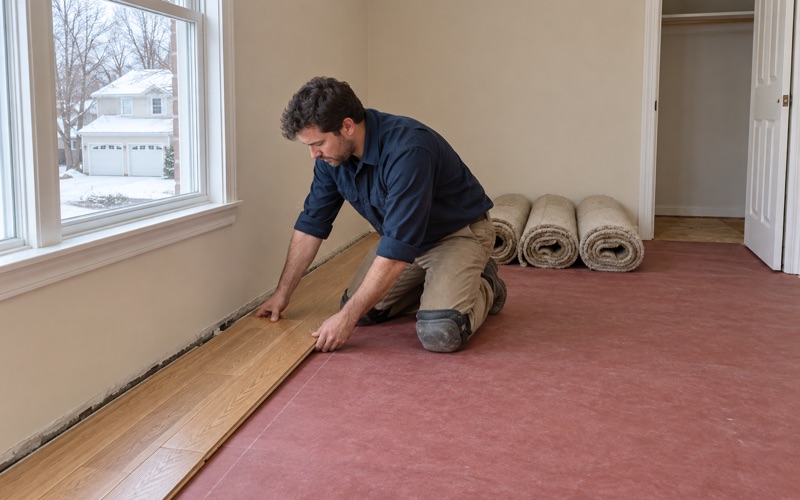
When a unit has engineered flooring, a hardwood wear layer over a plywood core, we pull a threshold or reducer and measure that layer before promising a refinish. A thin one may take a screen and recoat but not a full sanding with a drum sander. A thick one can often be sanded once or more, which is worth knowing before anyone talks about replacement.
Cedar Edge, The Sanctuary on East and Walpole’s Rental Buildings
The two largest projects on the town’s list mix ownership and rental. Cedar Edge at 55 Summer Street received its comprehensive permit on April 14, 2021 for 268 units, 56 of them for ownership and 212 for rent, with a modification in 2023. The Sanctuary on East, at 981-1015 East Street, was approved for 142 units in April 2024, and Union Street Landing proposes 45 more at 112 Union Street.
For the 56 ownership units at Cedar Edge, everything in the section above applies. The rental side is a different customer: a landlord or management company that needs a floor ready between one lease and the next, not a homeowner weighing stain samples over a weekend.
Where Walpole’s renters live
Walpole is mostly owner-occupied, with 7,829 of its 9,372 occupied units held by owners. Its 1,543 renter households are concentrated, though. According to the ACS 2024 five-year estimates, 972 of them, or 63.0 percent, live in buildings of five or more units, so renting in Walpole most often means an apartment building rather than half of a two-family.
Turning a unit between tenants
Apartment floors wear in predictable places: traffic lanes from the entry to the kitchen, pet urine stains in a bedroom corner, water stains in front of the sink. We work to the move-out date, using a screen and recoat where the finish is only scuffed and a full sanding where wear has reached bare wood, so the unit can be shown on schedule.
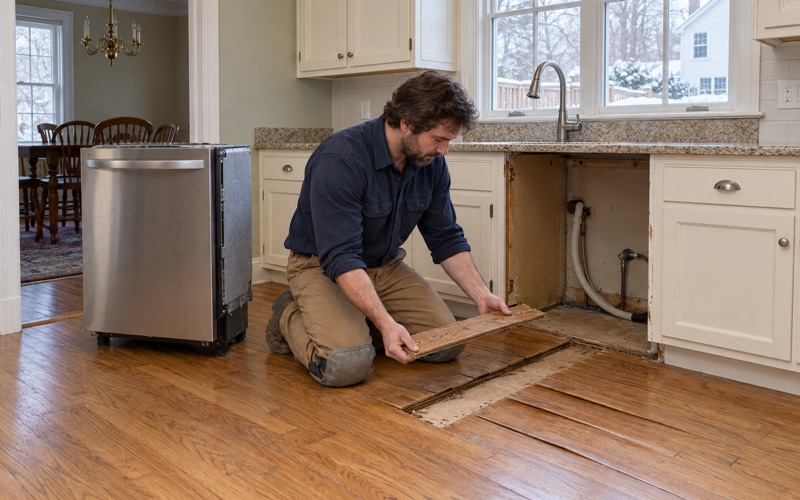
When a stain comes from a leak rather than a spill, we trace it first. A dishwasher supply, an ice maker line or a hot-water baseboard pipe can keep wetting the subfloor long after the surface looks dry, so we dry the boards and read them with a moisture meter before replacing anything. If the owner is filing a claim, we document the damage room by room for the adjuster.
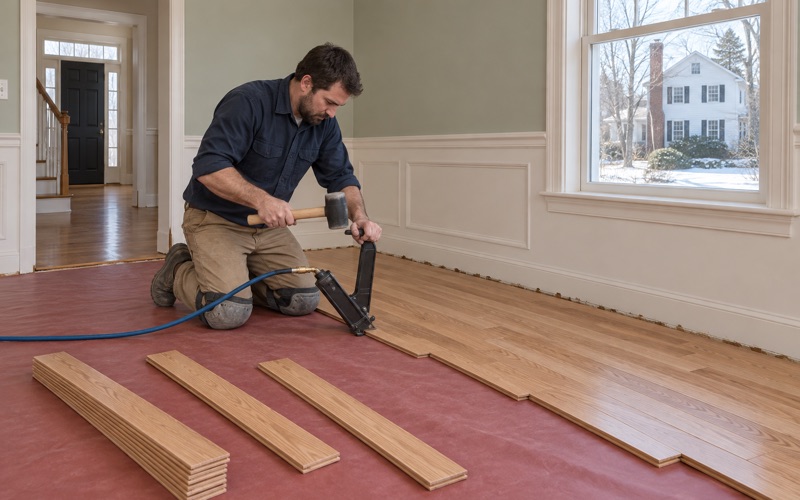
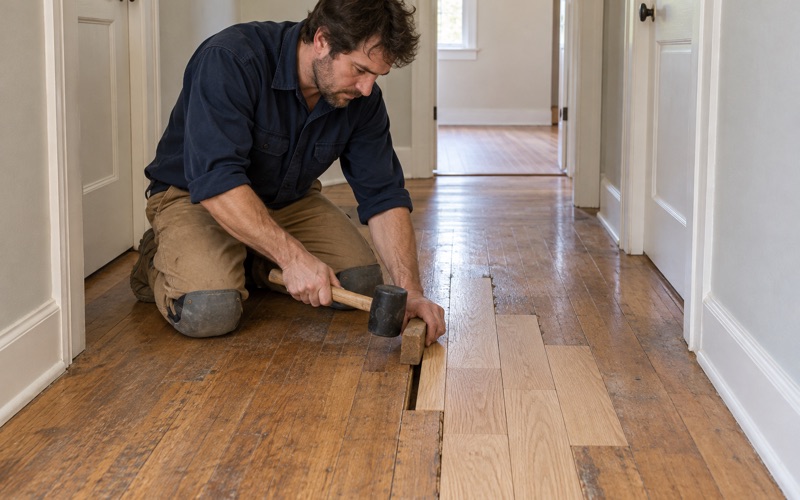
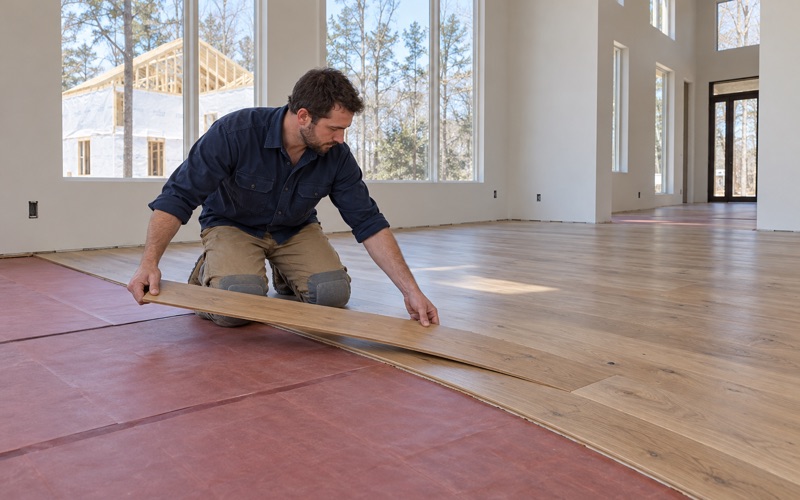
Where boards do have to come out, we weave new tongue and groove stock into the existing floor rather than patching a square around the damage. A weave-in repair blends into the room once it is sanded and finished, which matters in a unit that will be photographed for its next listing.
Planning a Floor Project in Walpole
Outside the new buildings, the town’s housing is older than its recent approvals might suggest. Of Walpole’s 9,801 housing units, 190 were built in 2020 or later, while 52.6 percent date from before 1980 and 1,318 from 1939 or earlier. Walpole was settled in 1659 and incorporated in 1724, and some of its floors have been sanded more times than anyone recorded.
Build year and painted surfaces
Massachusetts runs its own lead-safe renovation rules for homes built before 1978, under the Massachusetts Lead Law. We check a house’s build year and look for painted surfaces on stairs, baseboards and thresholds before any sanding starts, because once dust is in the air the question has already been answered the wrong way.
Old oak, carpet and basements
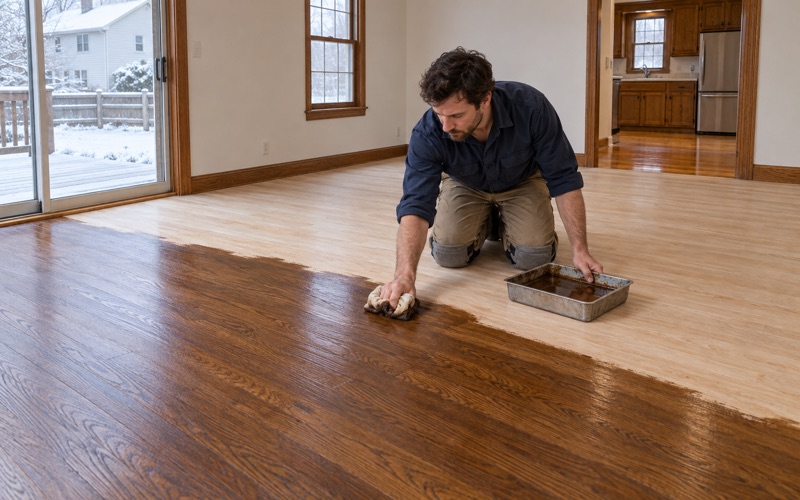
When a Walpole owner pulls up carpet and finds oak underneath, we clear the carpet pad, carpet staples and tack strip holes before the sanding, not after. Oak that has turned orange with age can be taken to a natural or modern tone, and we put color samples on the actual floor so the choice is made in the room’s own light. In a house with a finished basement, including a walkout, we measure against the NWFA below-grade rule before recommending any wood at all.
Permits, demolition review and the first call
The Walpole Building Department works out of Town Hall at 135 School Street, and the town takes residential building permit applications online through its Viewpoint system. We confirm with the department what a given scope needs rather than guessing. Separately, the Historical Commission can delay demolition of a significant structure more than 100 years old by up to six months under Chapter 349, which is worth knowing before larger work on a very old house.
When you call, tell us whether it is a condominium unit, an apartment or a house, roughly when it was built, and what the floor is doing. We will bring the meter and the samples, and we will write a quote that separates floors, stairs and repairs so you can see what each part of the job costs.
- 20+ Years on Wood Floors
- Free Written Estimates
- Lead-Safe Work Practices