Framingham Wood Flooring brings more than 20 years of work to wood-flooring in Upton, and most of what we do here happens in houses where the owners are still living. We sand, refinish, repair and install solid hardwood and engineered floors, and we plan each job around the kitchen, bedrooms and hallways a family keeps using. The goal is a finished floor without turning the household out for weeks.
A typical call is rarely about one damaged room. It is a hallway worn into traffic lanes, a living room with orange oak the owners have tolerated since they moved in, and a staircase that no longer matches either one. We look at the whole house, then break the work into stages that keep a bathroom, a bedroom and a path to the door usable at every point.
Before any quote, we confirm the build year, look for painted trim that sanding would disturb, and read the boards with a moisture meter. That tells us whether the floor can take a full sanding, a screen and recoat, or a few boards replaced first. It also keeps the price from changing once the drum sander is in the room.
Wood Floors in Upton’s Single-Family Houses
Upton is largely a town of detached houses. Recent Census estimates count 2,507 one-unit detached homes, 82.1 percent of the town’s 3,055 housing units, and 2,379 of the 2,604 owner households live in one, which works out to 91.4 percent. Overall, 86.7 percent of occupied homes in town are owner-occupied.
That shapes the work we are asked to do. An owner living in a detached house usually wants the floors done once and done right across the whole first floor, not patched one room at a time as tenants change. It also means the decisions sit with the people who live there: stain color, sheen level, and whether to keep original boards or replace a damaged run.
What we usually find under carpet and finish
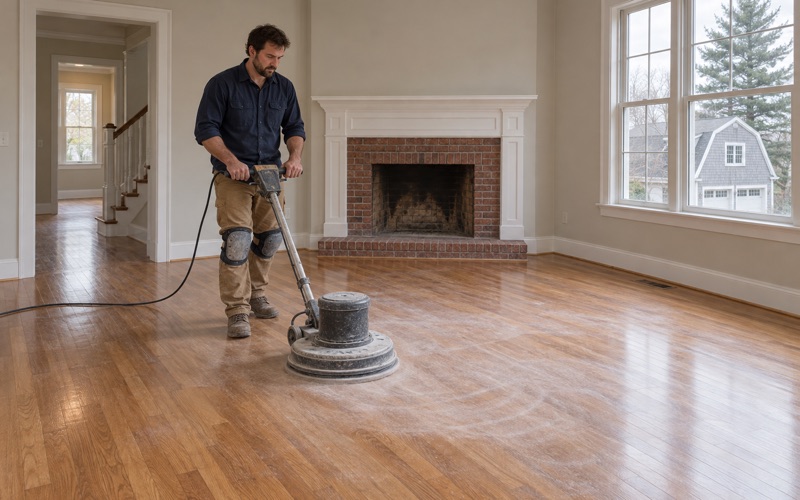
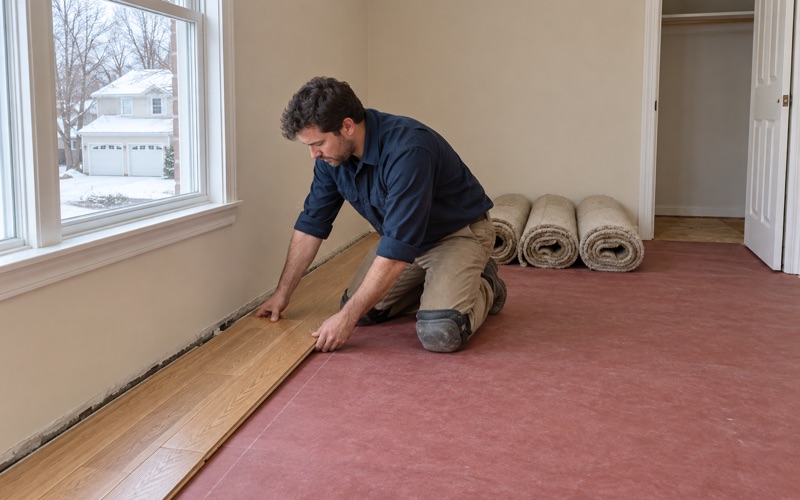
Many floors we open up are red oak or white oak strip in tongue and groove, nailed to a wood subfloor. Some have been under carpet for years, and pulling it back shows the carpet pad, carpet staples and tack strip still in place. We clean all of that off, fill the tack-strip holes and set any raised fasteners before the first sanding pass, so nothing tears the abrasive or gouges the boards.
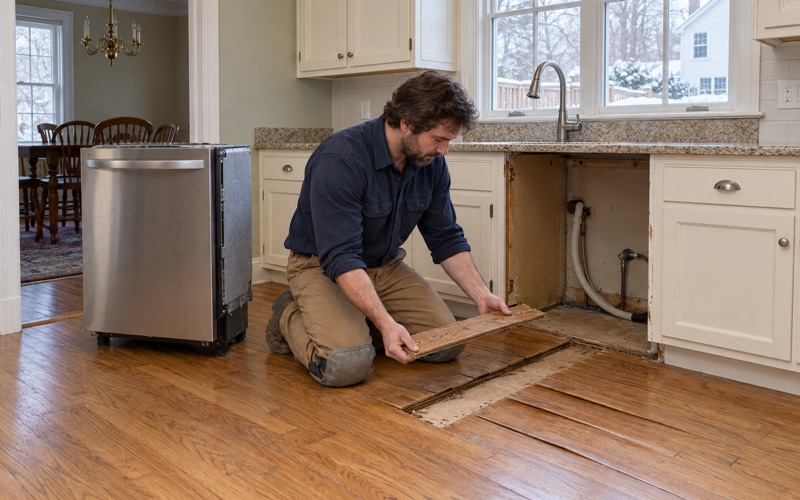
Other floors have been exposed and finished for decades and show the usual wear. Gray traffic lanes run from the kitchen to the back door, pet urine stains darken the boards near an exterior door, and water stains ring the spot below a refrigerator’s ice maker line. Each calls for a different fix, from a sanding that removes surface wear to board replacement where a stain has gone through the wood.
Refinish or replace
A solid hardwood floor with enough wood above the tongue can be sanded several times over its life. An engineered floor is different, so we measure the engineered wear layer before promising a sanding, since some prefinished products carry a veneer too thin to survive one. When a floor cannot take a sanding, we say so and talk through a screen and recoat or a replacement instead.
Looking for wood-flooring closer to Cambridge? See Wood-Flooring in Cambridge.
Refinishing the Whole House While You Live There
Most Upton owners we work with stay in the house through the job. That is workable, but it takes planning, because a site-finished floor needs time between coats and a household still needs to eat, sleep and get out the door. We sit down with the owners before the first day and map which rooms go when.
Keeping dust out of the rest of the house
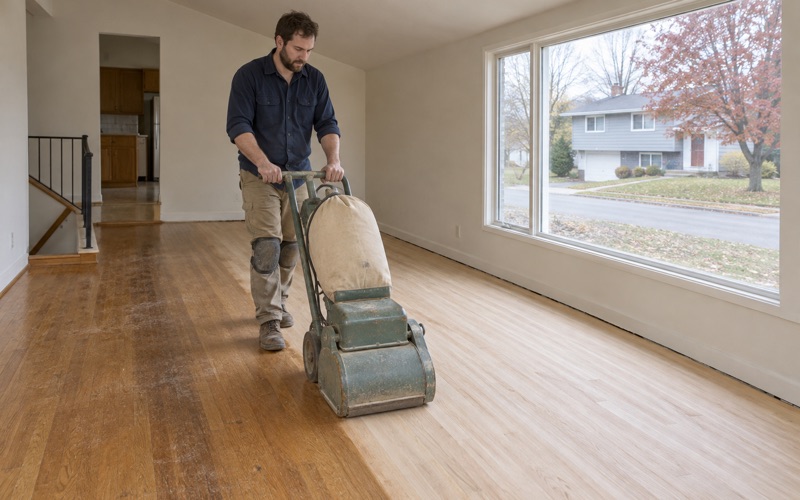
We use dustless sanding equipment with a HEPA vacuum for cleanup, and we seal off the rooms not being worked. Between the drum sander and the orbital sander passes, we vacuum so grit from a coarse cut is not dragged into a finer one. That keeps the grit sequence clean and limits the dust that reaches bedrooms and closets.
Finishes that suit an occupied house
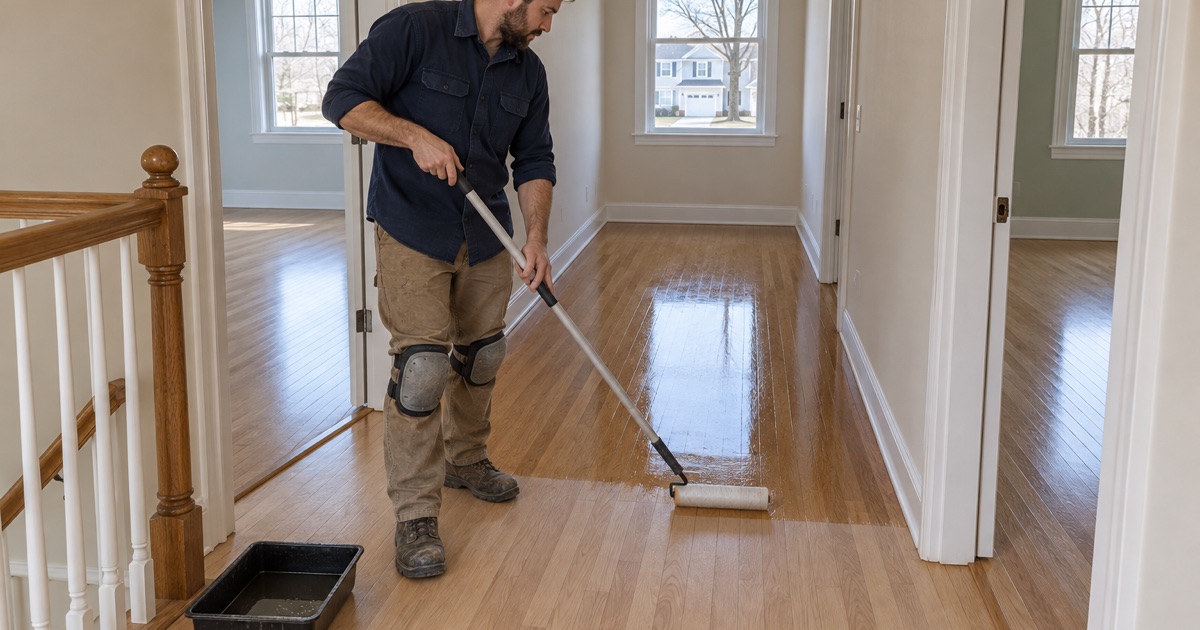
Finish choice matters more when people are living in the house during the work. Waterborne polyurethane dries faster and carries less odor, so a room can often be walked on in socks sooner. Oil-modified polyurethane ambers the wood and takes longer to cure, while hardwax oil suits owners who want a low sheen they can spot-repair later.
Every finish we use is chosen to meet the Massachusetts VOC limits for wood coatings under 310 CMR 7.25, which are stricter than the federal ones. For a family sleeping down the hall, that is not an abstract rule. We also go over the cure time for the finish chosen, so rugs and heavy furniture stay off the new floor until it can take the weight.
Color tested on your own floor
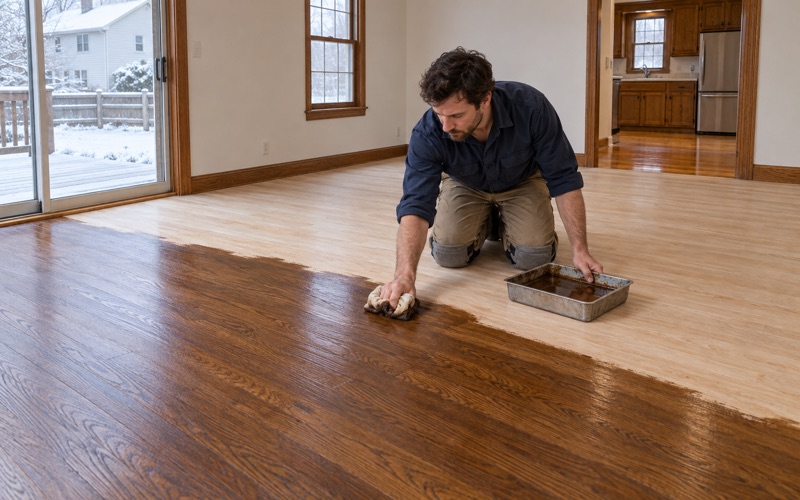
Many owners want to move away from oak that has turned orange or yellow under an older finish. We lay stain samples on the sanded floor itself, in the room’s own light, and leave them for the owners to judge before any color goes down. Where a darker, more even tone is the goal, water popping opens the grain so the stain takes evenly.
Growth-Era Houses and Older Floors Near Upton Center
The Town of Upton’s history page records that the population began to expand significantly in the 1980s, nearly doubling from 3,884 people in 1980 to 7,542 in 2010. The housing count tells the same story: 1,478 units, 48.4 percent of the stock, were built between 1980 and 2009. The same page notes that a significant portion of the town’s land is protected as state forest or town conservation land.
Houses built from 1980 to 2009
Houses from these decades often have oak on the main floor, with carpet in bedrooms that many owners now want to replace with wood. By now a good share of those original finishes are thin in the traffic lanes and dull along the kitchen edges. A floor of this age is often a strong candidate for a full sanding and new finish rather than replacement.
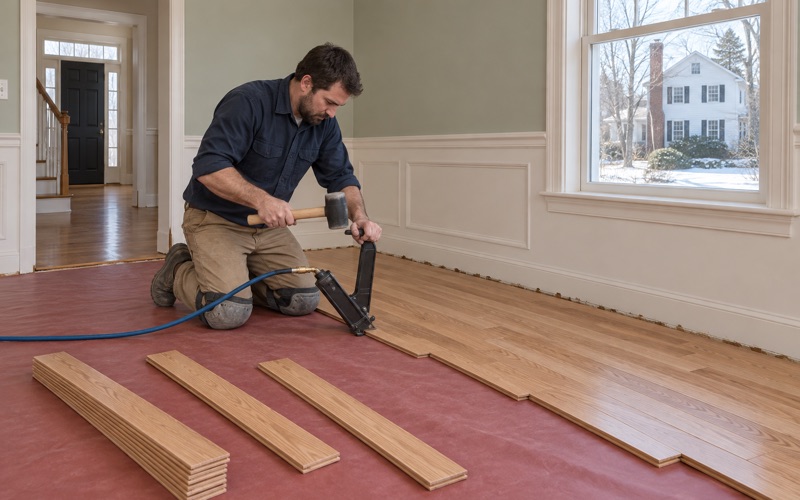
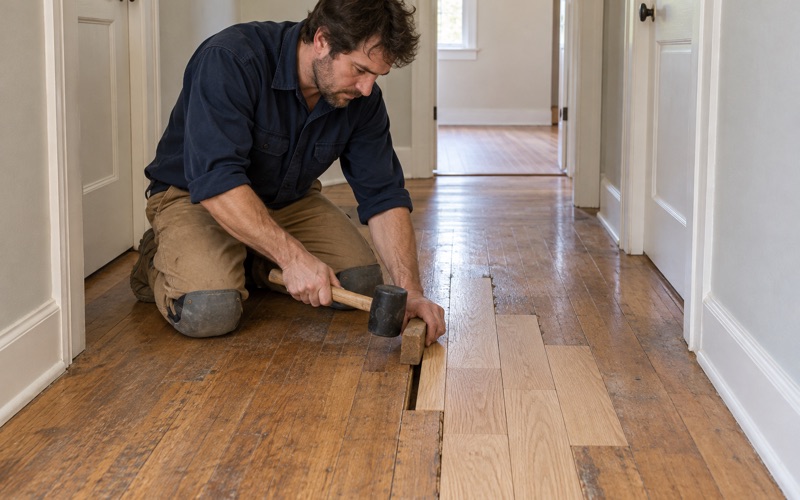
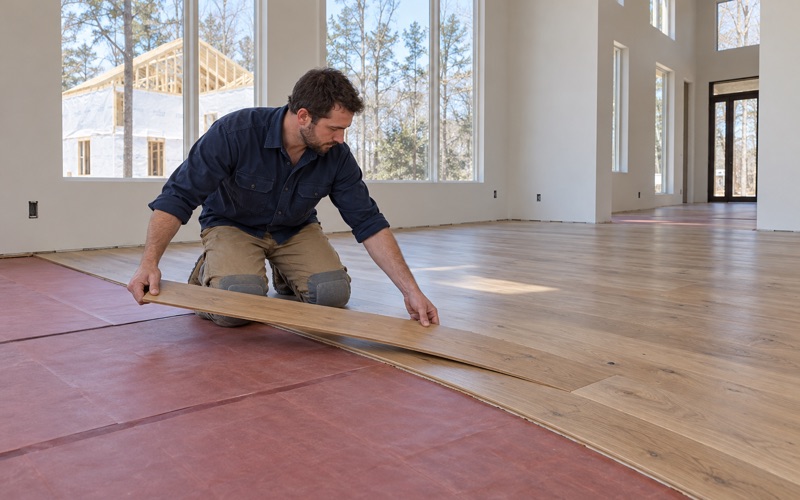
Where new wood goes in beside an existing floor, we do a weave-in repair that staggers new boards into the old ones instead of stopping at a straight seam, and we match species, width and grade. The new wood acclimates in the house, and we check its moisture against the subfloor before a board goes down. A nail-down installation with flooring cleats, with an expansion gap at the walls hidden under baseboard or quarter round, is the usual approach on a wood subfloor.
Older floors around Central Square
The older part of town gathers around Central Square, where Main, North Main, Milford, Grove, Church and Warren streets meet. The Upton Center Historic District was accepted to the National Register of Historic Places in 2014, taking in the 1884 Town Hall and three mid-19th-century churches. Census estimates count 565 of Upton’s housing units, 18.5 percent, as built in 1939 or earlier.
Floors in houses of that age may be eastern white pine, wide plank boards, or oak laid over an earlier floor. Pine is soft, with a much lower Janka hardness than oak, so we sand it with a lighter hand and expect to keep some of its character marks. Old boards can also carry signs of powderpost beetle or carpenter ants, and we check for active damage before sanding over it.
Any house built before 1978 gets a closer look before sanding starts. Massachusetts runs its own lead-safe renovation rules for these homes under the Massachusetts Lead Law, separate from the federal program, and painted baseboards, stair risers and thresholds are where old paint tends to sit. We confirm the build year, check the painted surfaces first, and plan the work around what we find.
Sequencing Rooms, Stairs and Hallways
In a detached house, the order of work decides how livable the house stays. We usually start with the rooms at the far end of the floor plan and work back toward the entry, so the finish in each room cures while the household uses the rest. Hallways and the path to the kitchen come last or get their own day, since they carry the most traffic.
Bedrooms can often be done in pairs, with the family sleeping in the other rooms for a few nights. Living and dining rooms that run together are sanded and finished as one field, so the sheen and color stay even across the opening. Where two floors meet at a doorway, a reducer or threshold is fitted once the finish has cured.
Stairs
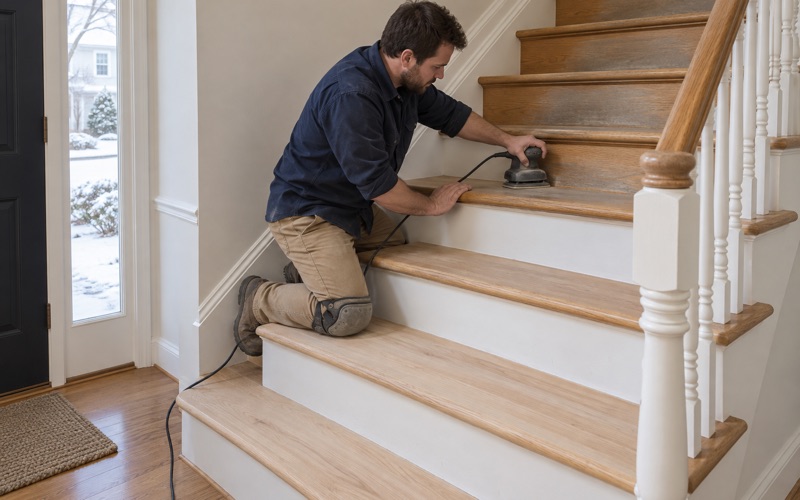
Stairs get used no matter what else is happening in the house. We quote them by the tread and riser rather than folding them into a square-foot price, since each stair, stair nosing included, is sanded and finished largely by hand. When the stairs must stay in use, we finish every other tread first and come back for the rest, so there is always a way up and down.
Leaks found along the way
Whole-house jobs sometimes turn up damage the owners did not know about, such as cupping near a dishwasher or dark boards along a hot-water baseboard pipe. We trace the source, dry the boards and read them with a meter before replacing anything, because a new board set into wet wood will not stay flat. If an insurance claim is involved, we document the damage room by room for the adjuster.
Keeping the new finish looking new
Once the floors are done, a little upkeep keeps them from wearing into traffic lanes again. Felt pads, mats at the doors and a dry-mop routine handle most of it, and a screen and recoat every few years restores the top coat without another full sanding. Dry indoor air in winter can open small winter gaps between boards, which usually close again as humidity returns, and we note the exact finish and sheen used so a later touch-up matches.
- 20+ Years on Wood Floors
- Free Written Estimates
- Lead-Safe Work Practices