
Framingham Wood Flooring offers screen and recoat hardwood floors service in Framingham, MA, serving surrounding cities including Cochituate, Marlborough, Hopkinton, Wellesley and Maynard. After more than 20 years of maintaining wood floors, we know that many floors that look tired do not need a full sanding at all. When the wood is sound and only the finish is worn, a screen and recoat restores the shine and protection in a fraction of the time.
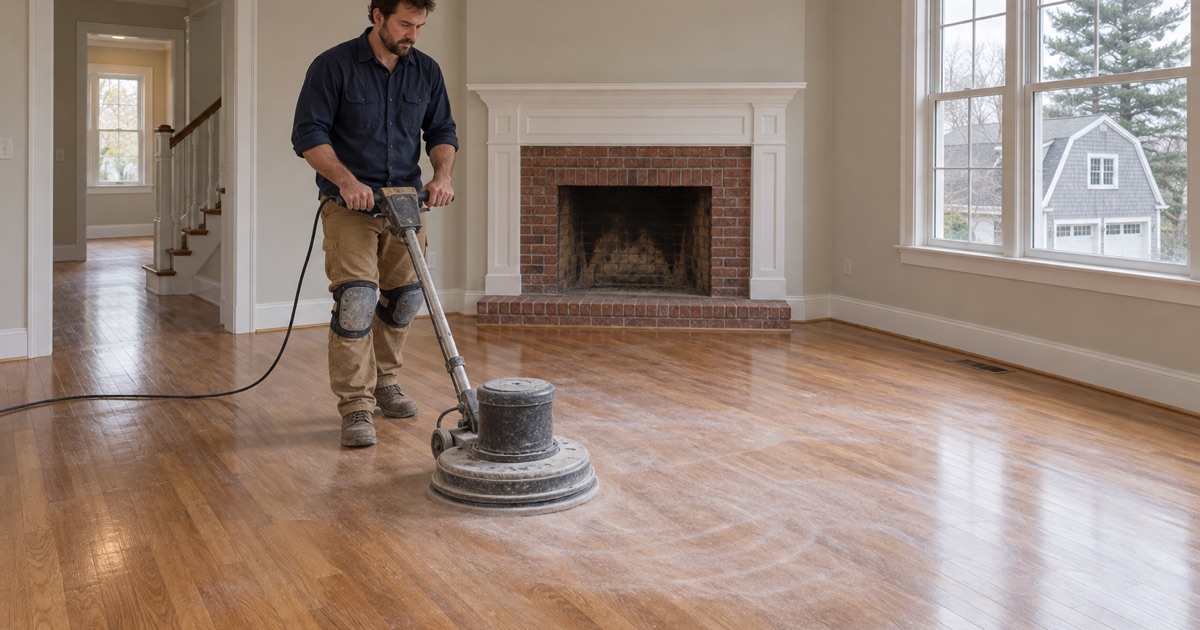
A screen and recoat, sometimes called a buff and coat, lightly abrades the existing finish with a fine screen or pad on a buffer, cleans away the dust, and applies a fresh coat of polyurethane. No wood is removed, so the floor keeps its thickness for future sandings, and the job is usually finished in a day or two rather than most of a week.
The key is knowing when it will work. A recoat cannot remove deep scratches, stains, gray worn wood or the orange color of an old finish, and it will fail on a floor that has been waxed or treated with the wrong cleaner. We check the floor before recommending it, and we tell you plainly when a full refinish is the better choice.
When a Screen and Recoat Is the Right Choice
Dull and Lightly Scratched Finishes
The best candidates are floors with a finish that has dulled or picked up fine scratches from everyday traffic, but where the wood itself has not been exposed. Surface scratches that sit in the finish mostly disappear under a fresh coat. If you can see bare, gray wood in traffic lanes, the finish has already worn through, and a recoat will not bring back even color in those areas.
Traffic Lanes Caught Early
Traffic lanes from the kitchen to the back door, down hallways and in front of the sink wear the finish faster than the rest of the room. Caught while the finish is thin but still intact, a recoat restores those lanes before the wood underneath starts to wear. Recoating on a regular schedule is one of the easiest ways to avoid a full sanding for many years.
Floors That Cannot Take Another Sanding
Some floors do not have enough wood left for a full sanding, including older solid floors that have been sanded many times and engineered floors with a thin wear layer. For those, a screen and recoat is the safest way to renew the surface. We measure the engineered wear layer or check the wood above the tongue before deciding.
Rentals and Quick Turnovers
Landlords often need a floor to look clean and cared for between tenants without losing a week of rent. A screen and recoat can usually be done in a day or two, and it makes a scuffed but sound floor presentable for showings and move-in. For units that need a rental inspection certificate before a new tenancy, it is a quick way to refresh floors that are worn but not damaged, and we can schedule several units back to back.
When It Will Not Work
Deep Scratches, Stains and Gray Wood
Scratches that cut into the wood, pet urine stains, water stains and areas where the wood has turned gray all go below the finish. A recoat covers them with a clear coat, but they remain visible underneath. Those floors need a full sanding, sometimes with board replacement, to look right again.
Waxed Floors and Contaminated Finishes
Wax, furniture polish, oil soap and some store-bought floor cleaners leave residue that stops a new coat from bonding. A recoat over those surfaces can peel in sheets within weeks. We ask about past cleaning products and test for wax before recommending a recoat. If the floor has been waxed, a full sanding is the only reliable fix.
Changing the Color
A recoat adds a clear layer over the existing finish, so it cannot change the floor’s color or remove the orange tint from an older oil-based finish. If you want a new stain or a natural look, the floor must be sanded to bare wood so the stain can reach the wood.
How We Screen and Recoat
Adhesion Testing
Before recoating the whole floor, we test a small area, usually in a closet, to make sure the new finish bonds to the old one. Some factory finishes on prefinished floors are designed to resist new coatings, and testing catches that before it becomes a problem across the room.
Deep Cleaning and Screening
We clean the floor thoroughly to remove dirt and residue, then abrade the existing finish evenly with a buffer and fine screen or pad. This dulls the surface so the new coat can grip. We vacuum and tack the floor to remove every trace of dust before applying finish.
Applying the Fresh Coat
We apply a new coat of waterborne polyurethane or a compatible finish, chosen to bond with what is already on the floor and to meet the Massachusetts limits for clear wood coatings. The coat goes on evenly with the sheen you choose, whether matching the original or changing it slightly.
Keeping the Finish Longer
Cleaning Between Recoats
Use a cleaner made for polyurethane-finished wood floors, and avoid wax, oil soaps, steam mops and all-in-one polishes, which can dull the finish or block the next recoat. Regular sweeping or vacuuming removes the grit that causes most scratches. Damp mopping with a well-wrung pad is fine, but standing water left on the floor can work into the seams and dull the finish along the board edges.
Felt Pads, Mats and Humidity
Felt pads under furniture, mats at exterior doors and steady indoor humidity all help the finish last. Replace worn pads regularly, since grit trapped in an old pad acts like sandpaper on the floor. In winter, when the heat dries the house, a humidifier helps limit the gaps and small finish cracks that open between boards.
- 20+ Years on Wood Floors
- Free Written Estimates
- Lead-Safe Work Practices