Framingham Wood Flooring has handled wood-flooring in Norwood for more than 20 years, and a large share of that work happens in the gap between one tenant moving out and the next one moving in. A vacant unit gives us a few days to sand, fill and finish a floor that has carried a lease or two of furniture, chairs and pets, and the schedule is usually set by the move-in date rather than by us.
We also refinish, repair and install floors for owners living in their own houses, from a single room of red oak to a full run of stairs. The approach is the same in both cases: we read the floor before we quote it, tell you what a screen and recoat can fix and what needs a full sanding, and finish with a coating that dries fast enough for the calendar you are working against.
This page covers what changes about that work in Norwood, where the housing splits almost evenly between owners and renters and where most rented floors sit in small and mid-size buildings rather than towers.
Norwood Rentals: Refinishing Between Tenants
Norwood’s rental market is not a side note. The Census Bureau’s 2024 five-year American Community Survey counts 6,104 of the town’s 13,259 occupied units as renter-occupied, which is 46.0 percent. For a landlord, that means floors are judged at turnover, when the last tenant’s traffic lanes, chair scuffs and furniture dents are suddenly visible in an empty room.
Screen and Recoat or Full Sanding
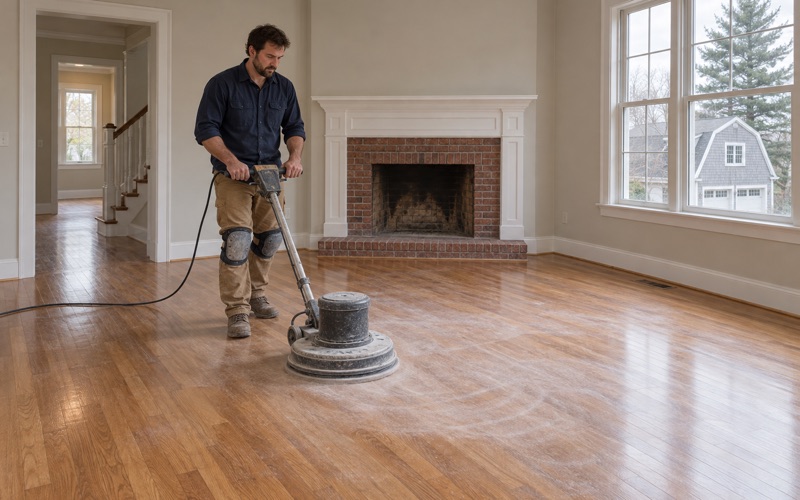
When the finish is worn but the wood underneath is sound and clean, a screen and recoat is often enough. We abrade the existing coat with a buffer, vacuum, and apply a fresh layer of waterborne polyurethane, which usually fits inside a short vacancy. It does not remove gray wood, deep scratches or water stains, so we check for those before we suggest it.
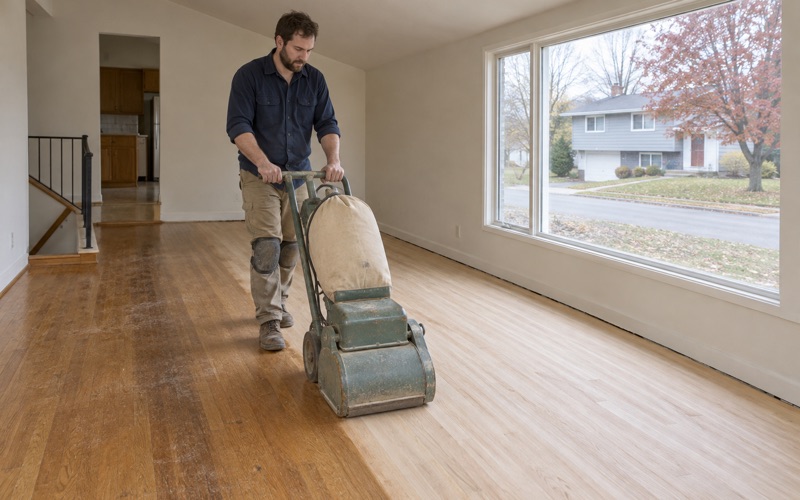
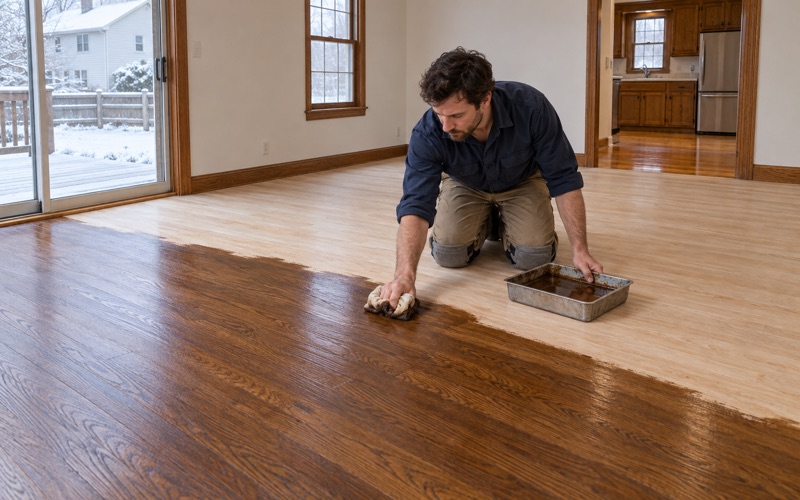
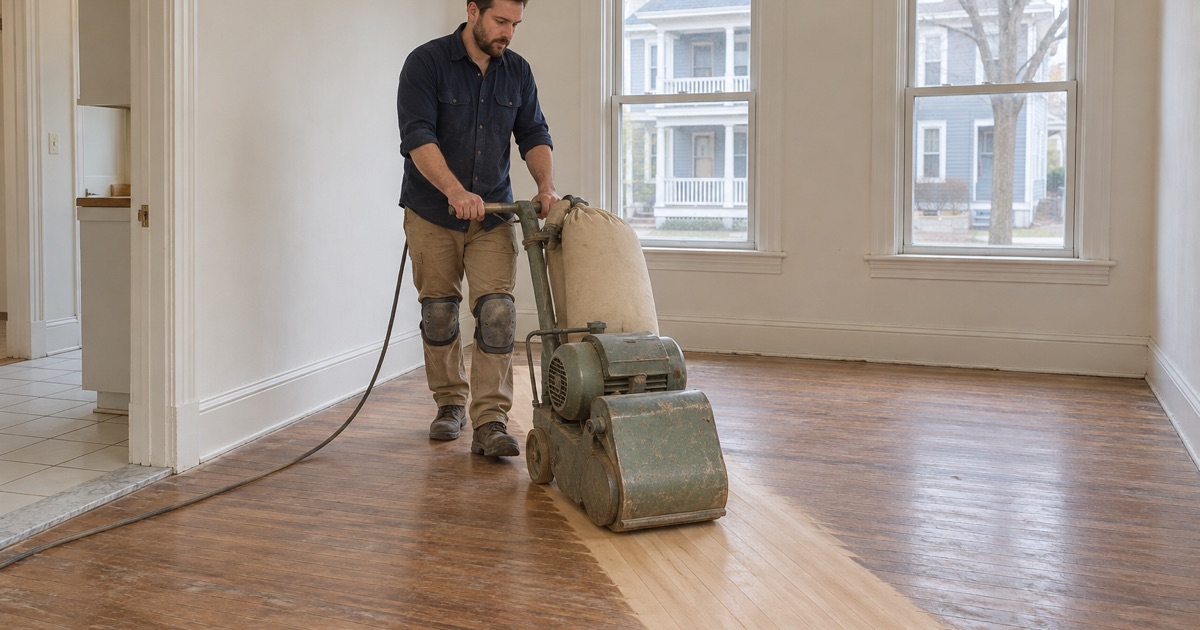
When the finish has worn through to bare wood in the hallway or in front of the kitchen sink, recoating only seals the damage in. That floor needs a drum sander, an orbital sander along the edges and a proper grit sequence, followed by stain samples if the owner wants a new color. We give you both prices when both are realistic, so the decision stays with you.
Pet Urine Stains, Gaps and Loose Boards
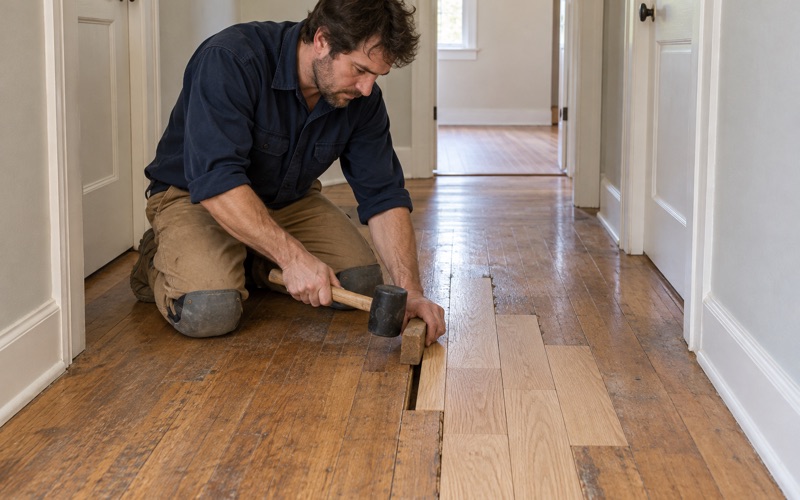
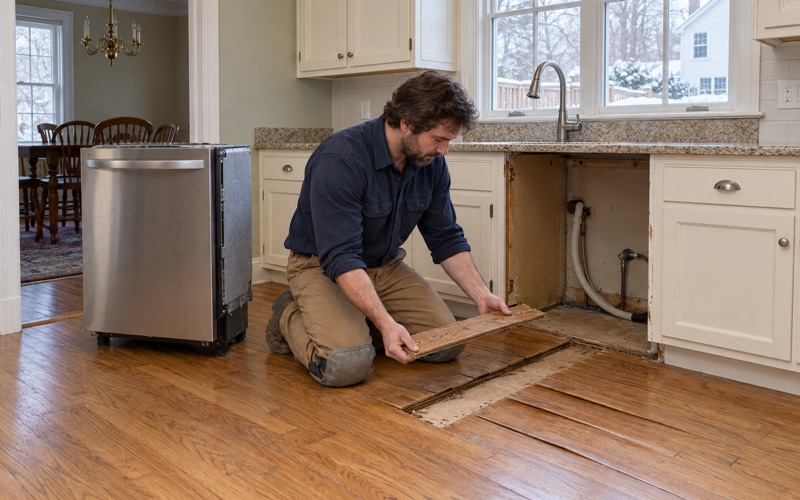
Pet urine stains are the most common surprise in a rental that has just been emptied. A light surface mark sometimes sands out; a dark stain that has soaked into the grain usually does not, and we cut out those boards and weave in new tongue and groove pieces before sanding the whole room. Board gapping from dry heating seasons and a few squeaky or loose boards are handled at the same visit.
Older Units and Lead
The survey counts 24.9 percent of Norwood’s housing units as built before 1940, and many older rentals have painted baseboards, thresholds and quarter round next to the floor. Massachusetts runs its own lead-safe renovation rules for homes built before 1978, so we check the build year and look for painted surfaces before any sander touches the room.
Looking for wood-flooring closer to West Roxbury? See Wood-Flooring Services in West Roxbury.
Two-Families, Three-Families and Mid-Size Buildings
The shape of Norwood’s rental stock matters more to a floor job than the renter share alone. Of the town’s renter households, 2,007, or 32.9 percent, live in buildings with two to four units, and 2,693, or 44.1 percent, live in buildings with five to forty-nine units. Only 348 renter households are in buildings of fifty or more units, so most rented floors here sit in small and mid-size buildings rather than large complexes.
Working Above and Below Occupied Units
In a two-family or three-family house, the unit we are sanding often has a tenant living directly above or below. We use dustless sanding with HEPA vacuum extraction on the sanders, seal off the doorways we are not working through, and keep machine hours to reasonable times of day. Those steps keep dust out of the neighboring unit and the shared hallway instead of relying on a closed door.
Finish choice matters for the same reason. We use coatings that meet the Massachusetts VOC limits for wood finishes under 310 CMR 7.25, which are stricter than the federal ones, and a waterborne polyurethane gives off far less odor than an oil-modified one. Neighbors notice that, and so does the incoming tenant who arrives a few days later.
Shared Stairs and Common Hallways
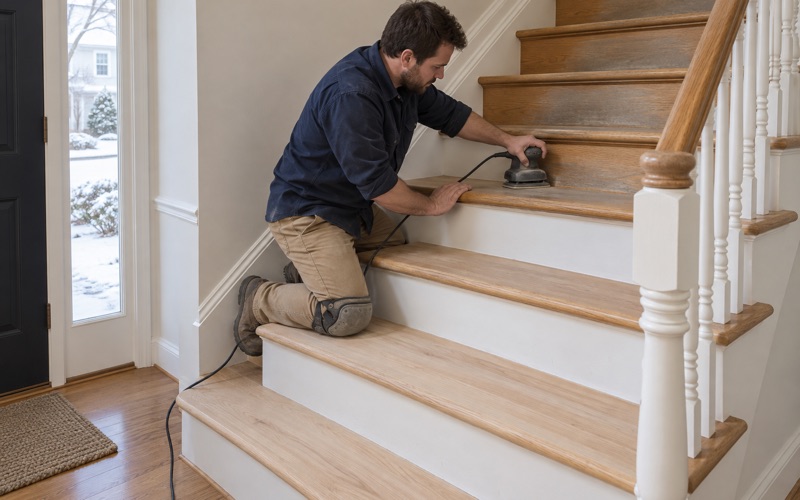
Small rental buildings tend to carry their heaviest wear on the stairs and the front hall. Stair treads get worn through at the nosing, risers get scuffed by boots and moving dollies, and the landing gets the same traffic as a kitchen. We quote stairs by the tread and riser, not as a square-foot add-on, so a landlord can see exactly what the staircase costs apart from the units.
Mid-Size Buildings and Scheduling Several Units
In a building of ten or twenty units, turnovers rarely line up. Some owners have us refinish one vacancy at a time; others plan a sequence so that each empty unit is sanded and coated in the same week it opens up. Where an engineered floor was installed during an earlier renovation, we measure the engineered wear layer before promising a sanding, because a thin veneer over a plywood core may only take a recoat.
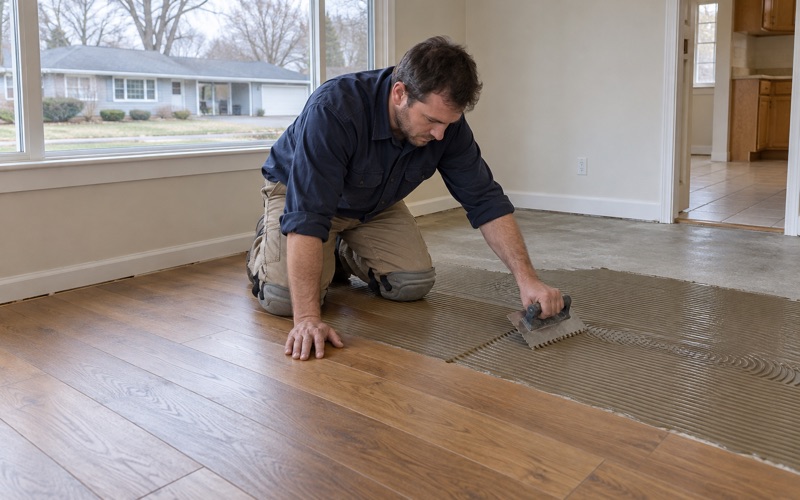
Mid-size buildings also mix floor types more than small houses do. One unit may still have its original site-finished oak while the next has a prefinished engineered plank glued down during an update, and the hallway between them ends at a reducer or threshold. We match the repair to what each unit actually has, rather than treating the building as one floor, and we note which units can be sanded again later.
What Norwood’s Health Department Inspects, and When
Norwood’s Health Department enforces the State Sanitary Code, 105 CMR 410, the Massachusetts standard for minimum housing conditions. The town’s housing inspection page says inspections are conducted upon request of the occupant, to make sure housing is in a safe and healthy condition, and it does not describe a periodic rental inspection program. For landlords, that means an inspection usually follows a tenant’s call rather than a turnover date.
Why That Changes the Timing of Floor Work
In practice, the most useful time to fix a floor in a Norwood rental is while the unit is empty, not after a complaint arrives. A soft spot near a toilet, a lifting board at a threshold or a split stair tread is far easier to repair with no one living in the room. Once a tenant has moved in, the same repair means working around furniture and a household’s schedule.
Floors That Tend to Draw Attention
The floor problems a tenant is likeliest to report are the ones they can feel or trip on: cupping from a slow leak under a dishwasher or ice maker line, crowning after a spill was left too long, loose stair nosing and gaps big enough to catch a heel. We trace the water source first, dry the boards and read them with a moisture meter before anything is replaced, so the repair does not fail the following winter.
Seasonal movement accounts for some of the rest. Winter gaps open between boards when the heat runs and indoor air dries out, then close again in the humid months, and a tenant who moved in during January may read that as damage. We explain which gaps are normal seasonal movement, which point to a moisture problem, and when filling them with wood filler would only crack out by summer.
Records for Insurance Claims
When a floor was damaged by a burst pipe or a leaking hot-water baseboard, we document the damage room by room for the adjuster: photos, moisture readings, the extent of cupping or buckling, and which boards can be saved. That record helps whether the claim runs through the owner’s policy or a tenant’s, and it keeps the repair scope clear before work begins.
Owners in Norwood’s Single-Family Houses and Older Mill-Town Homes
The other 54.0 percent of Norwood’s occupied units are owner-occupied, and most of those owners, 5,682 households, live in detached single-family houses. The survey dates 2,829 of the town’s housing units to the 1950s alone, about 20.5 percent of the stock. When a house of that age has been carpeted at some point, the oak underneath is often in better shape than the owners expect.
Oak Found Under Carpet
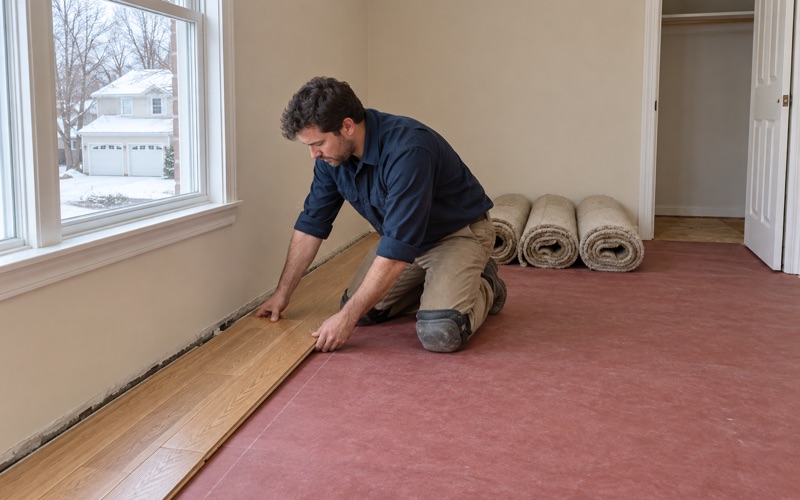
When carpet comes up, we pull the carpet pad, every carpet staple and the tack strip, and fill the nail holes the strip left along the walls before sanding starts, not after. Red oak and white oak from that era usually sand back well. If the old finish has turned orange or yellow, we lay stain samples and natural test patches on the actual floor so you can choose a tone in your own light.
Owners also ask us about sheen level and durability. A satin waterborne polyurethane hides scratches and dust better than gloss in a busy kitchen or entry, while a hardwax oil suits owners who would rather touch up a worn spot than recoat a whole room. Red oak and white oak sit in a similar Janka hardness range, so the finish usually matters more to daily wear than the species does.
Repairs, Installs and Rooms Below Grade
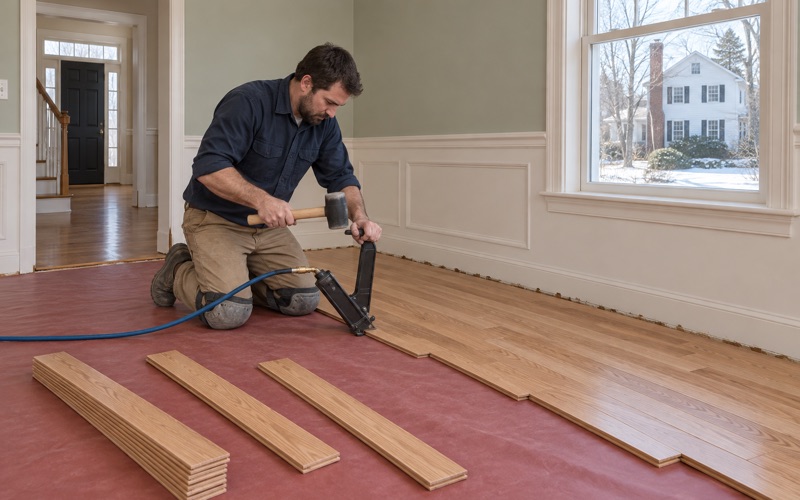
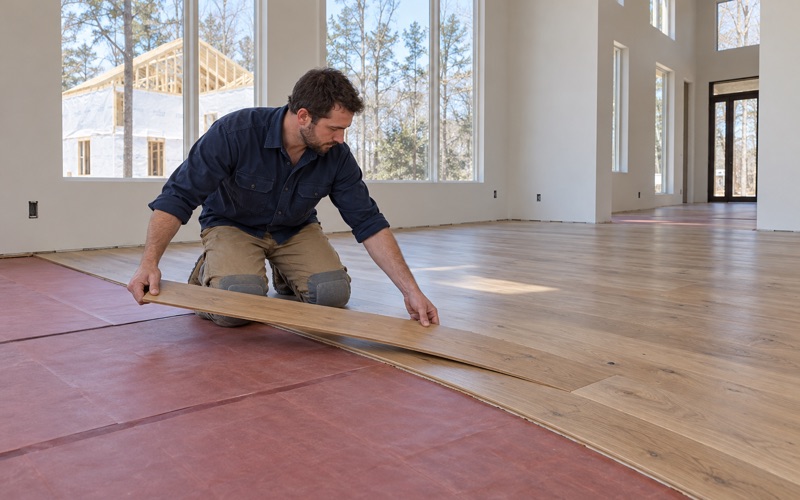
For owners adding wood to a finished lower level, we measure the room against the NWFA Installation Guidelines for below-grade spaces, including walkout rooms, before recommending anything. Sometimes that points to an engineered plank with a vapor retarder and a floating installation; sometimes it points away from wood entirely. Upstairs, we match existing boards for weave-in repairs and add new solid hardwood with a proper expansion gap and acclimation time.
A Printing-Press and Tannery Town
Norwood was incorporated in 1872 from part of Dedham, and the Norwood Historical Society and Morrill Memorial Library describe industry as the most distinctive feature of its history. The Norwood Press, formed in 1894, had one of the largest press rooms in the country by 1904 and 600 workers in town by 1917. The Plimpton Press, the Winslow Brothers tannery complex and George H. Morrill & Co.’s printing ink works were part of the same story.
Today that working-town history sits alongside a housing mix where two-family and three-family houses carry much of the rental stock next to single-family streets. Whether a floor belongs to an owner in South Norwood or a landlord with a unit opening next month, we start by reading what is there and quote the work the floor actually needs.
- 20+ Years on Wood Floors
- Free Written Estimates
- Lead-Safe Work Practices