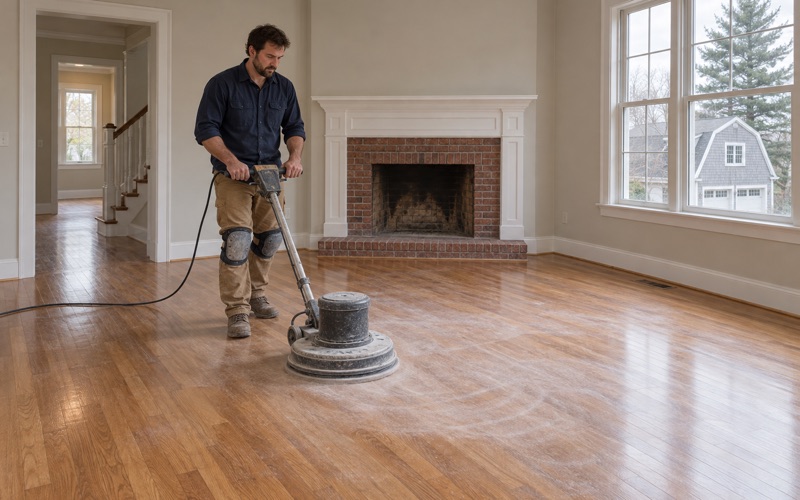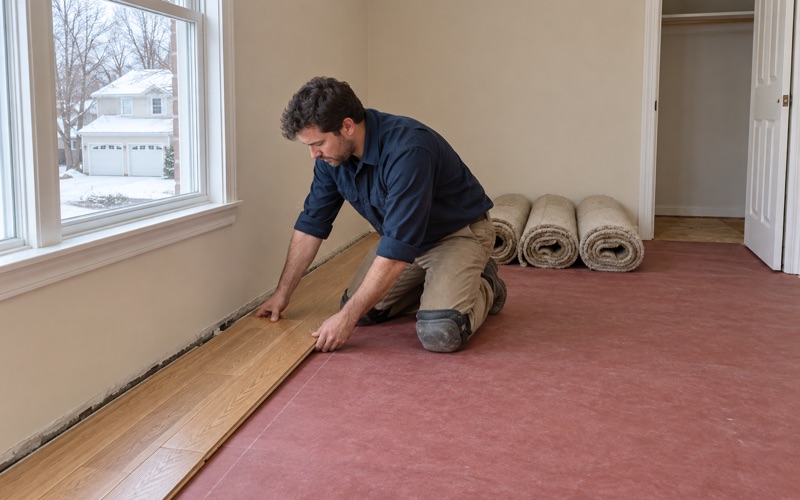
Framingham Wood Flooring has spent more than 20 years on wood-flooring in Northborough houses, and the calls we take from town tend to share one trait: the person on the phone owns the place and intends to keep it. That shapes the work. A worn hallway rarely stays a hallway question for long, because the owner is usually also looking at the living room, the stairs and the bedrooms upstairs.
We would rather plan those rooms together than patch them one at a time. Sanding, refinishing, board repair and new installation all come out better when the finish color, the sheen level and the direction of the boards are decided for the whole floor plan at once. It also means one dust-controlled visit instead of three separate disruptions spread over several years.
This page covers what we look at before quoting a Northborough job, where the houses in town tend to raise specific questions, and how an owner can sequence a larger project without living in a construction zone. None of it is a sales script. It is the order we actually work in, from the first moisture meter reading to the final coat.
Wood Floors in Northborough’s Detached Homes
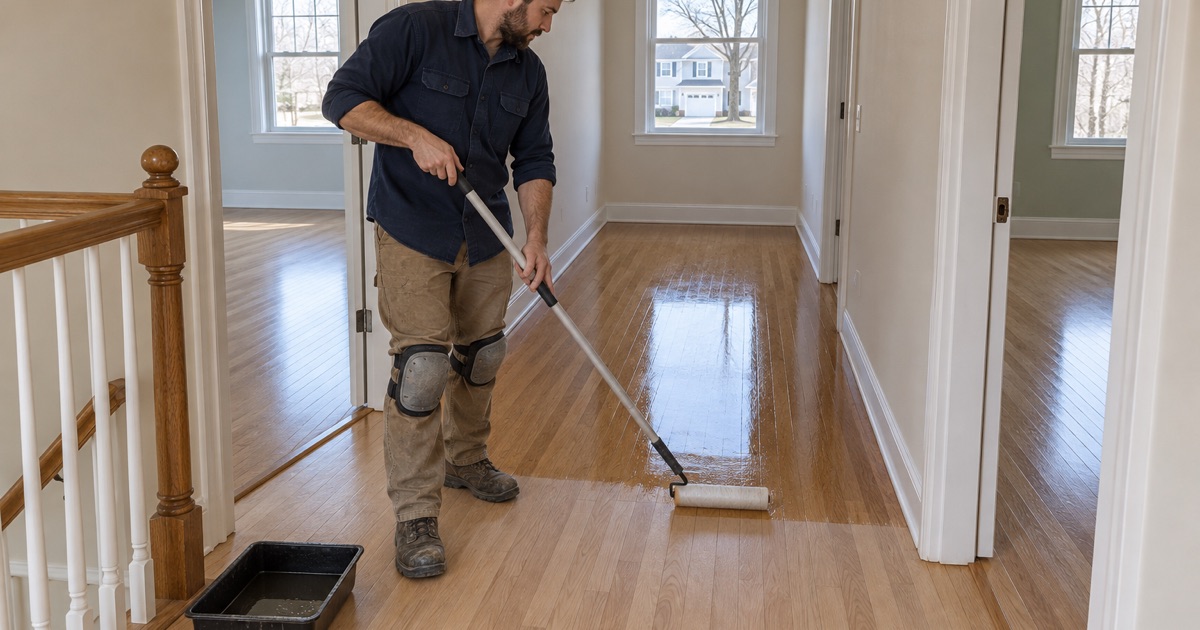
Northborough is very much a town of owners. Of 5,929 occupied homes, 4,929 are owner-occupied, which works out to 83.1 percent, and 4,214 of those owner households live in detached houses. Roughly three of every four housing units in town are one-unit detached. For floor work, that means most of our jobs here are whole houses under one owner’s decision, not single units inside a larger building.
That matters because a detached house carries its floors across many rooms that were meant to read as one. The front hall flows into the living room, the dining room opens off it, and the upstairs landing meets three or four bedrooms. When one room gets a new finish and the rest do not, the difference in color and sheen shows at every doorway and threshold.
Reading the Floor Before Anything Is Sanded
Our first visit is about the boards, not the price. We identify the species, whether it is red oak, white oak, maple or something else, and whether the floor is solid hardwood or an engineered product. On engineered floors we measure the engineered wear layer before promising any sanding, because a thin veneer over a plywood core may take one light pass or none at all.
We also take moisture meter readings in several rooms and note where the boards show cupping, crowning, board gapping or winter gaps. Those patterns tell us whether a problem is seasonal or whether water is coming from somewhere. Traffic lanes through the kitchen and down the hall show us where the finish has worn through, which decides whether a screen and recoat will do or a full sanding is needed.
When the Carpet Comes Up
Plenty of owners call us after lifting a corner of wall-to-wall carpet and finding hardwood underneath. Before any drum sander touches that floor, we pull the carpet pad, the carpet staples and the tack strip, then clean and fill the holes the tack strip left along the walls. Doing it in that order keeps staples from tearing sanding paper and keeps debris from being ground into bare wood.
Uncovered floors often show old water stains near exterior doors, faint pet stains and nail holes from earlier work. We tell the owner which marks will sand out and which need board replacement before the job starts, so the finished floor matches what was promised. Where we find powderpost beetle exit holes or carpenter ant damage, we recommend treatment before any new wood goes down.
Looking for wood-flooring closer to Waltham? See Waltham Wood-Flooring.
Refinishing Floors in Northborough’s 1980s Houses
The town’s housing stock tells a clear story about when most of it went up. Northborough had 3,122 residents in 1950 and 14,155 by 2010, and the houses built to hold that growth now make up the bulk of what we refinish. The 1980s were the single largest build decade, with 1,111 homes, and the years from 1980 through 1999 together account for 31.6 percent of all housing units.
Houses from those two decades are now roughly thirty to forty-five years old, an age when the finish in busy rooms has often worn down to bare wood. If a floor has been sanded before, we check the remaining thickness at a register or threshold. Our aim is to take the floor down evenly through a proper grit sequence, remove as little wood as possible, and leave enough for a refinish decades from now.
Not every floor from these decades needs a full sanding. If the finish is scratched but intact and the wood itself is not exposed, a screen and recoat with a buffer abrades the top coat and adds a fresh one without removing any wood. We test for old wax or polish first, since a new coat will not bond over it and would peel within months.
Taking Orange Oak to a Newer Tone
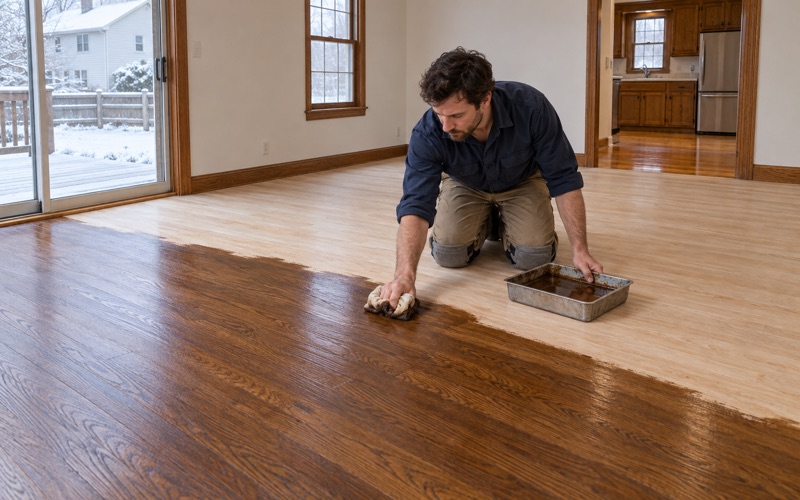
One of the most frequent requests we get is to move away from orange oak, the amber cast that oil-based finishes develop as they age. We sand to raw wood, then lay stain samples directly on the actual floor in the owner’s own light, including natural, neutral and darker options. Water popping before the stain opens the grain for a more even color. Nobody picks a tone from a brochure chip.
Lead Checks Before Sanding
About half of Northborough’s housing, 49.3 percent, was built before 1980, so the build year matters on a large share of jobs. Massachusetts runs its own lead-safe renovation rules for homes built before 1978, under the Massachusetts Lead Law and 454 CMR 22.00, alongside the federal TSCA Title VI program. We check the build year and any painted surfaces near the floor, such as baseboard, stair risers and trim, before sanding starts.
Finishes That Fit Massachusetts Limits
For the finish itself, we choose products that meet the Massachusetts VOC limits for wood coatings under 310 CMR 7.25, which are stricter than the federal ones. Owners living in the house during the work often lean toward waterborne polyurethane for its lower odor and faster recoat times, while others prefer oil-modified polyurethane or a hardwax oil for a warmer look. We compare sheen level and durability on a sample board.
Whole-House Floor Projects for Northborough Owners
Because most Northborough projects sit inside a single-family house with one owner making every decision, the natural unit of work is often the whole floor plan. Room-to-room continuity is the main reason. When the living room, dining room and hall are sanded and finished in one sequence, the stain color matches, the sheen is identical, and there are no visible lines where one day’s work met another’s.
Sequencing Rooms While You Live There
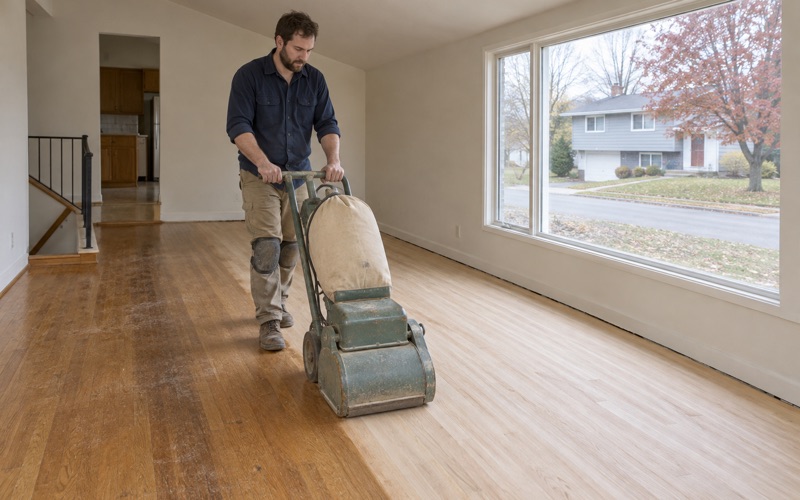
Few owners want to move out, so we plan the order around how the house is used. A common sequence is bedrooms and the upstairs hall first, then the stairs, then the main living level, keeping a path to the kitchen and a bathroom open as long as we can. Dustless sanding with a HEPA vacuum attached to the drum sander, edger and orbital sander keeps fine dust out of the rest of the house.
Stairs, Transitions and Trim
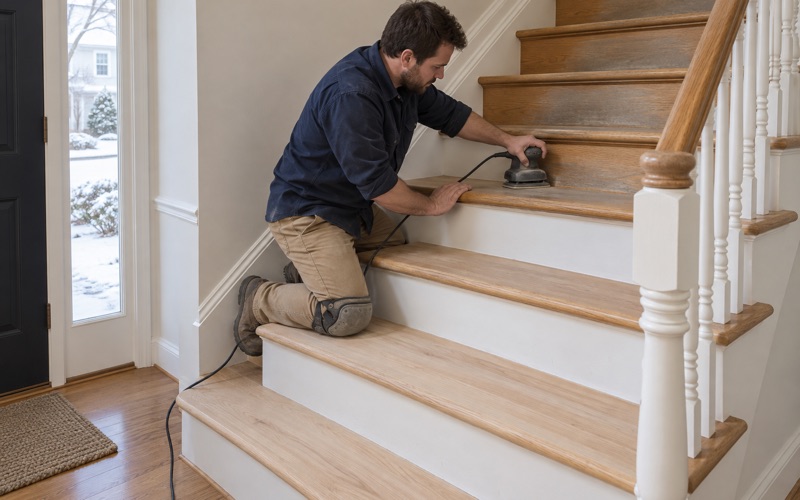
Stairs are quoted by the tread and riser, not folded into a square-foot price, because each stair tread, riser and stair nosing is sanded and finished largely by hand. Where the wood floor meets tile, carpet or vinyl, we fit a reducer or threshold so the change in height is clean. Quarter round and baseboard are pulled or protected as the job requires, and replaced where they are damaged.
Repairs Folded Into the Same Visit
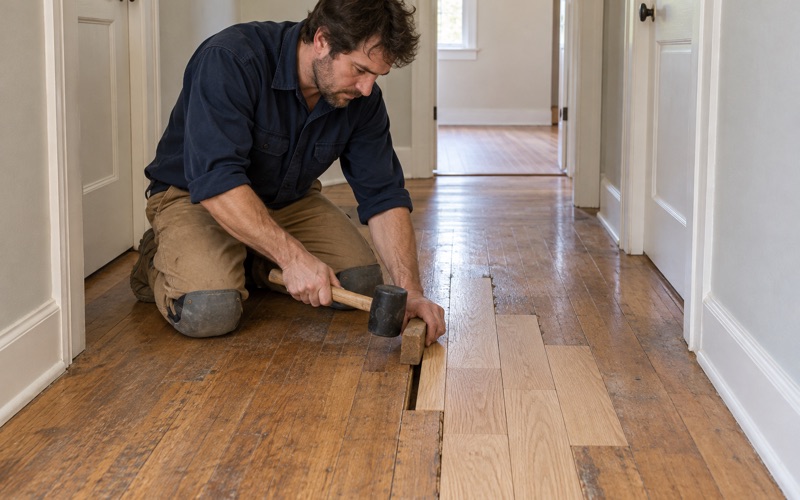
A whole-house refinish is the right time to fix the boards that have been bothering you. Pet urine stains and deep water stains that have gone black usually need board replacement rather than sanding, and we do a weave-in repair that staggers the joints so the new boards blend with the old. Once the floor is finished as one surface, a repaired patch should be hard to find.
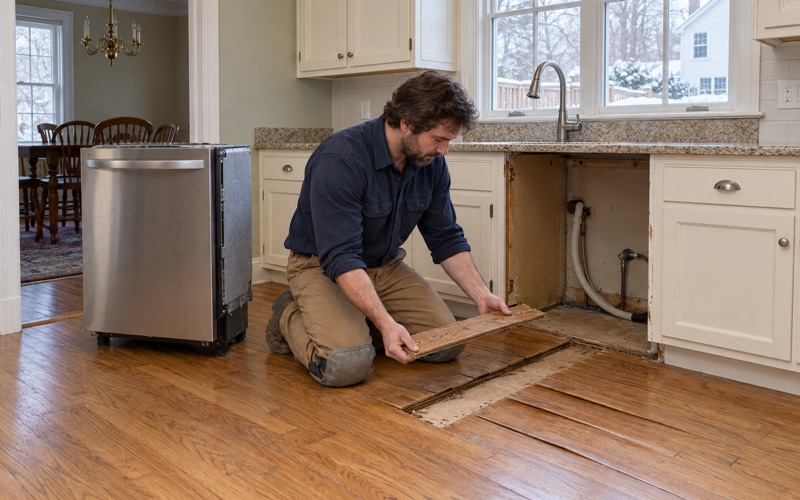
If the damage came from a leak, we trace it first. A dishwasher supply, an ice maker line or a hot-water baseboard pipe can keep wetting the subfloor for weeks. We dry the area and confirm it with a meter before replacing anything, and when insurance is involved we document the damage room by room for the adjuster.
Newer Attached Homes and Planning Floor Work in Northborough
Not every owner in town lives in a detached house. Northborough’s 2020 Master Plan notes that growth in rental developments and in single-family attached housing is largely responsible for housing development since 2000. About 19.1 percent of the town’s housing dates from 2000 or later, and 433 owner households live in one-unit attached homes. Those newer homes raise different questions from a house built in the 1980s.
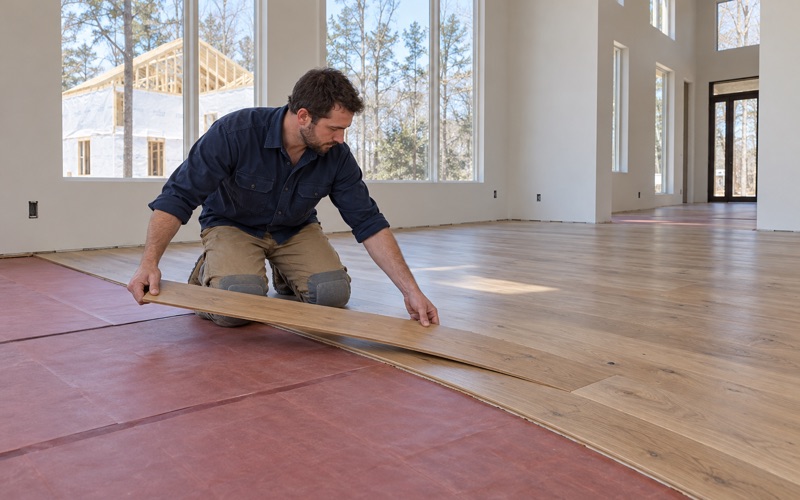
In a newer attached home, we check first whether the floor is prefinished or engineered, since a factory finish and a thin wear layer limit what sanding can do. If the wear layer will not take a sanding, we discuss a screen and recoat, a board replacement or new flooring. Condominium owners under M.G.L. c.183A should also check the association’s rules before scheduling work.
Moisture, Seasons and Basements
Northborough sits in the National Weather Service forecast zone MAZ012, Southern Worcester, and its floors go through the familiar central Massachusetts swing between dry heated air in winter and humid summers. That shows up as winter gaps between boards that close again by August. We run a relative humidity test alongside moisture meter readings, and new wood gets proper acclimation and an expansion gap at the walls.
Basements get a separate conversation. Before any wood is recommended below grade, including a walkout, we measure the space against the NWFA Installation Guidelines for below-grade floors. Where heat runs through a concrete floor, we recommend an engineered or floating floor chosen for radiant heat rather than solid oak nailed where it cannot hold. A vapor retarder and, where appropriate, a sleeper system are part of that plan.
Getting a Project on the Calendar
A whole-house refinish in an occupied home usually takes several days from first sanding to final coat, plus cure time before furniture and rugs go back. We give owners a room-by-room schedule, say when each space can be walked on in socks, and flag which rooms need to be empty. If you are weighing a single room now against the whole house later, we will price both so the tradeoff is clear.
Northborough was set off from Westborough as its north borough and became a town in 1775, and its houses now span nearly every decade since, from 689 built in 1939 or earlier to 587 added between 2010 and 2019. Whichever decade yours comes from, we start with the same walk-through, the same meter readings and the same straight answer about what the floor can take.
- 20+ Years on Wood Floors
- Free Written Estimates
- Lead-Safe Work Practices