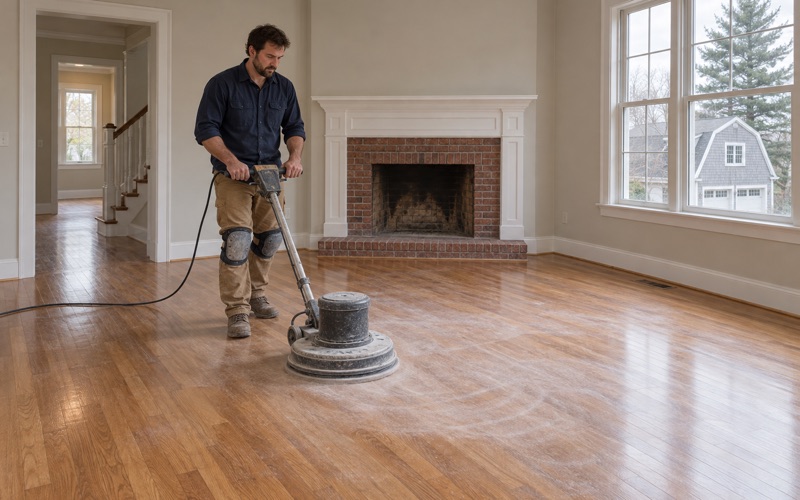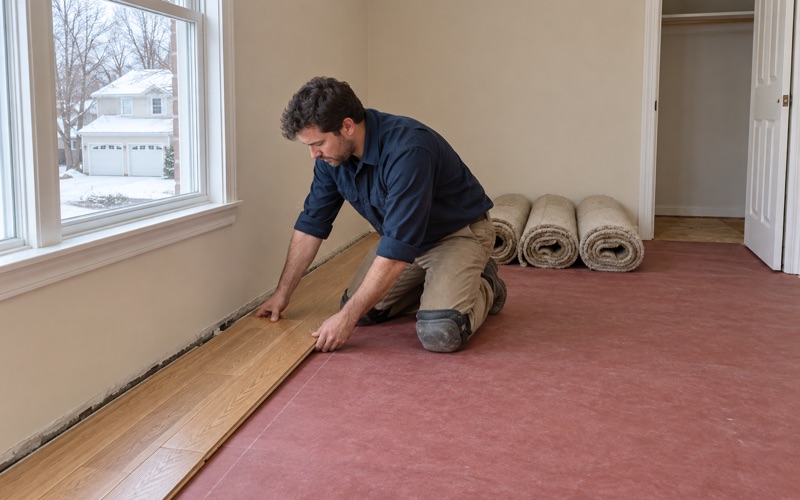
Framingham Wood Flooring brings more than 20 years of sanding, board repair and finishing to wood-flooring in Dover, and most of what we do here is about saving a floor rather than tearing it out. A worn, gray or gapped floor is rarely finished. Usually it needs a careful read, some targeted repair and a finish chosen for how the room is actually used.
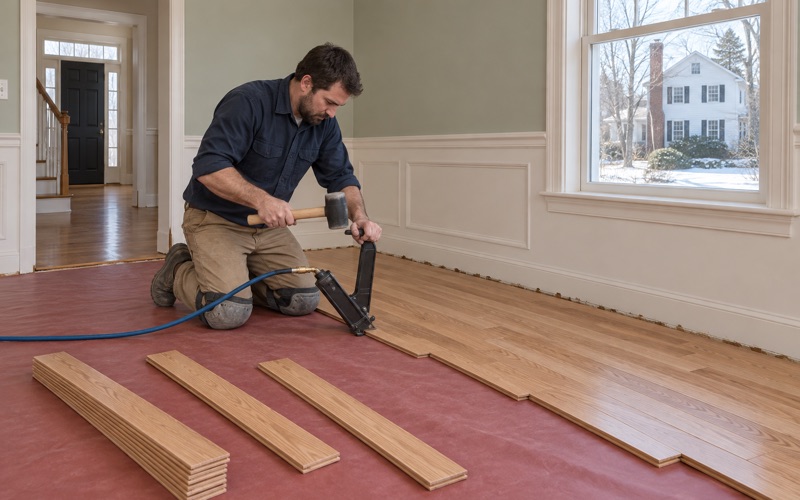
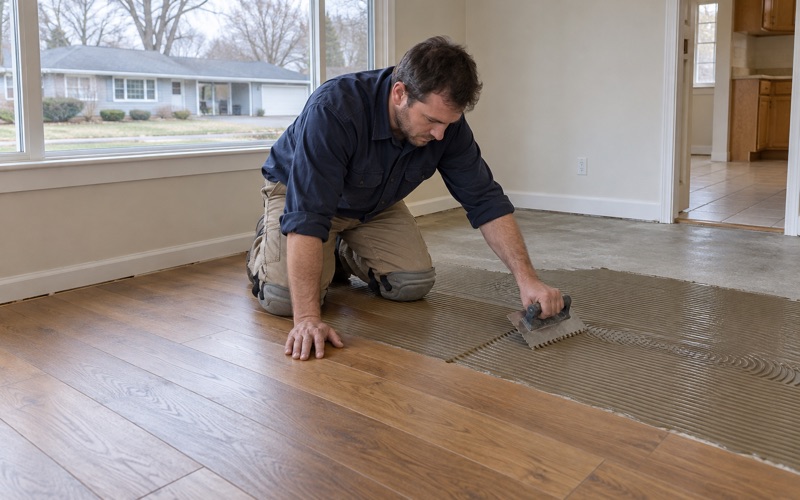
Our work covers full sand-and-refinish jobs, screen and recoat maintenance, board replacement, stair treads and risers, and floors that have taken on water. We also install new solid hardwood and engineered flooring when a room calls for it. The order never changes, though: we look at what is already there before we suggest replacing any of it.
That approach matters most in Dover’s older houses. A small share of the town’s homes date from before the Second World War, and the town has a bylaw aimed at keeping its early buildings standing. When the house is meant to last, the floor inside it deserves the same patience.
Floors in Dover Houses Built Before 1930
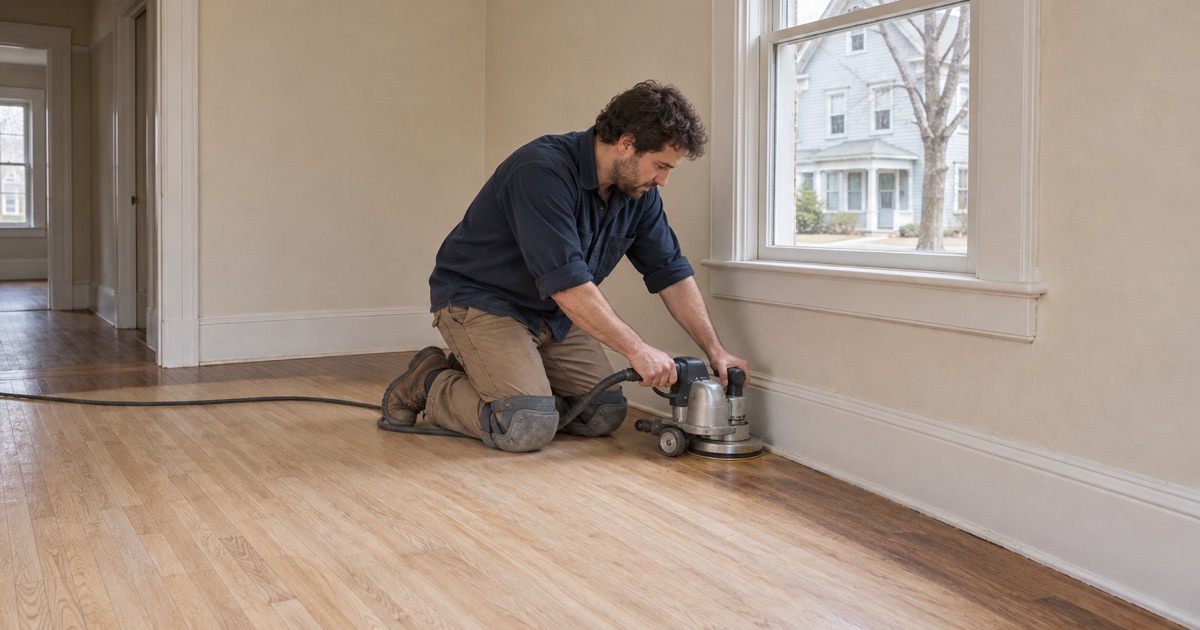
An early floor tells you its history if you know where to look. Old patches, changes in board width at a doorway, face nails near a wall, and a finish built up over decades all say something about what the floor has been through. We read those signs first, because they decide how much sanding a floor can still take and where repair should come before refinishing.
How Much of Dover Is Prewar
The Census Bureau’s American Community Survey (2024 five-year estimates) counts 1,998 housing units in Dover, and 204 of them, or 10.2 percent, were built in 1939 or earlier. The survey’s oldest bucket ends at 1939, so it cannot say how many houses predate 1930. What it does show is that the prewar layer is a small tenth of the town, surrounded by a much larger stock of later houses.
That small layer is where our slowest and most careful work tends to happen. A floor that has been sanded several times over the better part of a century has less wood left above the tongue than a newer one. Before we quote a full sanding, we pull a floor vent or a threshold where we can and look at how much wear layer remains.
What Older Floors Tend to Show
Early floors commonly show board gapping that opens in winter and closes in summer, cupping near old radiator or plumbing runs, and traffic lanes worn through the finish in hallways. Some boards have been replaced over the years with a different species or width. None of that is unusual, and most of it can be handled without pulling the whole floor.
We also check for insect damage in any old wood we plan to keep. Powderpost beetle leaves small round exit holes and fine powder, while carpenter ants follow moisture and hollow out softened boards. Either one changes the plan, so we find it before sanding rather than halfway through a room.
A Town With a Long Record
Dover was settled in 1640, became the Springfield Parish of Dedham in 1748, a district in 1784 and a town in 1836. The Benjamin Caryl House dates to about 1777, a reminder of how far back the town’s building record reaches. Houses from those eras are exactly the kind of structures the town has chosen to review before they can be torn down.
Looking for wood-flooring closer to Westborough? See Wood-Flooring Services in Westborough.
What Dover’s Demolition Bylaw Covers and What It Does Not
Dover’s Demolition Delay By-law was passed by Town Meeting in May 1996, and the Dover Historical Commission administers it. Its stated purpose is protecting and conserving the architectural, historical and aesthetic resources of the Town of Dover. For a homeowner with an early house, it is worth understanding before any major project, even though flooring is not what it is written about.
Which Buildings It Reaches
According to the town’s Demolition Review Bylaw FAQ, the bylaw applies to structures constructed during or before 1929 that have a roof, a permanent foundation and a shelter function. When an application to demolish one reaches the Building Inspector, it is forwarded to the Commission within 7 days. The Commission then has 21 days to decide whether the building is significant, looking at association with historic persons or events, architectural importance, or listing on the National or State Register.
The One-Year Delay
If the Commission finds a building significant and preferably preserved, no demolition permit can be issued until one year after the date of that determination. After the delay, the owner allows 30 days for archival documentation of the building. The practical effect is time: a year in which an owner, the Commission and anyone interested can look for a way to keep the house instead of losing it.
What It Leaves Alone
The bylaw concerns demolition. Nothing in the town’s FAQ addresses interior work, and we do not read it as a rule about floors, finishes or sanding. What paperwork a particular floor project needs is a question for the Town of Dover Building Department, and we point owners there rather than answering on the town’s behalf. Our point is simpler: in a town that asks owners to keep early houses, keeping the floor inside them is part of the same job.
Keeping an Early House’s Floors
Restoring an old floor is mostly a series of small decisions made in the right order. We test, clean, repair, sand and finish, and each step can change the one after it. Rushing any of them is how a floor that could have lasted another few decades ends up being replaced.
Reading the Floor Before Sanding
We start with the house’s build year and any painted surfaces, because Massachusetts runs its own lead-safe renovation rules for homes built before 1978. Painted baseboards, stair risers and old floor paint near the edges are the usual places to look. That check comes before a sander ever touches the room, not after the dust is already in the air.
Next comes a moisture meter reading across the room, especially near exterior walls and anywhere pipes run below. If carpet is coming up, we strip the carpet pad, carpet staples and tack strip and fill the tack-strip holes before sanding starts. Leaving that cleanup for later means sanding over metal and gouging boards that were otherwise sound.
Repair Before Replacement
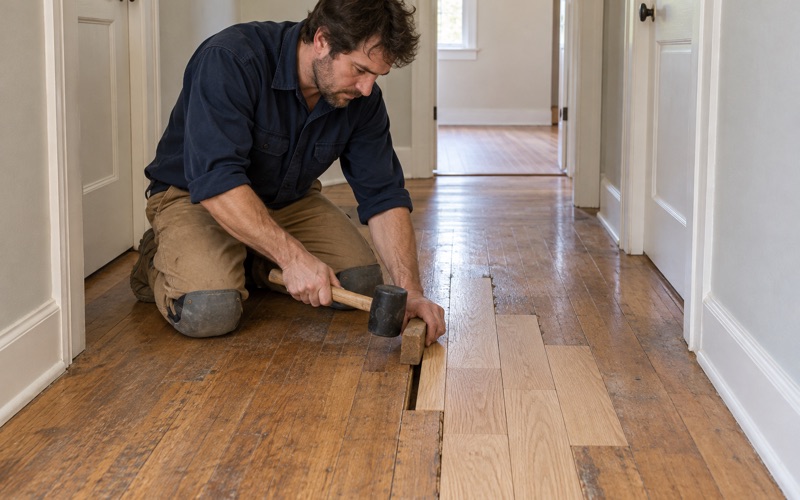
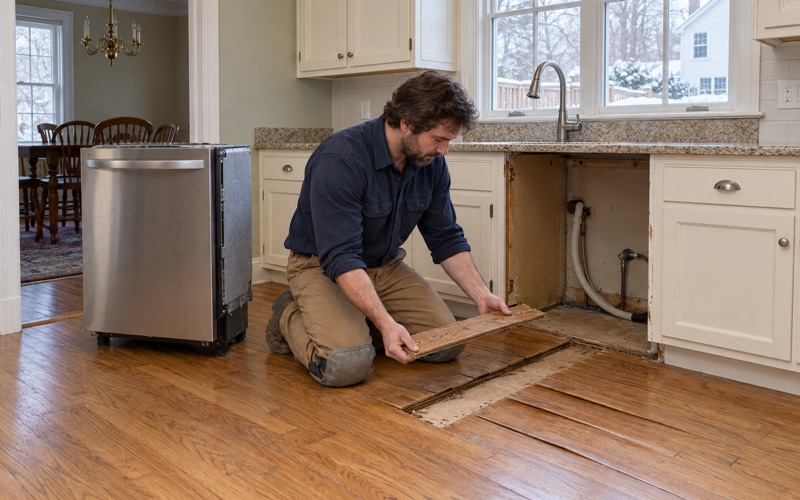
Where boards are split, stained through or damaged by insects, we cut them out and weave in replacements so the new boards stagger into the old ones. A weave-in repair done well disappears once the floor is sanded and finished together. We match species, grade and width to whatever is actually in the room, whether that turns out to be red oak, white oak, maple or eastern white pine.
Pet urine stains and deep water stains are a judgment call. Some come out with sanding, some lighten but stay visible, and some go through the full thickness of the board. We tell you which is which after testing, and board replacement is the answer only when a stain will not sand out.
Sanding and Finishing an Old Floor
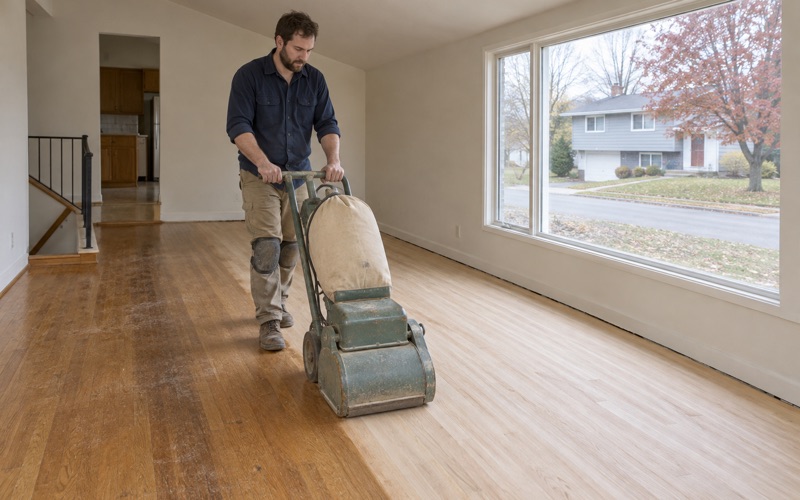
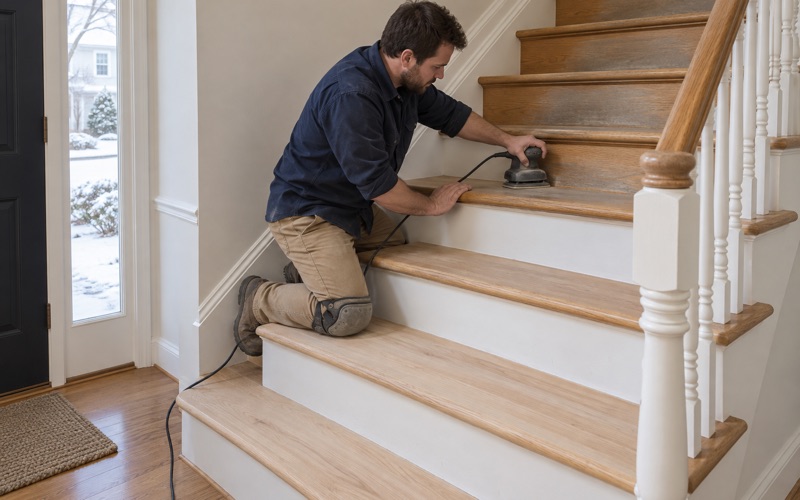
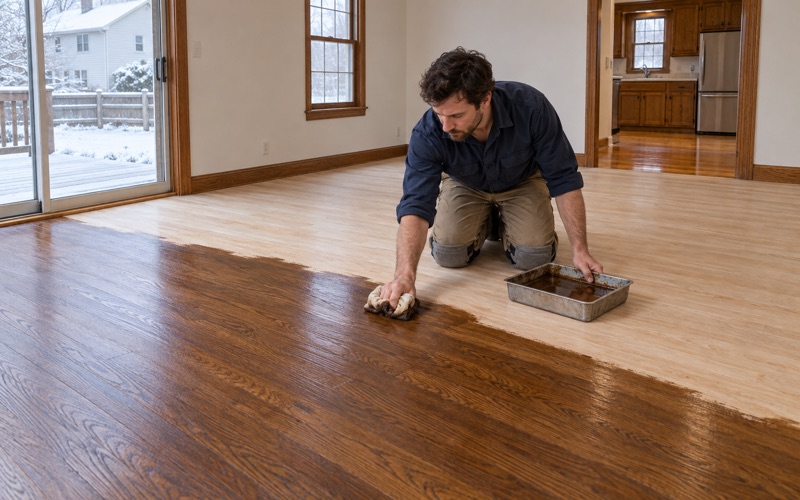
Old floors are rarely flat, so we adjust the grit sequence and use the drum sander with a lighter hand, finishing edges and uneven areas with an orbital sander. Dustless sanding with HEPA vacuum collection keeps the work contained in a lived-in house. If you want stain, we water pop the floor for even color and lay stain samples on the actual floor before you choose.
For finishes, waterborne polyurethane stays clear and dries fast, oil-modified polyurethane adds a warmer tone, and hardwax oil suits owners who prefer spot repair to periodic recoats. Every finish we use is chosen to fit the Massachusetts VOC limits for wood coatings under 310 CMR 7.25, which are stricter than the federal ones. If the existing finish is worn but the wood underneath is sound, a screen and recoat saves a full sanding for later.
Planning a Floor Project in Dover
Dover is a town of owners. The same survey shows 97.9 percent of occupied homes are owner-occupied, and 95.8 percent of housing units are one-unit detached houses. In practice that means most people we work with here are living in the house while we are in it, so the schedule and the dust control matter as much as the finish.
Working Around a Lived-In House
We plan rooms in a sequence that keeps a kitchen, a bathroom and a path through the house open whenever the layout allows. Furniture moves, drying times and foot-traffic windows are agreed before we start. Waterborne finishes usually let a household get back onto a floor sooner, which is often the deciding factor for families who cannot move out.
Stairs are quoted by the tread and riser, not folded into a square-foot price. In an older house, stair nosing and treads often carry the heaviest wear, and pricing them separately shows you exactly what the stair work costs before you decide.
Seasons, Humidity and Gaps
Dover sits in the National Weather Service’s Western Norfolk forecast zone, MAZ013, and like the rest of eastern Massachusetts it moves between humid summers and dry, heated winters. Wood follows that swing. Winter gaps that open between boards in January usually close again by summer, and we would rather explain that than fill gaps that will crush the filler when the wood swells.
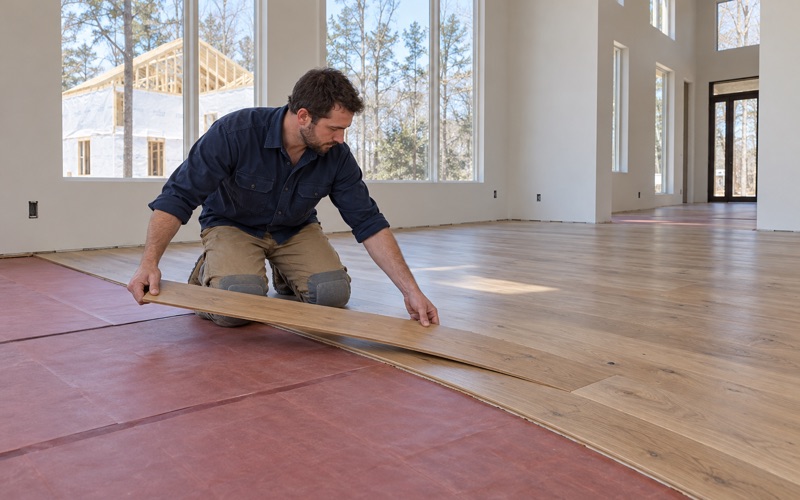
New boards for a repair or an addition get time to acclimate in the house before they go down, and we read them with a moisture meter against the existing floor. That step keeps replacement boards from crowning or shrinking away from their neighbors a season later.
When Water Is Involved
A leak from a dishwasher, an ice maker line or a hot-water baseboard pipe can cup a floor quickly. We trace the source, dry the boards and read them with a meter before anything is replaced, because many cupped floors flatten once they are properly dry. If an insurance claim is involved, we document the damage room by room for the adjuster.
Whatever the project, the first visit is about looking. We measure, test and explain what the floor can take, and then we give you a plan that keeps as much of it as the wood allows.
- 20+ Years on Wood Floors
- Free Written Estimates
- Lead-Safe Work Practices