Framingham Wood Flooring has handled wood flooring in Cochituate for more than 20 years, and most of that work lands in houses where every room sits close to the next and the floors show it. We refinish worn oak, repair boards that have cupped or gapped, and install new solid and engineered floors, working at a scale that suits compact homes rather than sprawling ones.
A floor job in a smaller house moves differently. The dust plan matters more when the kitchen, stairs and bedrooms sit a few steps apart, and a family often has to live around the work instead of retreating to an unused wing. We plan the sequence room by room so the house stays usable, and we tell you up front which days each space will be off limits.
Owners and landlords call us for the same core services: sanding and refinishing, screen and recoat on floors that only need a fresh topcoat, board replacement after a leak, stair treads and risers, and new floors where carpet or tired laminate comes out. Every estimate starts with the floor itself, not a square-foot guess.
Floors in Cochituate’s Small-Lot Village Houses
Cochituate is a village and census-designated place inside the Town of Wayland, not a town of its own, so it shares Wayland’s boards, bylaws and building department. What sets it apart is density. Wayland’s master plan describes Cochituate as an area of small lots, with homes closer together than in northern Wayland, and that pattern shapes what we find on the floors.
Older Houses, Older Wood
The age of the housing is the other half of the picture. Estimates derived from the Census Bureau’s 2024 five-year American Community Survey place 59.6 percent of Wayland’s pre-1960 housing units in Cochituate, even though the village holds only about half of the town’s homes. So a large share of the floors we open up here are original red oak or white oak strip, often under carpet and sometimes under a layer or two of later flooring.
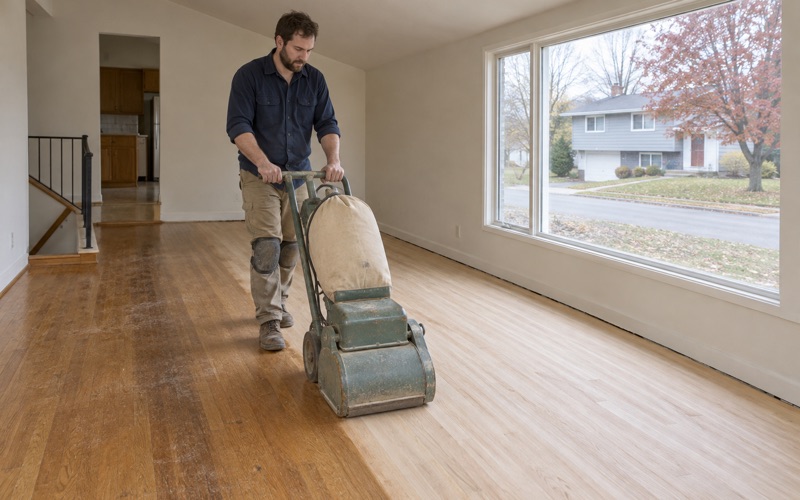
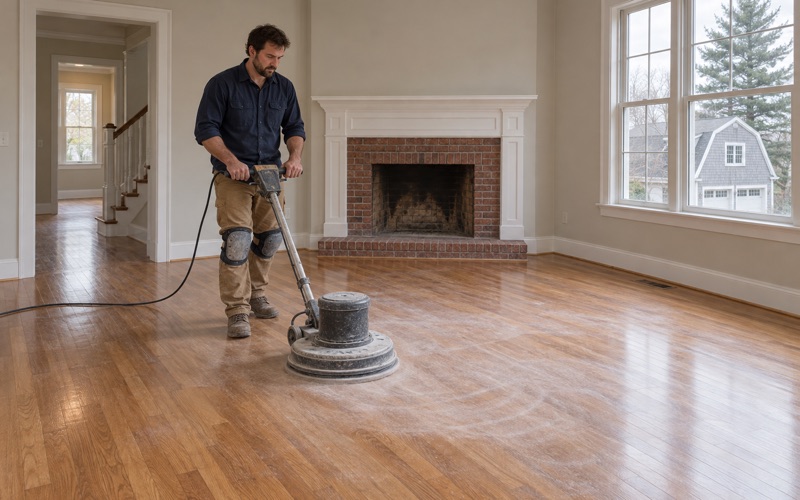
Old strip oak is usually worth saving. It is solid hardwood with enough wood above the tongue and groove for another sanding in most cases, and once the carpet pad, staples and tack strip are pulled and the holes filled, it can look like a different floor. We clear all of that before the drum sander touches the boards, because a staple left behind tears the paper and gouges the surface.
Tight Rooms, Careful Sanding
Small rooms and short hallways leave little space to swing a big machine, so edge work and the orbital sander do more of the job here than in an open-plan house. We run a full grit sequence, vacuum between passes with a HEPA vacuum, and keep dust contained to the rooms being worked. In a compact house, that containment is the difference between a clean refinish and dust in every closet.
Traffic lanes also concentrate in smaller homes. When the kitchen, front door and stairs all feed through the same few feet of hallway, the finish there wears through years before the bedrooms do. Sometimes the right answer is a full sand; other times a screen and recoat across the whole floor buys years for far less.
Checking the Build Year First
Because so much of Cochituate was built before 1978, we confirm the house’s age and look for painted surfaces, such as painted stair risers, baseboard or old floor paint along the edges, before any sanding starts. Massachusetts runs its own lead-safe renovation rules for homes built before 1978, and that check decides how the job is set up. It costs little to do first and a great deal to skip.
Looking for wood-flooring closer to Marlborough? See Wood-Flooring Services in Marlborough.
Rental Floors and Houses Split Into Units
Cochituate is mostly owner-occupied: 85.6 percent of its occupied homes are lived in by their owners, according to the Census Bureau’s tenure table. Yet the rentals Wayland does have lean toward the village. By estimates derived from the 2024 five-year survey, Cochituate holds 2,572 of Wayland’s 5,245 housing units but 350 of its 627 renter households, so more than half of the town’s renter households live here. The margins on those village figures are wide, but the pattern is clear enough to plan around.
Turning Floors Between Tenants
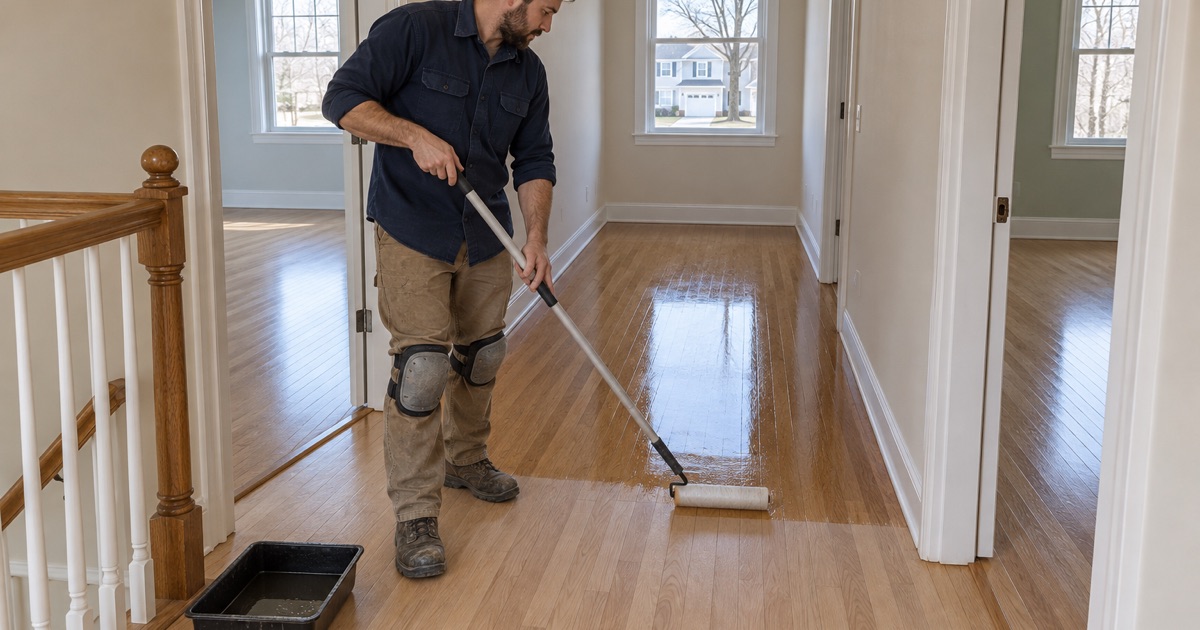
A rental floor has a deadline an owner’s floor does not: the gap between one lease ending and the next beginning. We schedule landlords’ jobs to fit that window, choosing a screen and recoat when the finish is only scuffed and a full sand when pet urine stains, water stains or deep scratches have reached bare wood. Waterborne polyurethane dries quickly, which helps a unit get back on the market sooner after the last coat.
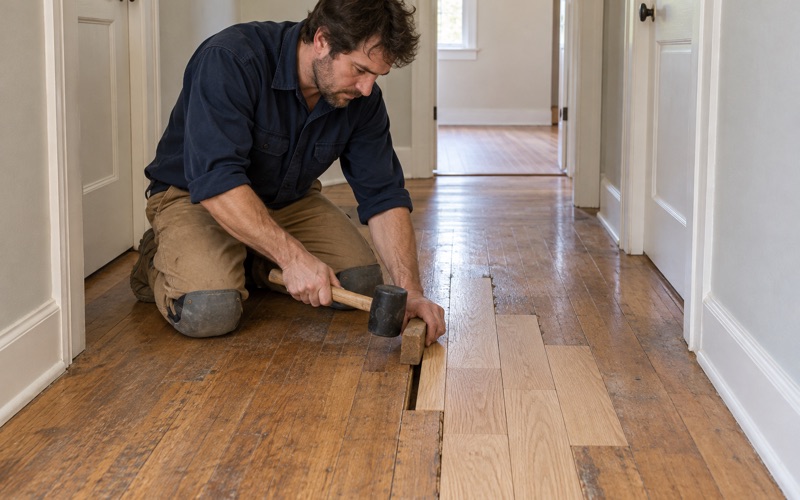
Tenant wear follows familiar patterns: furniture drag marks in living rooms, gray water stains near the kitchen sink, and dark spots where a pet claimed a corner. Some of those sand out. Others sit deep in the board, and a weave-in repair with matching red oak or white oak is the cleaner fix.
Older Houses Divided Into More Than One Unit
Wayland’s 2004 master plan notes that the town’s multi-family housing includes scattered larger, older single-family houses renovated to hold multiple units. In Cochituate the census counts 156 homes in two-unit buildings, and 63 renter households live in that kind of building. Those conversions bring floor problems of their own.
A house split into two apartments often has original oak in one unit and newer flooring beside it in the other, with reducers and thresholds bridging the height change at old doorways. Sound between stacked units matters, and underlayment choice can help, though we will not promise a sound-rating number we have not tested. Where a condominium association is involved, we follow the association’s rules on flooring changes before any board goes down.
Leaks in Shared Plumbing
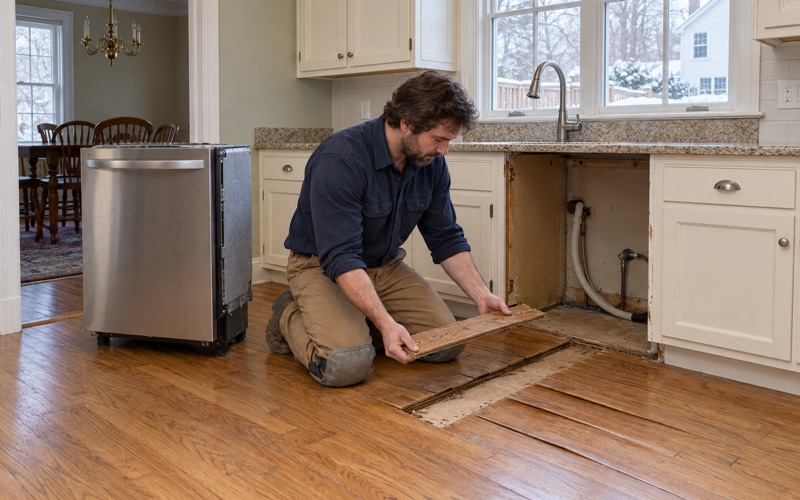
When one plumbing line serves two units, a dishwasher leak or failed ice maker line upstairs can show up as cupping or buckling below. We trace the source, dry the boards, and read them with a moisture meter before deciding what needs replacing, and we document the damage room by room when an insurance adjuster will review the claim.
Cochituate Village and Commonwealth Road
Cochituate Village, the business area along Commonwealth Road, is the part of the village most people know. Wayland’s master plan names it as a business area and recommends an Economic Development Commission to help revitalize both Wayland Center and Cochituate Village. Around it stand some of the older houses in the village, including the Damon-Griffin House at 92 Commonwealth Road, completed in 1869 in the Second Empire style.
Nineteenth-Century and Early Floors
Houses from that era can hold wide boards of eastern white pine, patched sections where a wall once stood, and several generations of finish layered one over another. Pine is soft, with a low Janka hardness, so we sand it gently and often suggest a hardwax oil or a satin sheen level that forgives the dents a softwood floor collects.
When boards come up in an old house, we also look for signs of powderpost beetle or carpenter ants in the subfloor and joists, since damage from either turns a patch into a larger repair.
Newer Homes and Mixed Floors
Not every house in the village is old. The census counts 144 Cochituate homes built between 2010 and 2019 and 121 built between 2000 and 2009, and newer homes often carry prefinished or engineered floors. Before we promise to sand an engineered floor, we measure its wear layer, because a thin one may take only a light screen or none at all.
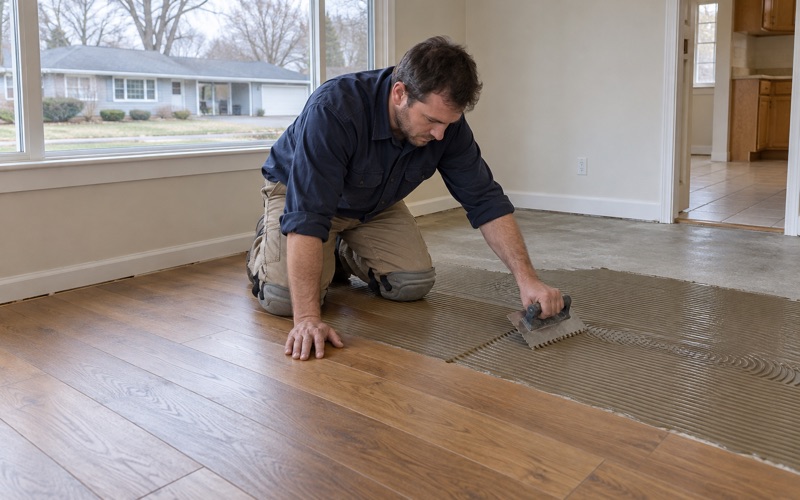
Where a house has radiant heat or a concrete slab, we choose an engineered or floating floor suited to that heat rather than nailing solid oak where it cannot hold.
Orange Oak and Tone Changes
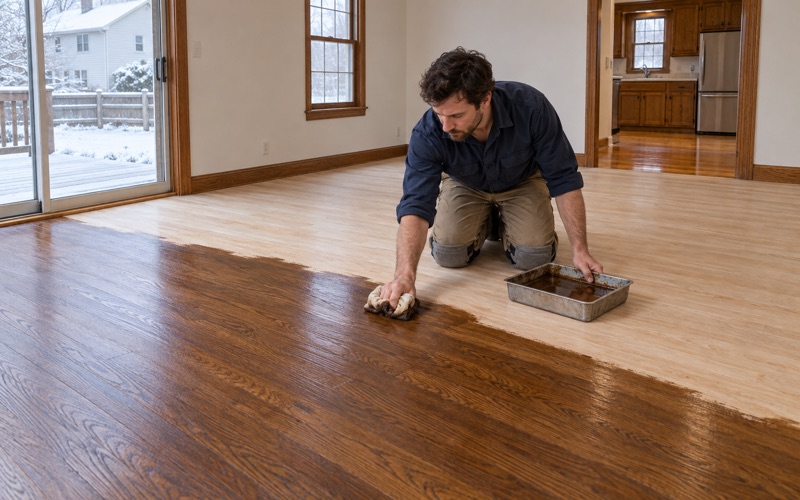
Many village floors were finished decades ago with oil-modified polyurethane that has since yellowed into the orange oak look owners want gone. We lay stain samples on the actual floor, after sanding and water popping where a darker tone needs even absorption, so you choose from real color on your own wood rather than a showroom chip.
A natural, lighter look usually comes from a clear waterborne finish over freshly sanded white oak; red oak keeps some warmth whatever we do. We show both before you commit, and we say plainly when a species limits the result.
Planning a Floor Project in Cochituate
Every permit, bylaw and board that touches a Cochituate house belongs to Wayland. The Town of Wayland Building Department is the office for any permit question about your specific job, and we can talk through the scope with you first so you know exactly what to describe when you call.
Timing and the Seasons
Wood moves with humidity. Cochituate falls in the National Weather Service’s Central Middlesex County forecast zone, MAZ005, and like the rest of eastern Massachusetts it swings between humid summers and dry, heated winters. Winter gaps that close again by summer are normal movement; gaps that stay open, or crowning after a wet stretch, point to something worth investigating.
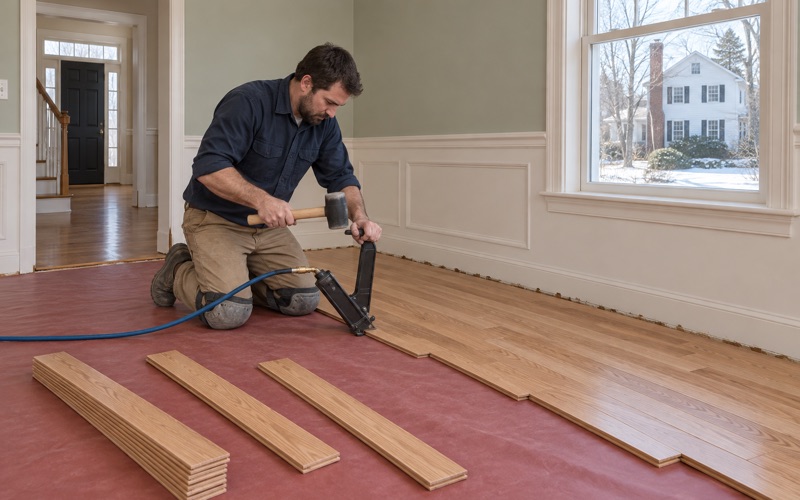
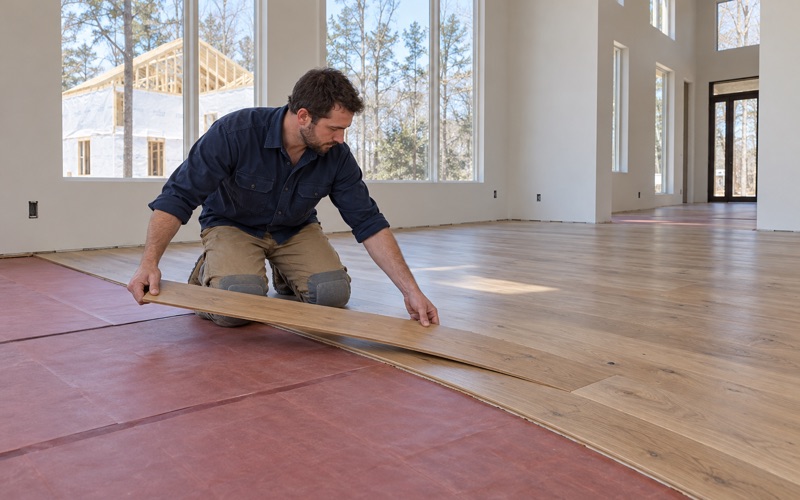
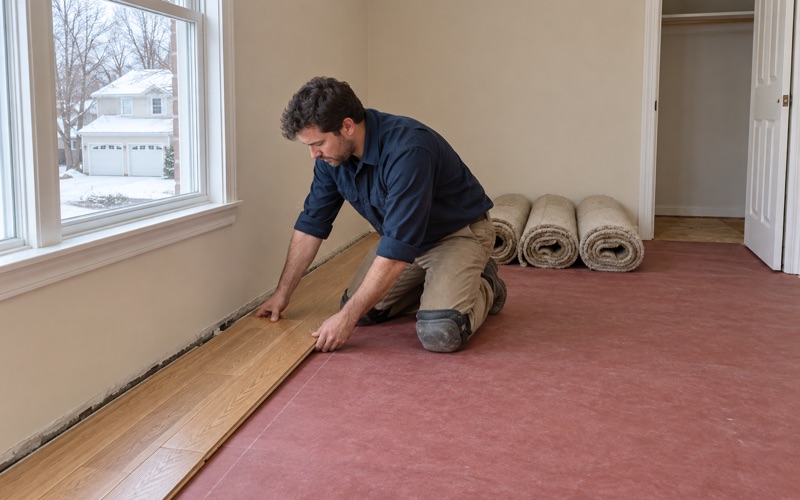
For new installations we check subfloor moisture, let the boards acclimate, and leave the right expansion gap at the walls under the baseboard and quarter round. In a basement, we measure against the NWFA below-grade rule, walkouts included, before recommending any wood at all.
Finishes and Indoor Air
Massachusetts sets VOC limits for wood coatings that are stricter than the federal ones, and every finish we use is chosen to fit them. In an occupied house, a waterborne polyurethane or hardwax oil keeps odor lower and gets you back into rooms sooner than older solvent-heavy products. For a rental between tenants, we weigh durability against turnaround time.
Living in the House During the Work
Many owners stay home while we work, so we split larger jobs into phases. Bedrooms can be done while the family uses the kitchen, then the kitchen and hall while the bedrooms cure. We tell you when furniture can return and when rugs can go back down, since a fresh finish needs time before it takes weight or a covering.
Stairs and What the Estimate Covers
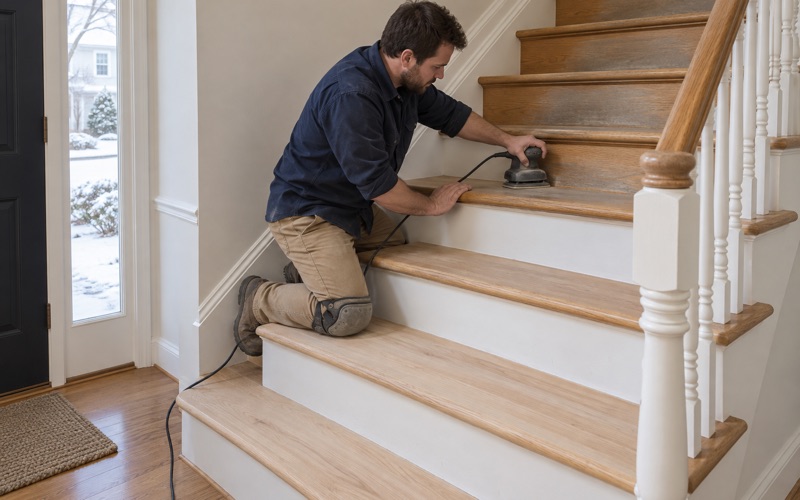
Stairs are quoted by the tread and riser, with nosing detail noted, never folded into a square-foot number. In a compact village house the staircase is often the most-used surface in the home, so it is priced as its own work. The estimate also spells out furniture moving, carpet removal, repairs found under the carpet, and how many coats go down.
What to Have Ready
Before the visit, it helps to know roughly when the house was built, whether any floor has had a leak, and whether the home is a single-family house, a unit in a converted house or a rental. With that, we can tell you on the first walk-through whether the floor needs a screen and recoat, a full refinish, repairs or replacement, and how long each room will be out of use.
- 20+ Years on Wood Floors
- Free Written Estimates
- Lead-Safe Work Practices