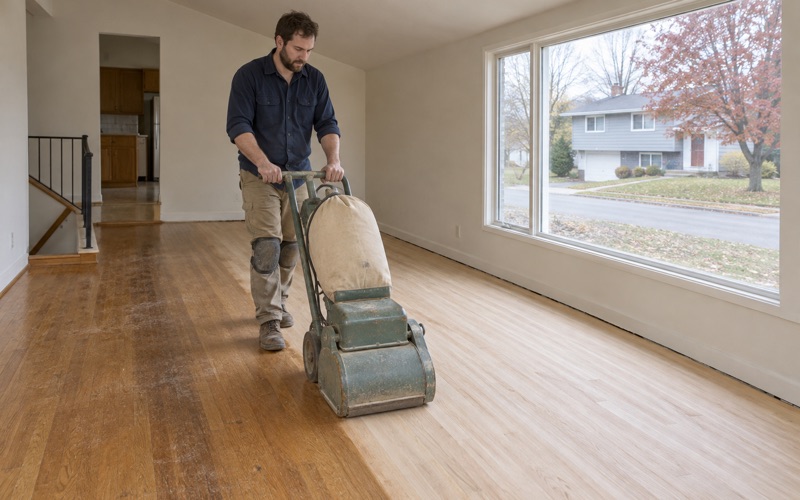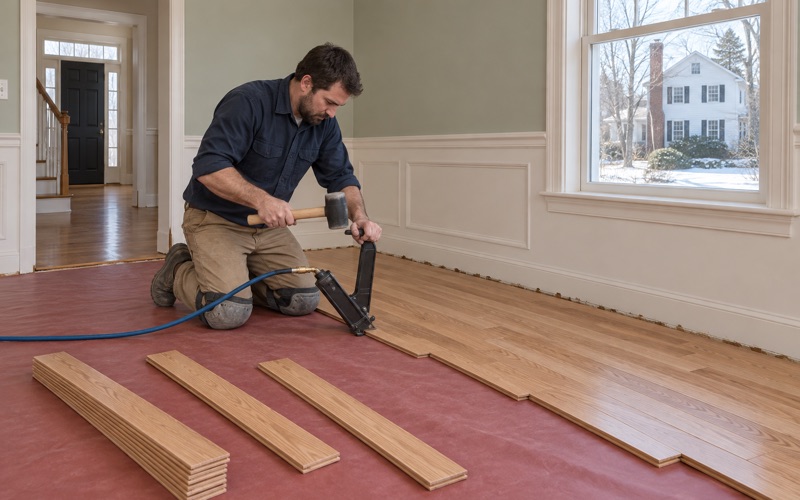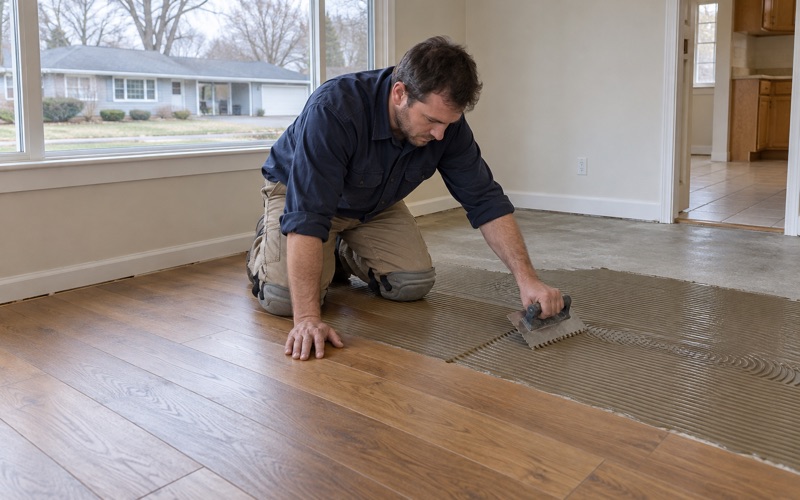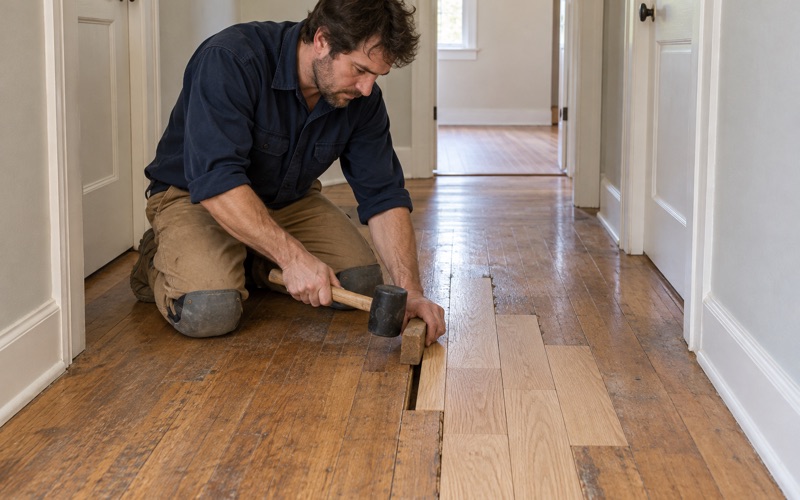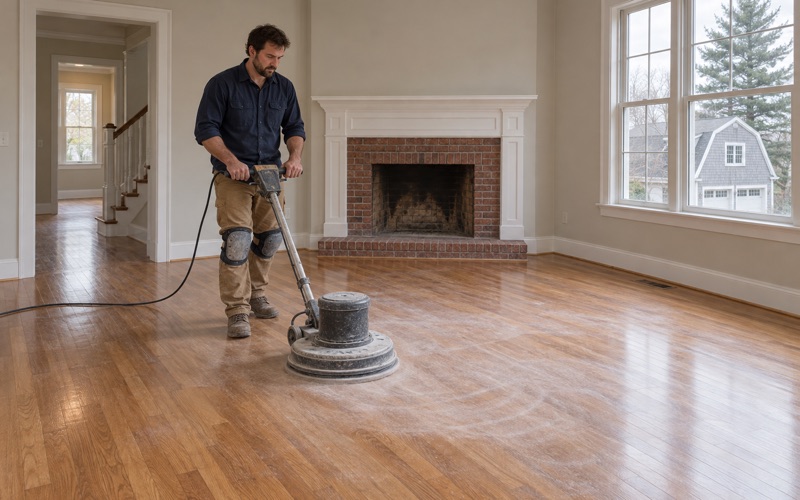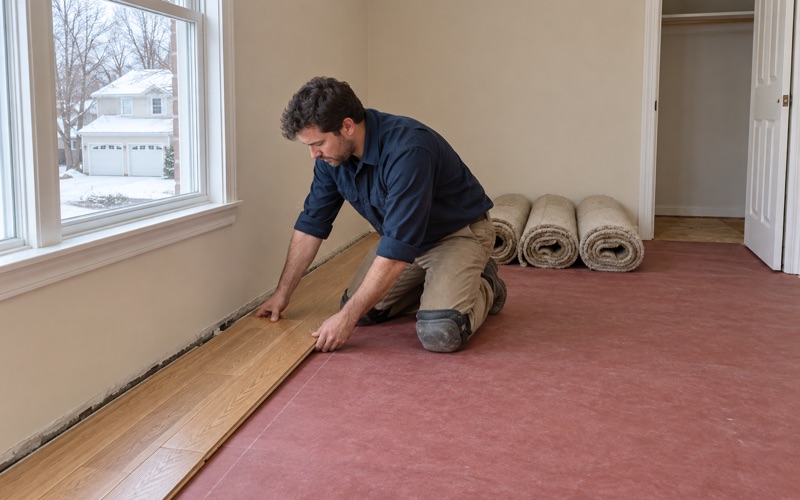
Framingham Wood Flooring has spent more than 20 years on wood flooring in Clinton, MA and the towns around our Framingham base, sanding, refinishing, repairing and installing floors for owners and landlords. Most of the Clinton calls we take involve older floors that have been sanded before, carry decades of patches, or need to look right before the next lease starts.
That shapes how we quote. We walk every room, read the boards with a moisture meter, check how much wood is left above the tongue and groove, and look at the painted trim beside the floor before anything else. A price built from the actual floor holds up far better than one built from a square-foot guess over the phone.
Some jobs are a quick screen and recoat to freshen worn traffic lanes. Others need a full sanding with board replacement, a weave-in repair where a wall came out, or new stair treads. We tell you which one your floor needs, and why, before any equipment comes through the door.
Wood Floors in Clinton’s Pre-1940 Homes
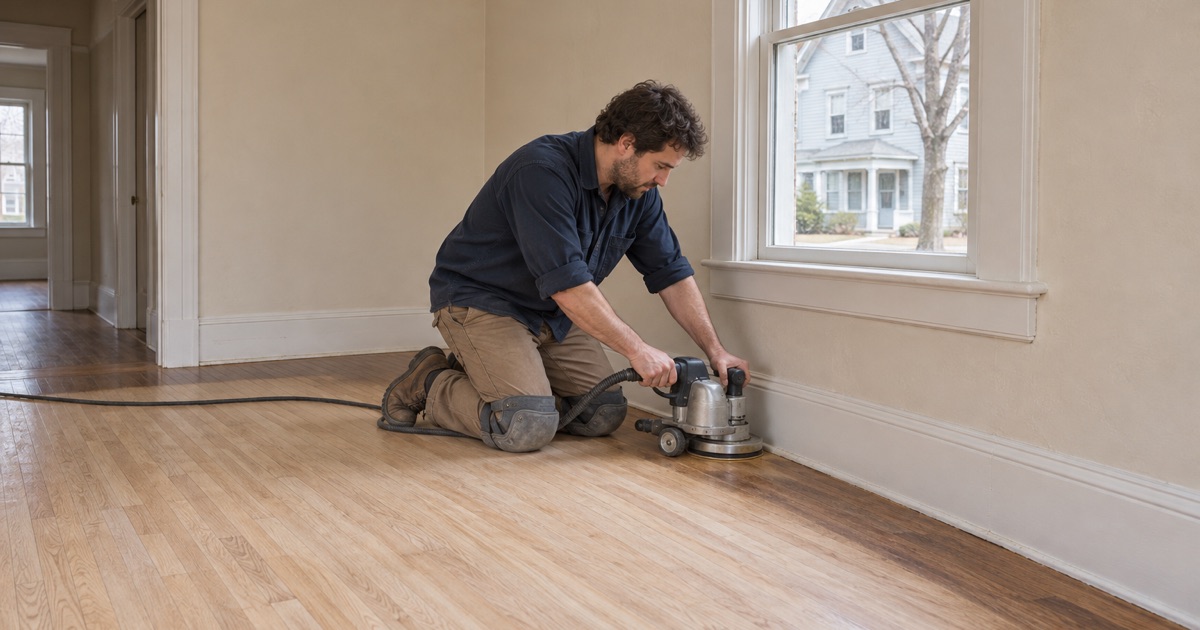
Clinton’s housing is old by any measure. Of the town’s 6,977 housing units, 2,605 were built in 1939 or earlier, which is 37.3 percent of the stock, and more than half went up before 1960. A floor in a building that age has usually been through several sandings, a few layers of finish and repairs by more than one owner.
That history is what we read first. A solid hardwood floor can only be sanded so many times before the nails and the tongue start to show, and older boards sometimes turn up face-nailed, patched with a different species, or shimmed where a radiator once stood. We check the board thickness at a floor register or threshold before promising a full sanding.
What the Boards Usually Are
Floors from this era in Massachusetts are commonly red oak in the main rooms, sometimes with maple or eastern white pine in kitchens, back halls and upstairs rooms. Some are select grade with tight, even color; others read closer to character grade, with knots and mineral streaks. Each sands and takes stain differently, so we lay stain samples on the actual boards rather than trusting a printed chart.
Age also shows up as damage. Board gapping and winter gaps open when the heat runs dry in January, cupping follows old leaks, and a stretch of soft, powdery wood near a sill can point to powderpost beetle or carpenter ants rather than ordinary wear. We name what we find and deal with the cause before sanding over it.
Lead-Safe Prep Before Sanding
Massachusetts runs its own lead-safe renovation rules for homes built before 1978, and with 71.6 percent of Clinton’s housing units built before 1980, the question comes up on most jobs here. Painted baseboard, quarter round, stair risers and old thresholds can carry lead paint even where the floor itself never did. We confirm the build year and check painted surfaces beside the floor before the drum sander starts.
Where lead is a possibility, the work changes. We set containment at doorways, run a HEPA vacuum between passes, and use dustless sanding equipment that pulls debris at the drum. It adds some time, and it is the right way to sand a floor in a building where other households live on the far side of the wall.
Looking for wood-flooring closer to Brookline? See Wood-Flooring Services in Brookline.
Refinishing Floors in Clinton Two- to Four-Unit Rentals
Clinton is nearly half renters. Of 6,758 occupied homes, 3,059 are renter-occupied, which is 45.3 percent, and much of that rental housing sits in small multifamily buildings. The town counts 1,067 units in three- or four-unit buildings and 602 in two-unit buildings, so 1,669 units share a building with no more than three other units.
The renters are concentrated there too: 811 renter households live in three- or four-unit buildings, more than in any other building size in town. That makes the owners of these buildings a steady part of our Clinton work, and it shapes how we plan a job from the first walkthrough to the last coat.
Turning a Rental Floor Between Tenants
The window between one lease and the next is short, so we plan the floor around it. We walk the unit at move-out, sort surface traffic lanes and pet urine stains from deeper water stains, and decide whether a screen and recoat will carry the floor through another lease or whether it needs a full sanding. Board replacement for a black urine spot is quoted on its own line.
For most turnovers we use waterborne polyurethane, which dries quickly enough for more than one coat in a day. The unit can take light foot traffic sooner, and the finish sits within the Massachusetts VOC limits for wood coatings, which are stricter than the federal ones. Oil-modified polyurethane remains an option when an owner wants its amber tone, with more drying time built into the schedule.
Stairs, Halls and Shared Spaces
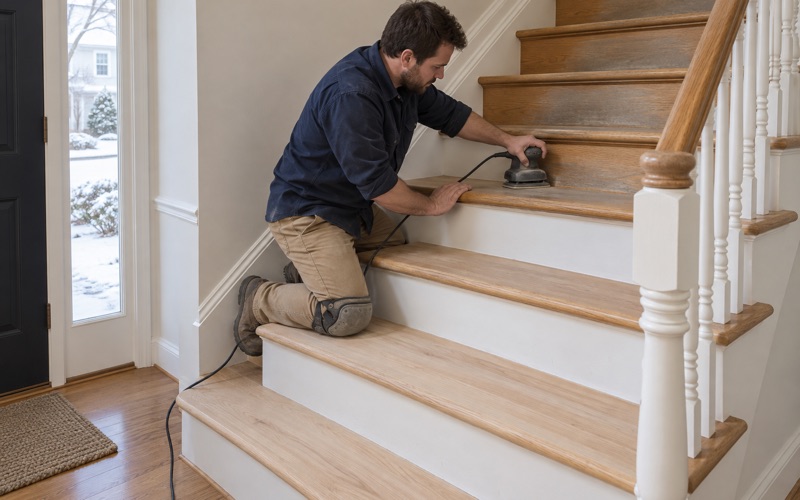
In a building with two to four units, the shared stairs often take the hardest wear. We price stairs by the tread and riser rather than folding them into a square-foot rate, because each tread is sanded, filled and finished largely by hand. Worn or split stair nosing gets repaired or replaced so the edge is sound again.
Shared halls also mean neighbors. We keep dust out of common areas with dustless sanding and HEPA cleanup, run the drum sander at reasonable hours, and vent finish odors through the unit rather than the stairwell wherever the layout allows. Tenants in the other units should notice as little of the job as possible.
Houses Near Lancaster Mills and the Bigelow Mills
Clinton’s housing makes more sense once you know how the town grew. It was founded by Erastus and Horatio Bigelow, who built their mills in the settlement of Clintonville, then part of Lancaster, and the town was incorporated on March 14, 1850. By 1890, Clinton was noted for manufacturing carpets and woven wire, and more than a third of the homes standing today date from before 1940.
Lancaster Mills, the brick complex at Green and Chestnut Streets, was founded in 1844 as the first major gingham mill and laid out as a classic company village, with worker housing across the street. The mill and the tenement houses beside it were built between 1844 and 1848. The Bigelow Carpet Mill at Union and High Streets followed in 1847 and was enlarged until 1922.
Floors in the Older Blocks
Older multifamily buildings near the mills have often been repainted, rewired and re-floored in pieces over many decades, and the floors show it. We see rooms of patched boards, old doorways filled with mismatched strips, and kitchens with sheet vinyl laid over wood. We sort out which boards can be saved and blend a weave-in repair of matching width and species where the old floor has gaps.
Floors this old also move with the seasons. Clinton sits in the National Weather Service Northern Worcester forecast zone, and heated winter air dries boards enough to open gaps that close again in humid summer weather. We take a relative humidity test and read board moisture before filling gaps, since wood filler forced into a seasonal gap tends to crack out by spring.
Downtown and High Street
The Downtown Clinton Historic District runs along High Street between Union Street and Ring and Prospect Streets, with buildings developed from about 1840 into the 1920s, and it was listed on the National Register in 1985. The Clinton Historical Commission, organized in 1977, works to identify historic sites and recognize restoration. For interior floor work in an older building, the practical goal is keeping original boards wherever they can still be sanded.
Floor Work Across Clinton
Not every Clinton job is a rental. The town’s 3,699 owner-occupied homes include 2,579 households in detached single-family houses, and those owners call for the full range of work: refinishing, new installation, stair repairs and fixes after a leak. The same attention to build year and board thickness applies to each of them.
Owner Homes and Older Finishes
Oak uncovered under old wall-to-wall carpet is common in houses of this age. Before any sanding we pull the carpet pad, tack strip and every carpet staple, and fill the tack-strip holes along the walls, because a missed staple tears the paper and scars the wood. Only then can we judge the floor honestly.
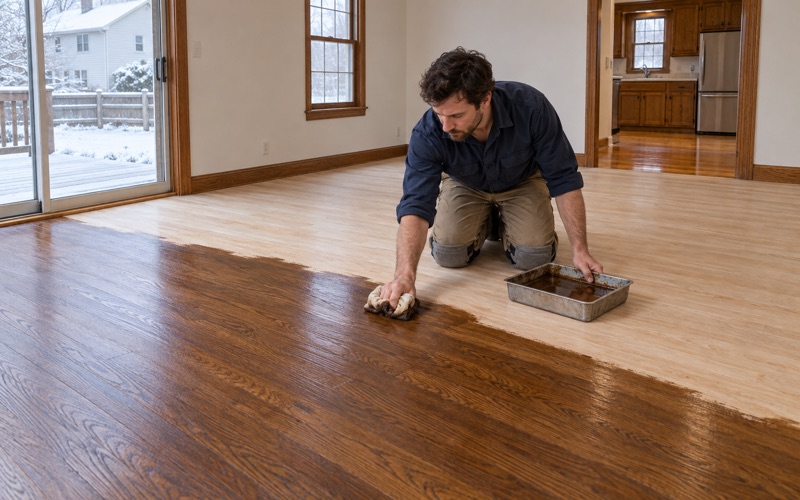
Many of these floors were finished decades ago with coatings that have since turned orange or yellow. Taking orange oak to a natural or modern tone starts with color samples on your own floor, in your own light, since red oak and white oak take the same stain very differently. You approve a sample, and the sheen level, before we finish the room.
Leaks and Water Damage
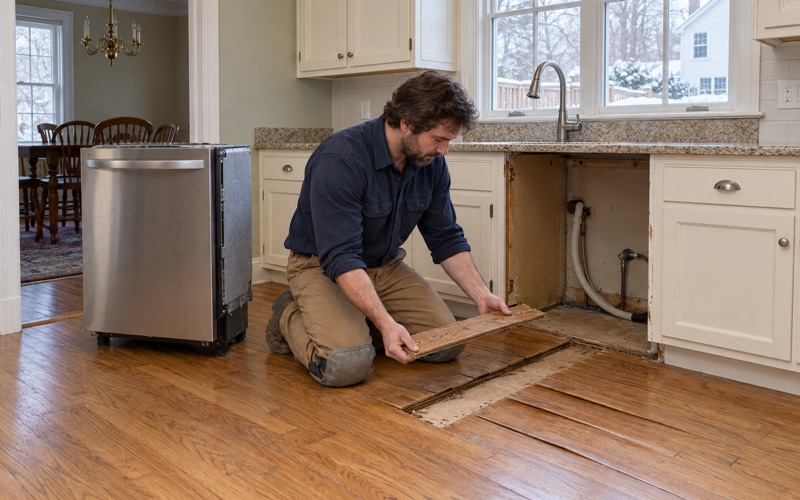
Water damage in an older house usually starts somewhere specific: a dishwasher supply, an ice maker line, or a hot-water baseboard pipe weeping behind the trim. We trace the source, dry the boards and read them with a moisture meter before deciding what gets replaced. Cupping and crowning often settle once the wood dries, and boards that come back do not need to be torn out.
When an insurance claim is involved, we document the damage room by room, with moisture readings and photos, so the adjuster can see what was wet and what was not. Buckling boards are photographed in place before they come up.
Engineered and New Floors
Engineered floors can often be refinished, but only if the wear layer is thick enough. We measure the engineered wear layer at a vent or threshold before we promise a sanding, and recommend a screen and recoat when there is not enough wood to sand through. If you want wood in a basement room, including a walkout, we measure the space against the NWFA below-grade rule before recommending any product.
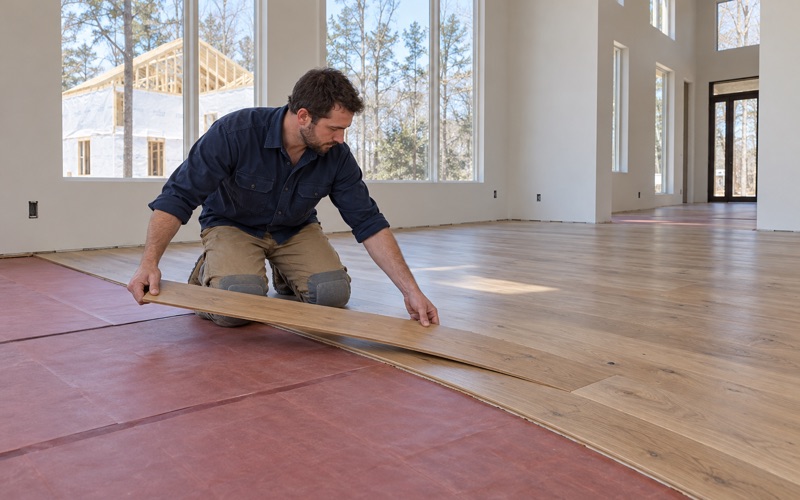
For new installs we let the boards reach acclimation, leave the expansion gap at every wall, and fasten solid hardwood with flooring cleats into a sound subfloor. Whether the job is a rental unit downtown or a detached house at the edge of town, it starts the same way: we look at the floor, tell you what it can take, and price the work it actually needs.
- 20+ Years on Wood Floors
- Free Written Estimates
- Lead-Safe Work Practices