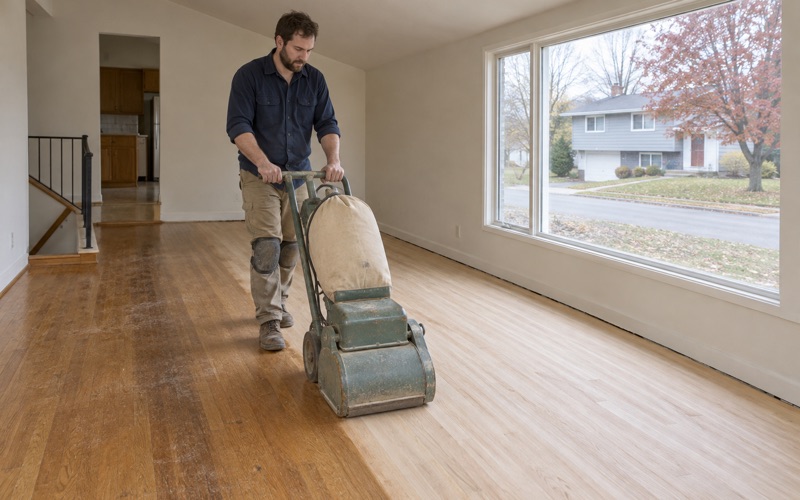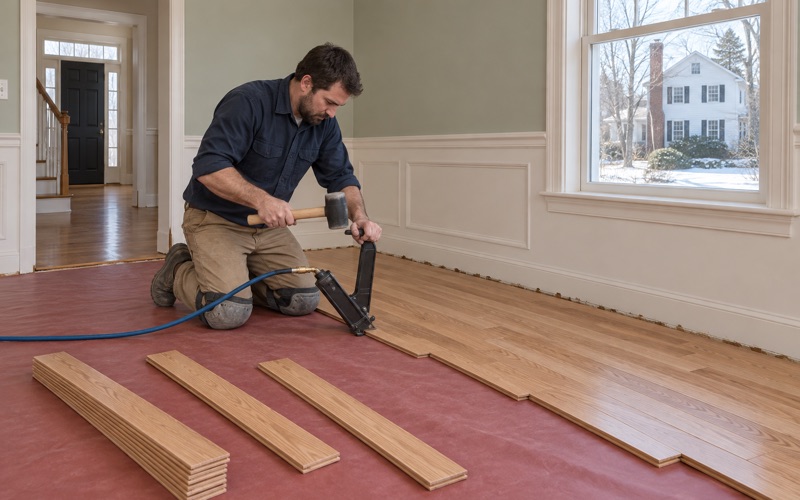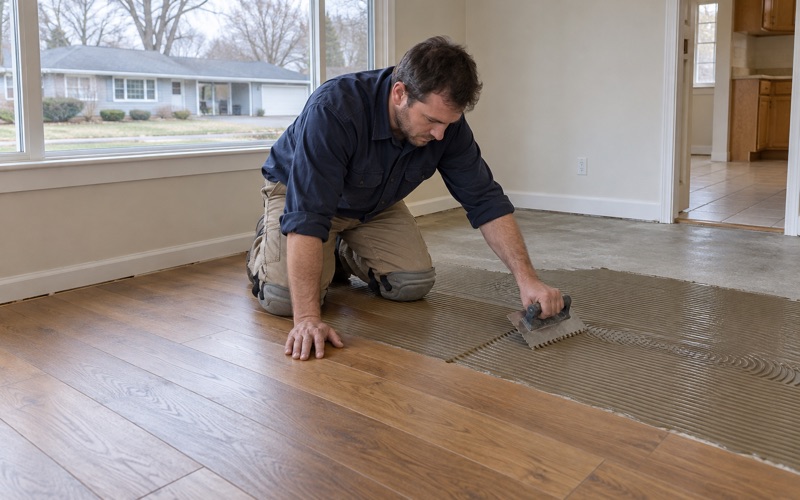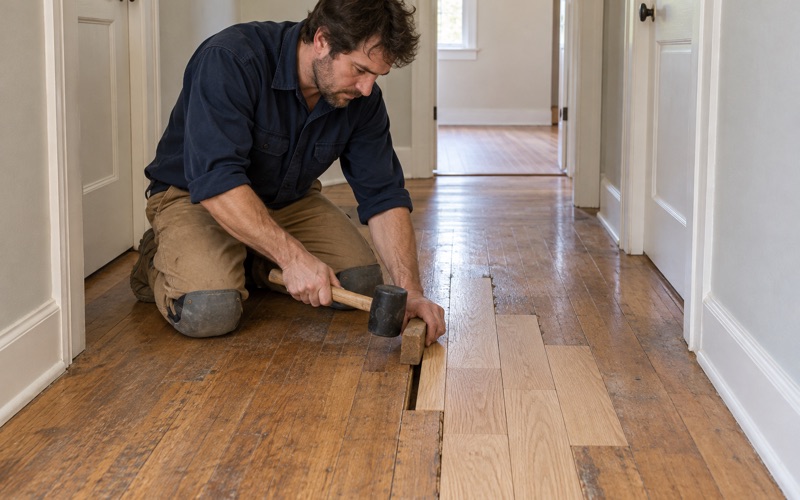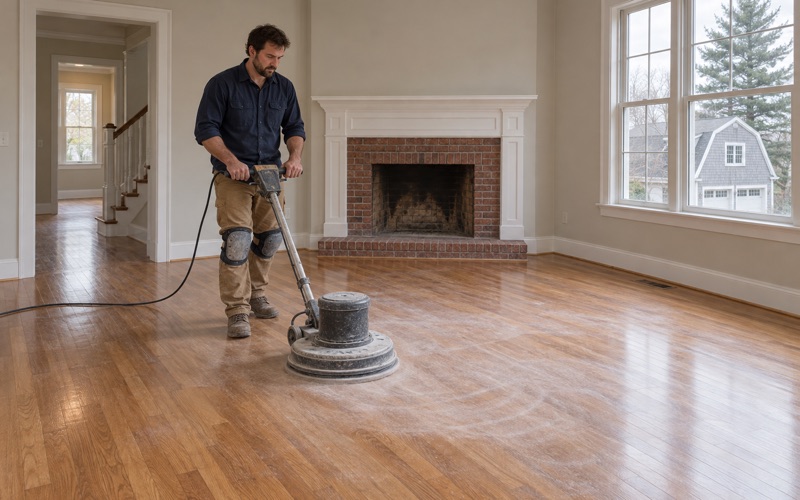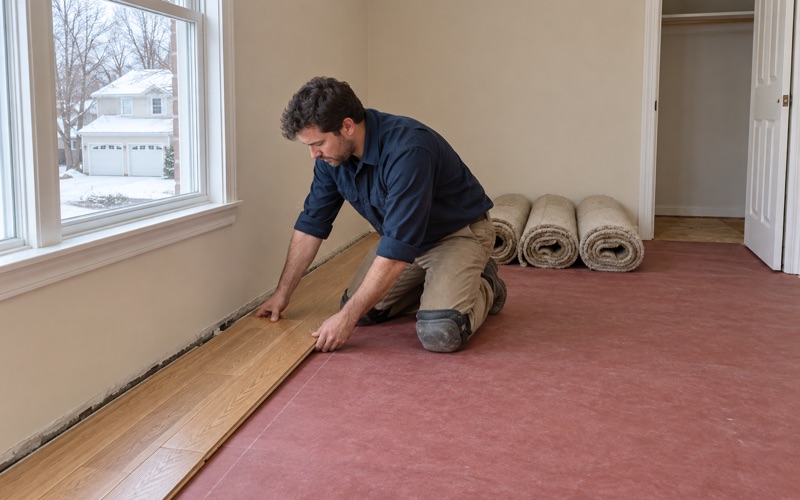
Framingham Wood Flooring has been doing wood flooring in Cambridge for more than 20 years, and much of that work happens in rented rooms: apartments between leases, units in multi-family houses, condos an owner is readying for the next tenant. We sand and refinish worn oak, repair water-stained and cupped boards, and install new solid hardwood or engineered floors where the old ones are past saving.
The first thing we look at is not the floor. It is the year the building went up, and whether any painted surface near the work, from baseboard and quarter round to door casings and stair risers, could put old paint into the dust a drum sander throws. Massachusetts keeps its own lead-safe renovation rules for homes built before 1978, and that date decides how we set up a room before a single board is touched.
That setup is the difference between a clean floor job and a complaint from next door. Below we walk through what sanding in an older rental involves here, what the city’s own lead programs do and do not cover, and how we plan a project so the tenants, the landlord and the neighbors all know what is coming.
Sanding Floors in Cambridge’s Pre-1978 Rentals
How old the housing stock runs
The numbers explain why we treat nearly every sanding job in this city as a dust-control job. Of Cambridge’s 54,840 housing units, 25,767 were built in 1939 or earlier, which is 47.0 percent of the stock, according to the Census Bureau’s 2024 five-year American Community Survey. Counting everything built before 1980, the share reaches 67.9 percent. Buildings that old have usually been painted many times over, and the early coats are the ones that matter.
Tenure matters just as much. Two out of three Cambridge households rent; the same survey puts renter-occupied units at 66.5 percent. That means the person hiring us is often a landlord or property manager, the person living with the floor is a tenant, and the family on the other side of the wall or across the property line is someone else again. Each of them has a stake in where the dust ends up.
What we find under the old finish
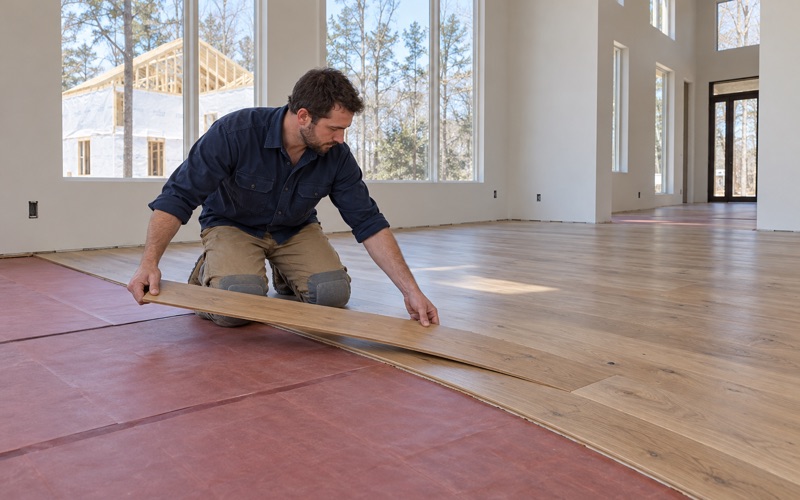
Floors from the prewar era tend to be solid hardwood, typically red oak or white oak strips laid tongue and groove, with eastern white pine turning up in secondary rooms. Decades of earlier refinishing leave less wood above the tongue than the surface suggests, so we pull a vent cover or threshold and measure before we promise another full sanding. Where a later owner put down engineered flooring, we measure its wear layer too, because some can take a sanding and some cannot.
Carpet is the other common discovery. Oak that has spent decades under wall-to-wall carpet comes with carpet pad stuck to the old finish, rows of carpet staples, and tack strip nailed around the perimeter. We pull all of it and fill the tack-strip holes before sanding starts, not after, because a drum sander that catches a staple gouges the board and scatters debris across the room.
Looking for wood-flooring closer to Hopedale? See Wood-Flooring Services in Hopedale.
What Cambridge’s Lead Programs Do, and What They Don’t
Cambridge backs careful work in its older rental housing with several city programs, laid out in a lead-paint brochure published by the Cambridge Human Rights Commission. None of them is a floor service, and none replaces the care a contractor takes inside the room, but a landlord or tenant planning a refinish should know they exist and which office runs each one.
Lead determination testing through Inspectional Services
The City of Cambridge Inspectional Services Department offers lead determination testing of rental housing units built before 1978 where a child under six or a pregnant woman lives. The brochure describes it as a screening step that identifies units needing a full lead inspection, and those units are referred to the state Childhood Lead Poisoning Prevention Program, which the city works with on enforcement. It is testing aimed at those households, not a test of every apartment in the city.
For a landlord scheduling a refinish in a pre-1978 unit where a young child or an expectant mother lives, that screening is worth asking about before the floor work rather than after it. Lead testing, deleading and abatement are not work our crews do. What we do is check the build year, look over the painted surfaces around the work area, and plan containment on the assumption that older paint is present unless the owner has paperwork saying otherwise.
Reports of improper work and dust next door
The same brochure names two backstops for work done badly. When the city suspects improper lead abatement practices on pre-1978 housing, it refers the case to the Massachusetts Division of Occupational Safety. And the Cambridge Public Health Department’s Lead-Safe Kids program coordinates an intervention when it receives a report of unsafe work practices that blow paint dust and chips into neighboring yards or properties.
That second program is the one a careless floor job can run into. Where houses sit close together, a sander venting through an open window or a crew shaking out drop cloths in the yard can land dust on a neighbor’s porch, garden or play area. Lead-Safe Kids also helps families with inspections, abatement funding and finding an abatement contractor, which is the right door for anyone whose problem is the paint rather than the floor.
Loans and fair housing
Owners facing abatement costs have another option the brochure lists: local banks, including Cambridge Savings Bank, Cambridge Trust and East Cambridge Savings Bank, offer loans for lead abatement to qualified applicants. Separately, the Human Rights Commission enforces the city’s Fair Housing Ordinance against refusing to rent to families because of lead paint, so older paint is a condition to manage, never a reason to turn a family away.
Keeping the Dust Inside the Unit
Our dust control is a set of habits rather than a slogan, and it applies to every pre-1978 building we sand in, whether the unit is rented or owner-occupied. It starts before the first machine comes off the truck and ends only when the last bag of debris leaves the building sealed.
Sealing the room before sanding
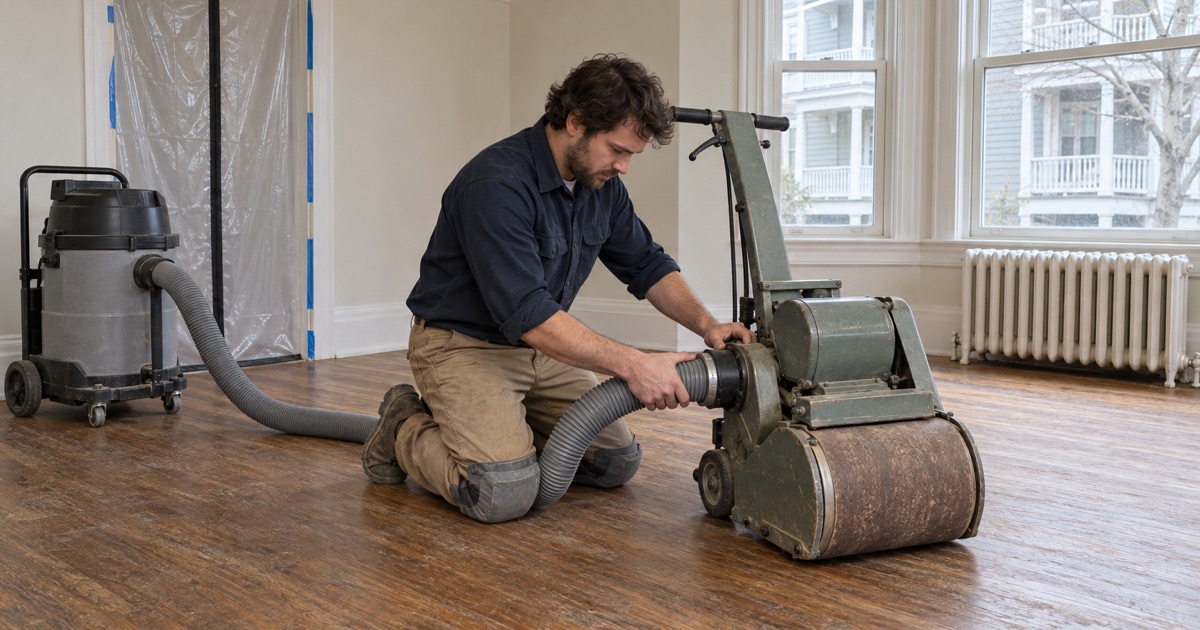
We close off the work area with plastic sheeting at the doorways, cover and tape heating registers and return vents, and keep windows shut on any side that faces a neighbor while sanding is underway. Hot-water baseboard covers get masked so dust does not settle in the fins. Painted baseboard, quarter round and door casings are protected rather than sanded against, because the edge of a floor is exactly where old paint and bare wood meet.
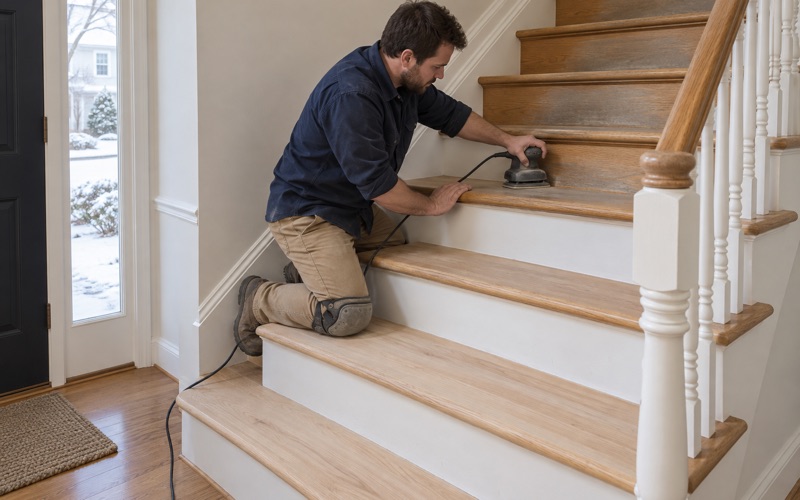
The sanders run with dust collection attached, and full bags are closed and sealed indoors instead of being emptied at the curb. An orbital sander handles the edges and corners where a drum sander would bite into painted trim, and we choose the grit sequence to cut through the old finish without grinding any deeper into the oak than the floor actually needs.
Cleanup between coats and at the end
Between passes and before every coat of finish we clean with a HEPA vacuum, working from the top of the trim down to the floor, then wipe the surface. That serves the finish as much as the household: dust left on the boards is dust sealed under the polyurethane. At the end of the job, sheeting is folded inward and bagged inside the unit, and nothing is shaken out in the yard or on the porch.
None of this is deleading, and we never describe it that way to a client. Sanding a floor does nothing about painted walls, windows or trim elsewhere in the building. What containment does is keep our own work from adding dust to the unit or to the property next door, which is the part of the problem a floor contractor actually controls.
Finishes in shared buildings
Where other households share the stairwell, the finish matters as well. We pick coatings that meet the Massachusetts VOC limits for wood coatings, which are stricter than the federal ones, and in occupied multi-family houses we usually lean toward waterborne polyurethane for its lower odor and faster dry time. Oil-modified polyurethane and hardwax oil stay on the table for owners who want that look and can plan around a longer cure.
Two- to Four-Unit Houses and Planning a Project
Working in a small rental building
A large share of Cambridge renters live in exactly the kind of building where floor work reaches more than one household. The Census survey counts 9,100 renter households, 27.7 percent of all renter households in the city, in buildings of two to four units. In those houses the unit above, the unit below and the shared hall are all within reach of noise and dust, and the people living in them did not hire us.
So we plan for the neighbors inside the building as well as the client. We ask the landlord to give other tenants notice of the dates, keep common hallways covered where we carry equipment through, and put the loudest sanding in normal working hours. The city’s noise ordinance bars construction noise audible 50 feet from the lot line between 6 p.m. and 7 a.m. on weekdays, or before 9 a.m. on Saturdays and holidays, and Sunday work needs Police Department approval.
Turning floors around between tenants
Much of our rental work here happens in the gap between one lease and the next. We walk the empty unit with the landlord, note traffic lanes, pet urine stains, water stains by the kitchen and board gapping, and sort what a screen and recoat can fix from what needs a full sanding. A screen and recoat is quick and throws little dust, while urine that has soaked into the wood usually calls for board replacement or a weave-in repair first.
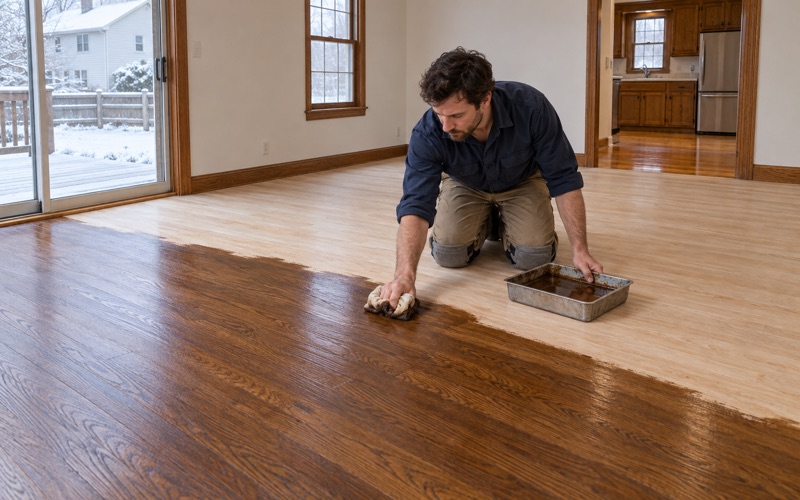
Timing follows the finish and the move-in date. Waterborne finishes allow a tight turnover, and a color change adds time because we lay stain samples on the actual floor and let the owner choose in daylight. When yellowed, orange oak needs to move toward a natural or modern tone, those samples settle the question before the whole floor is committed to one color.
Moisture, stairs and the rest of the quote
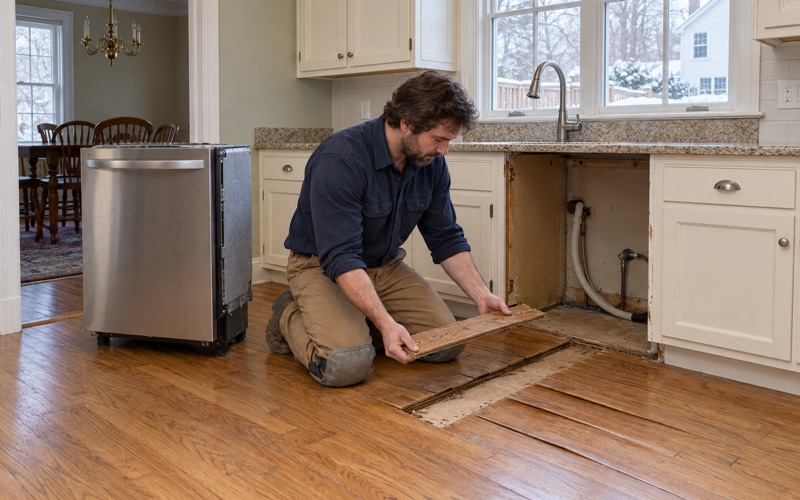
Winter heating dries indoor air, and wood floors shrink with it. Winter gaps that close again in summer are normal and rarely a repair, but cupping, crowning or buckling after a leak is a different story. When a dishwasher, ice maker line or hot-water baseboard pipe has leaked, we trace the source, dry the boards and read them with a moisture meter before replacing anything, and we document the damage room by room for the insurance adjuster.
Stairs are priced by the tread and the riser, not folded into a square-foot figure, because older rental stairs often pair painted risers with worn oak treads and stair nosing that needs its own attention. Those painted risers bring us back to where this page began: we check them before any sanding, the same way we check the building’s age before we quote a single room.
- 20+ Years on Wood Floors
- Free Written Estimates
- Lead-Safe Work Practices