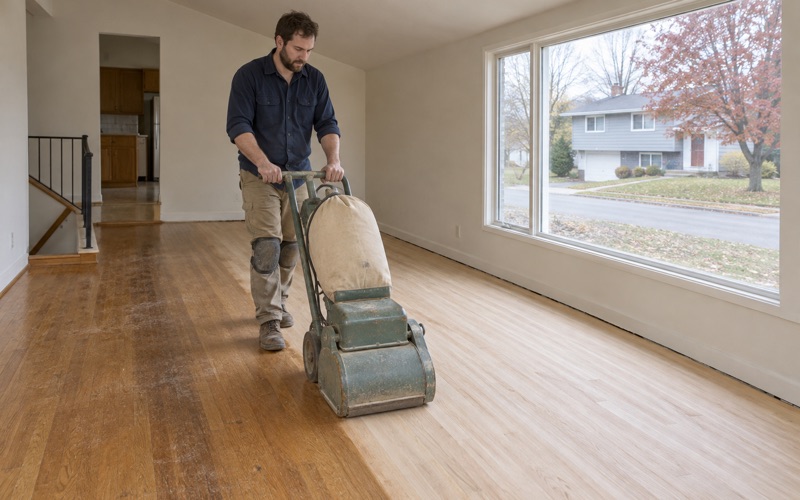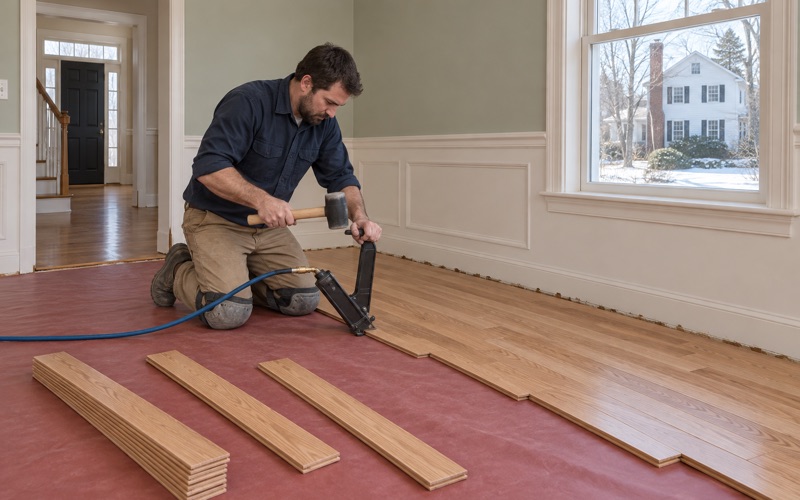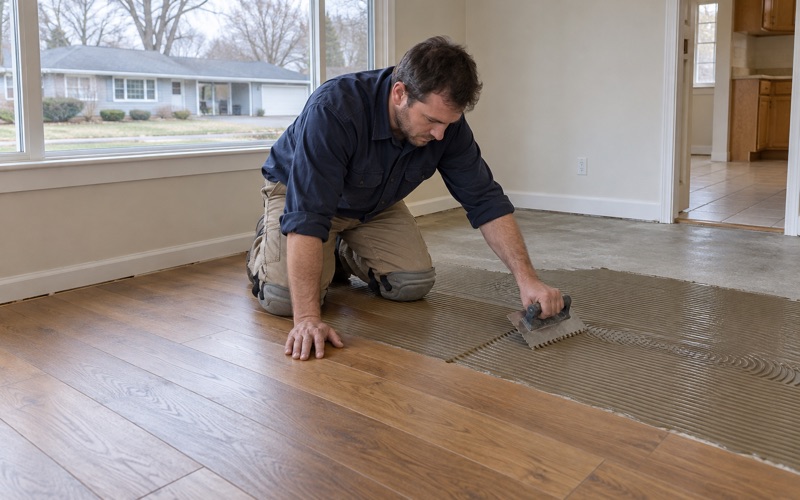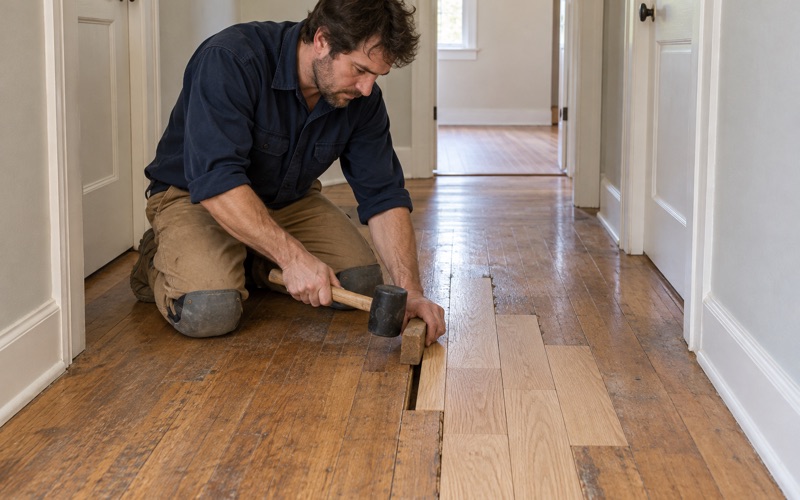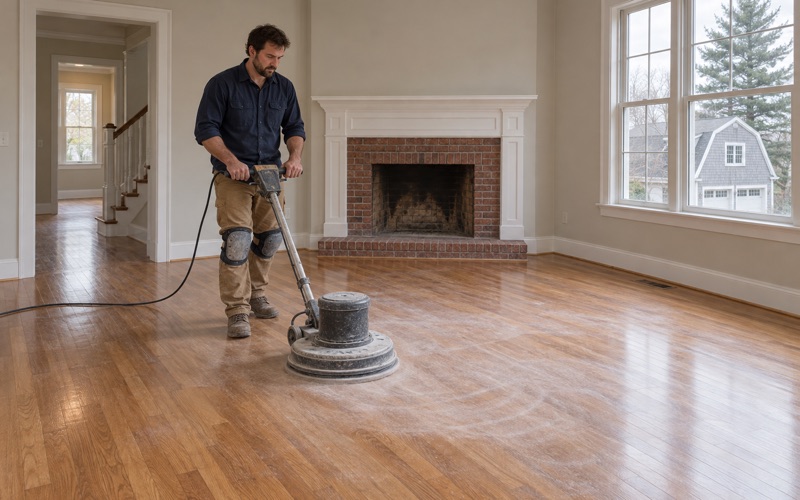
Framingham Wood Flooring approaches wood-flooring in Belmont with more than 20 years in the trade behind every estimate, and in this town the calendar shapes a floor job as much as the grit sequence does. Sanding is the loudest stretch of any refinish. It runs for hours at a time, and on a larger job it spans more than one day. So before we talk about stain colors or sheen level, we talk about when the machines can run and who will hear them.
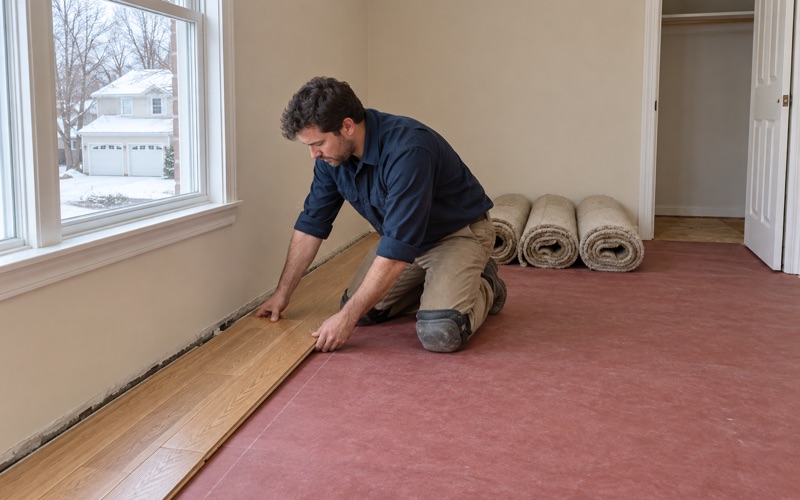
That conversation starts with the house itself. We ask the build year, look for painted surfaces on trim and floors, and check whether an engineered floor has enough wear layer left to sand at all. If the oak has been hiding under carpet, we pull the pad, carpet staples and tack strip and clean up the holes before any sander touches it. None of that prep is loud, so it fits around almost anyone’s day.
The loud part is where planning pays off. A drum sander and an edger working through a living room carry through walls and ceilings, and in a shared house the people on the other side of them hear it too. Our job is to put that noise inside the hours the town allows, to keep the loud days as few as the floor permits, and to warn the other household before anything starts. The rest of this page explains how we do that here.
When Loud Floor Work Can Happen in Belmont
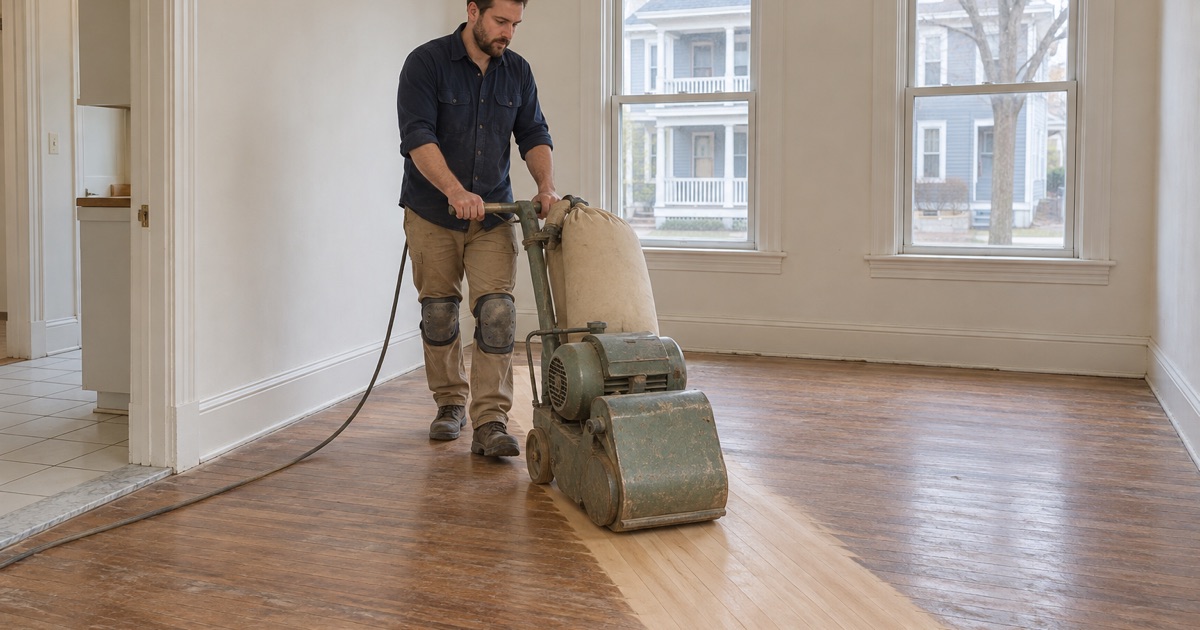
Belmont’s Noise Bylaw sets out a construction window in section 60-620. Construction noise is permitted between 7 a.m. and 8 p.m. on weekdays and Saturdays, as long as non-impact devices stay within 70 dBA over a 10-minute interval and impact devices within 90 dBA, measured at least 50 feet from the activity. Outside those hours, construction noise has to meet the standard exterior limits instead. That window is the frame we build every Belmont sanding schedule inside.
Weekdays and Saturdays
We put the loud days of a Belmont floor job inside that weekday and Saturday window, and we rarely use the whole of it. On a typical sanding day we arrive after 7 a.m., set up containment, and have the drum sander running by mid-morning, then shut the heavy equipment down well before evening. That leaves a buffer at both ends, which matters when the family on the other floor has small children or someone who works nights.
A Saturday can be the easiest day for the homeowner, who is home to move the last of the furniture and answer questions about stain samples. It can also be the one day the other household hoped to sleep in or have people over. When a job has to run into a weekend, we would rather hear that from the neighbor at the planning stage than from a knock on the door halfway through the first pass.
No Sunday Construction Window
The bylaw lists no Sunday window for construction noise, and we don’t book sanding days on Sundays in Belmont. Sunday is when we suggest the household walks the rooms, looks at the color samples again in daylight, or simply lets a fresh coat of finish cure undisturbed. Quiet days are part of the job too, and a curing floor needs them as much as the neighbors do.
Sundays do shape the calendar, though. A job that starts sanding on a Thursday and needs three loud days does not finish on Saturday if one day slips; it picks back up on Monday. We plan for that gap at the estimate, so the dates you pass along to a tenant or the family upstairs are dates we can actually hold, not a best case that falls apart by the second morning.
Looking for wood-flooring closer to Norwood? See Wood-Flooring in Norwood.
Sanding With a Neighbor on the Other Floor
Two-unit buildings are a large part of Belmont’s housing. According to the ACS 2024 five-year estimates, 3,228 of the town’s 10,881 housing units, or 29.7 percent, sit in two-unit buildings. That means a real share of our Belmont floor jobs happen in a house where one household lives upstairs and another downstairs, each with its own routine, its own work hours and its own idea of a reasonable Saturday.
Telling the Other Household
Before a sanding day, we ask the client to share the schedule with the people on the other floor, and we put it in writing so it can be taped to a shared door or sent as a message. We list the loud days, the rough hours, and the days the finish will be curing. In our experience most of the friction in a two-unit job comes from surprise rather than from the noise itself.
Dust, Odor and the Shared Stairway
A two-family house often shares a front hall, a back stair or a basement. We seal doorways into the work area, run a HEPA vacuum between each grit, and work with dust collection on the sanders so less of the job drifts into common space. We also plan which door the crew uses, so the other household can reach its own unit without crossing bare wood or wet finish.
Finish choice matters in a shared house too. A waterborne polyurethane dries faster and carries less odor than an oil-modified polyurethane, and both are chosen to fit the Massachusetts VOC limits for wood coatings, which are stricter than the federal ones. When the household upstairs shares air through an open stairwell, a lower-odor finish and a shorter cure are often the kinder choice for everyone under the roof.
Keeping the Loud Hours Short
We can’t promise how much sanding noise a particular ceiling will pass, and we won’t quote a sound figure for a Belmont house we haven’t worked in. What we can control is duration. Planning the edging, the drum passes and the buffer work so the loudest tools run in consolidated blocks means fewer hours of noise overall, instead of scattered bursts spread across the whole week.
Owners and Renters in Belmont Two-Unit Houses
The two-unit share is split between owners and renters. The same census tables count 1,478 owner households living in two-unit buildings. On the renter side, 1,555 of Belmont’s 3,673 renter households, or 42.3 percent, rent in a two-unit building, which makes it the most common building type for renters in town. So the person hiring us is often an owner, and the person hearing the sander is often a tenant.
When the Owner Lives in the Other Unit
If you own a two-unit house and live in one side, you may be the client, the landlord and the neighbor at once. We help you pick dates that work for your tenant, and we keep the work inside your unit unless you ask otherwise. If the tenant’s unit shares a stair or entry, we talk through which surfaces we will protect and how long the finish needs before anyone walks it.
Turning a Rental Unit Between Tenants
When a unit is empty, the scheduling problem is smaller but the deadline is tighter. We turn landlords’ floors around between tenants, working out traffic lanes, pet urine stains and water stains near the kitchen before the next lease starts. If the boards only need a fresh coat rather than bare wood, a screen and recoat is quicker, quieter and far less disruptive than a full sanding.
Occupied rentals are different. If the tenant is still living in the unit being worked on, we need the owner to handle notice and access, and we work within whatever arrangement they make with the tenant. We would rather push a job back a week than have a crew show up at a door the tenant was not expecting, with a drum sander on the truck.
An Older Housing Stock
Belmont’s homes skew old. The ACS count puts 6,208 of its 10,881 units in buildings from 1939 or earlier, which is 57.1 percent, and 87.3 percent predate 1980. Massachusetts runs its own lead-safe renovation rules for homes built before 1978, so we confirm the build year and look for painted surfaces before sanding starts, whichever unit the floor is in.
Planning a Floor Project in Belmont
A good Belmont floor job starts with a site visit rather than a phone quote. We take moisture meter readings, check for cupping, crowning or board gapping, and look at the edges of rooms where the old finish is least worn. That tells us whether a full sanding makes sense or whether a screen and recoat will carry the floor a few more years without the loud days.
Seasons and Moisture
Belmont sits in National Weather Service forecast zone MAZ014, Southeast Middlesex, where humid summers give way to dry, heated winters. Winter gaps between boards are normal in solid hardwood and usually close as humidity returns. We note them at the estimate and time any board replacement or weave-in repair for when the new wood has acclimated, so a patch does not stand proud in July.
Color and Finish Decisions
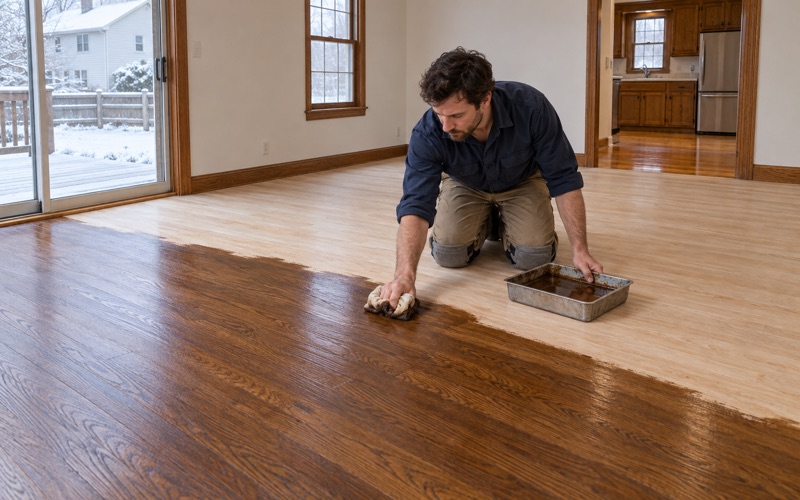
Many older oak floors have turned orange or yellow under decades of old finish. We put color samples on the actual floor, in the room where they will live, before committing to a natural tone or a more modern shade. Sheen level is part of that decision, and so is the choice between a waterborne polyurethane and a hardwax oil for a floor that sees heavy daily use.
Leaks, Stairs and Insurance Claims
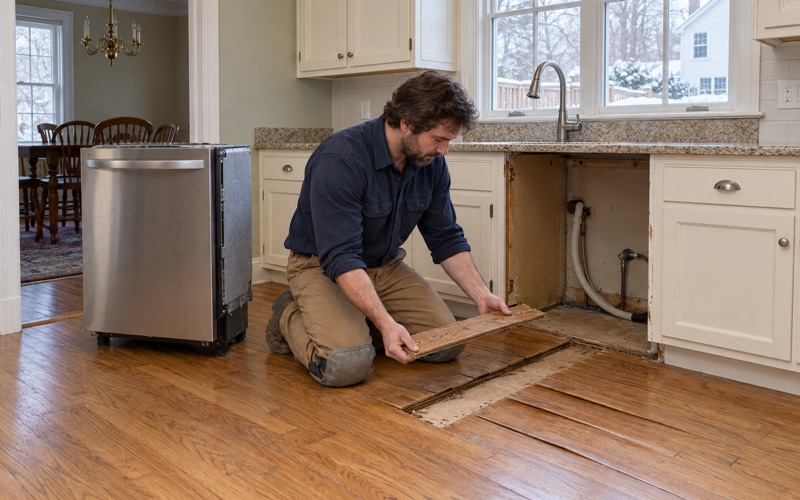
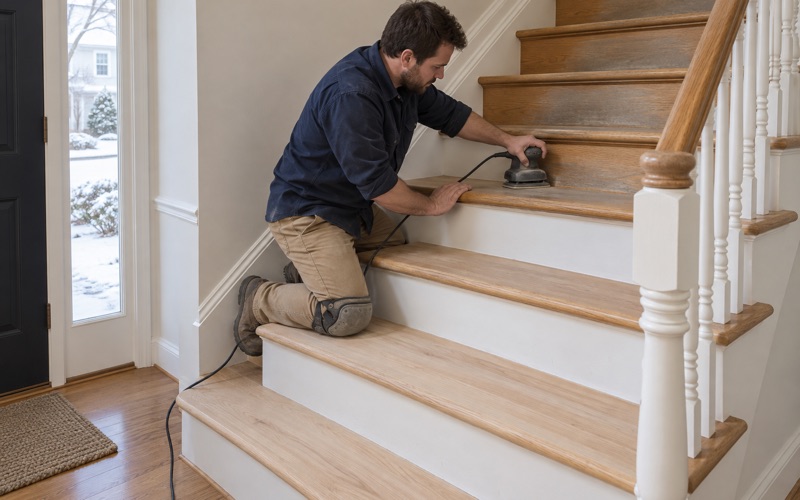
If a floor was damaged by a dishwasher, an ice maker line or a leaking baseboard pipe, we trace the source and dry the boards, reading them with a meter before replacing anything. For an insurance claim, we document the damage room by room for the adjuster. Stairs are quoted by the tread and riser, not buried inside a square-foot figure that hides what they actually cost.
Booking the Dates
Once the scope is set, we lay out the whole calendar: quiet prep days, loud sanding days inside the weekday and Saturday window, and curing days when the house needs to stay off the floor. You get that plan in writing to share with the household on the other floor. For most Belmont clients, that written calendar turns out to be the most useful thing we hand over.
- 20+ Years on Wood Floors
- Free Written Estimates
- Lead-Safe Work Practices